by Angela
Share
"Hermetically sealed" on a datasheet is a promise. Without a test method and limit on your order, it cannot be checked.
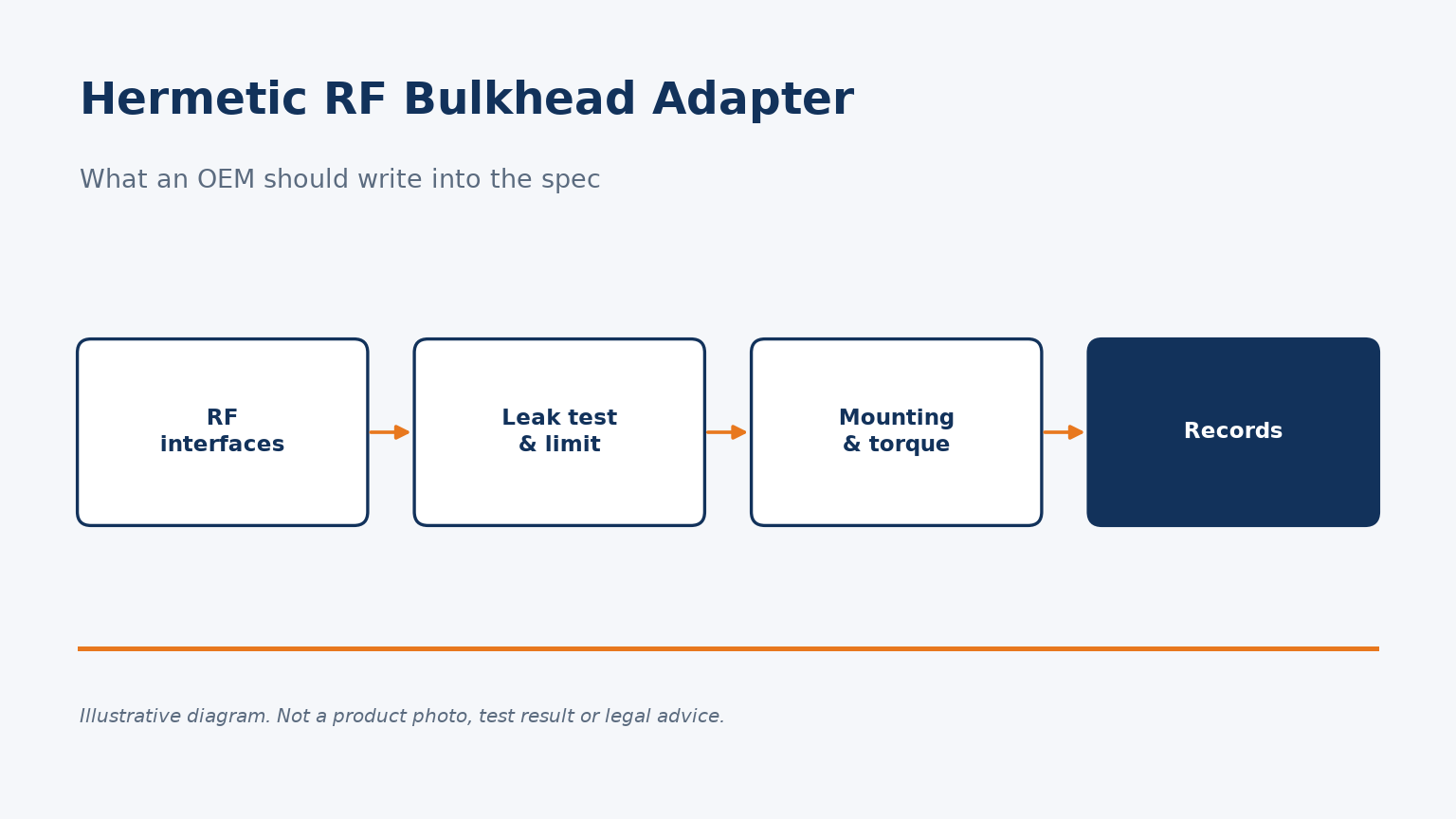
Specify a hermetic RF bulkhead adapter by both interfaces and frequency range, the leak-test method, condition and maximum leak rate, the sampling plan, panel mounting details with torques, and the records each lot must ship with.
Below I break down each item; if you have a panel drawing ready, send it to us and we will review it with you.
What does "hermetically sealed" mean for an RF adapter?
Datasheets use "sealed", "waterproof" and "hermetic" loosely. For an OEM enclosure the difference decides whether moisture gets in.
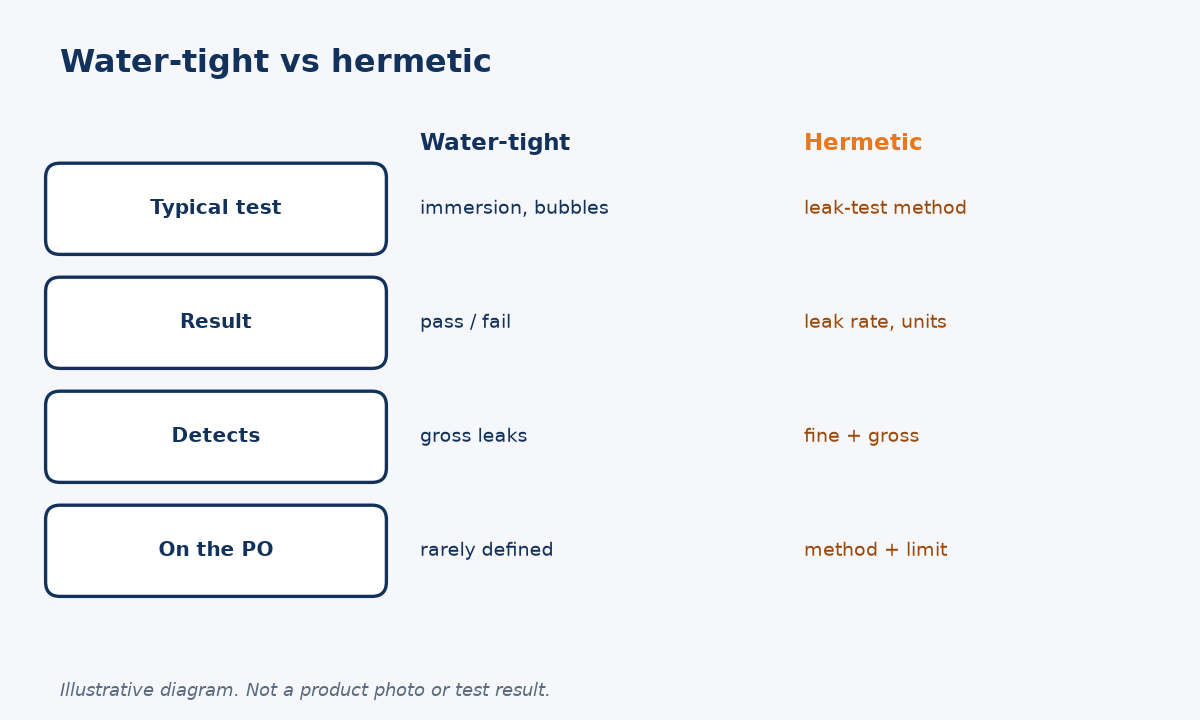
A hermetic seal is one verified by a leak test sensitive enough to detect gas leakage, with the result stated as a leak rate. It is a stronger claim than water-tight or weatherproof, which are usually checked by immersion and bubble observation.
Hermetic is a test result, not an adjective
The US military seal test method, MIL-STD-202 Method 112, is a useful reference because it draws this line explicitly. Its purpose is to determine the effectiveness of the seal of a part with an internal cavity, and it states that it does not cover the many lesser-sensitivity tests, such as water tightness or moisture proofness, that rely on watching for bubbles. Its leak rates are expressed in atmospheric cubic centimetres per second.
For a bulkhead adapter, the sealed path is usually through the adapter itself: the glass or dielectric bead and its bond to the body and centre contact. The adapter then forms part of the enclosure wall, so a leak through it is a leak into your housing.
I recommend that OEM buyers treat the word "hermetic" as a placeholder until the supplier names the test and its result. That is not a criticism of any supplier; it is how you make the claim checkable. Our 2.92mm female to female hermetically sealed panel-mount adapter (P/N RL-2.92-KYKG-HS) is one example; for leak-test details on a specific order, contact us and we will tell you what we can document.
Which leak-test details belong in the purchase specification?
"Hermetic, tested" on a PO tells the supplier nothing about which test, how sensitive, or what counts as a pass.
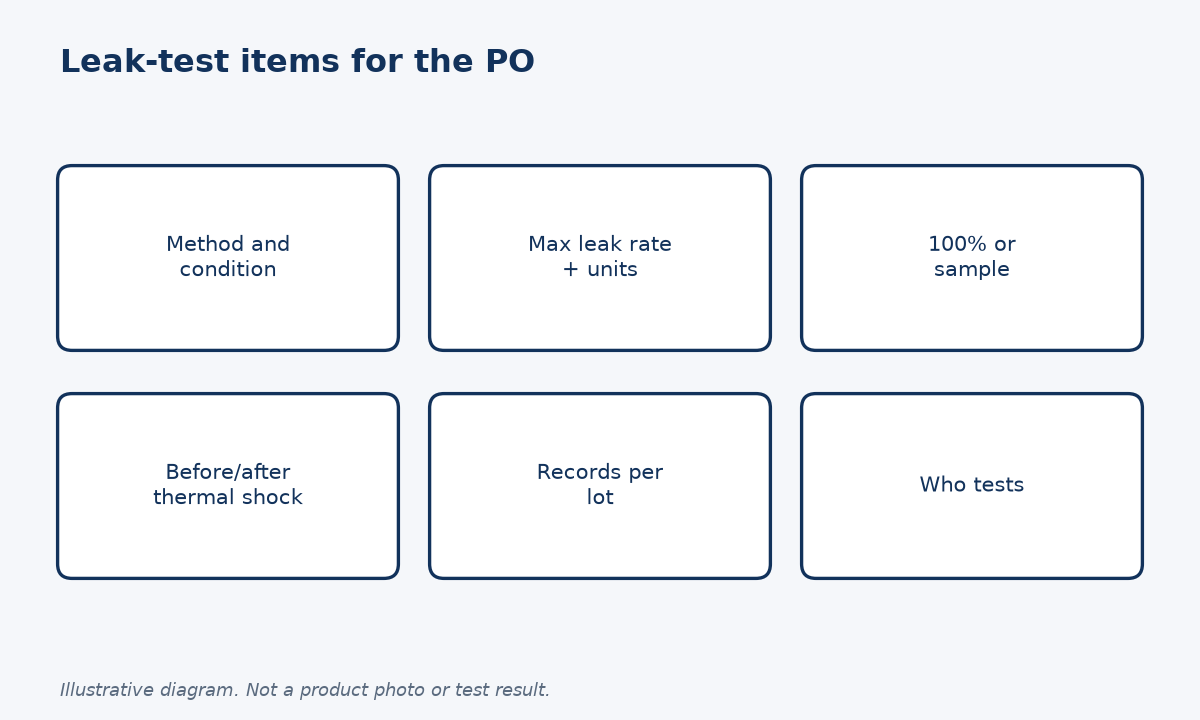
Name the test method and condition, the maximum acceptable leak rate in stated units, whether testing is on every unit or a sample, and whether it is done before or after environmental stress such as thermal shock. Ask for the records.
Turning the claim into acceptance criteria
Method 112 itself requires the individual specification to state which test condition applies, and, for tracer-gas fine-leak testing, the procedure and sensitivity. That is a good model for a commercial PO: the buyer, not the test lab, should choose the condition and the limit. It also notes the seal can be verified as received or after other environmental tests such as thermal shock or vibration.
| Item | Why it matters |
|---|---|
| Test method and condition | Fine and gross leak tests find different defects |
| Max leak rate and units | Makes pass/fail objective |
| 100% or sample | Changes cost and confidence |
| Before/after stress | Shows seal survives handling |
I deliberately give no leak-rate number here. The right limit depends on your enclosure volume, the life you need and what is inside, and a number copied from another programme can be either far too loose or impossible to verify. Decide it with your reliability engineer, document how it was derived, and then put it in the RFQ so every supplier quotes against the same acceptance criterion. If you are not sure what to ask for, send us your enclosure requirements and we will discuss what documentation is available for your order.
How do mounting and interface details affect a sealed bulkhead?
A perfect glass seal still leaks if the panel joint around it is not sealed. Mounting is part of the specification.
Specify the panel cut-out, panel thickness range, mounting method (nut, flange or solder), the seal at the panel interface such as an O-ring or gasket, tightening torque, and both connector interfaces by series and gender.
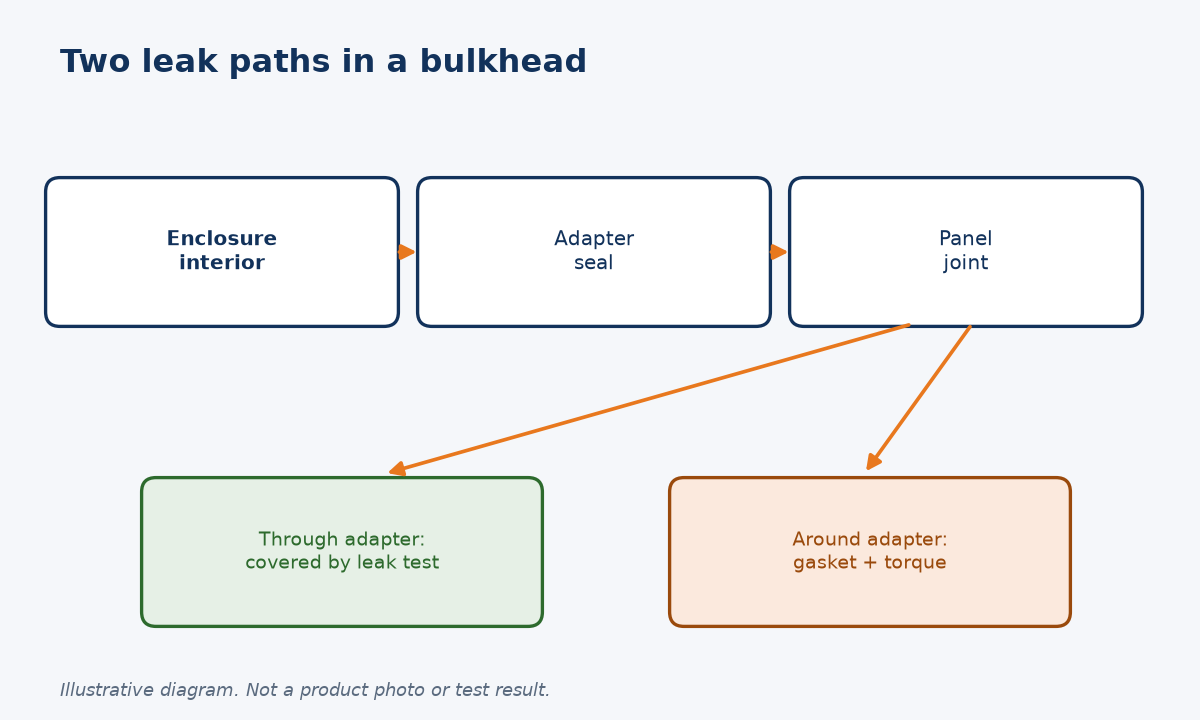
Two leak paths, not one
A hermetic adapter has two potential leak paths: through the adapter, which the leak test covers, and around it, at the panel joint, which it usually does not. The second path is set by your cut-out, panel finish, gasket choice and torque. It is worth stating clearly in the drawing who owns that seal, you or the supplier.
On the RF side, the interface series and gender should be named on both ends. MIL-STD-348 defines interface dimensions for common RF connector series, so a reference such as "2.92 mm female, both ends" leaves no room for interpretation. The RL-2.92-KYKG-HS listing gives DC to 40 GHz, 50 ohms, a passivated stainless steel body, gold-plated beryllium-copper contacts, -55 °C to +85 °C and at least 500 matings, which covers the electrical and material lines of a specification.
Torque deserves a separate line. NASA-STD-8739.4A says coaxial mating torque should come from engineering documentation, turning only the coupling nut. For a bulkhead part there are two torques: the mating torque on the RF interface and the mounting torque on the panel nut. Over-tightening either can stress the seal, so I would give both values on the drawing.
What should a hermetic adapter RFQ look like?
A one-page request with the right lines saves weeks of back-and-forth on samples.
List interfaces and frequency range, panel mounting details and torques, leak-test method, condition and limit, sampling plan, environmental pre-conditioning, required records, and annual quantity. Attach your panel drawing.
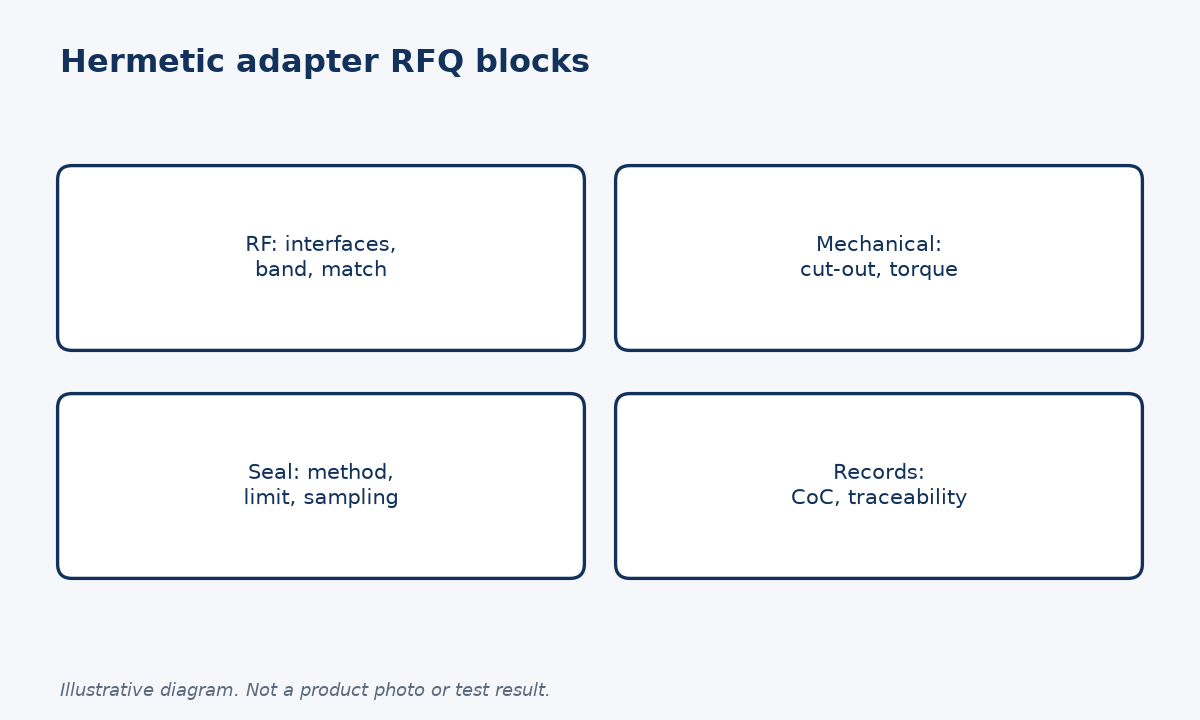
A compact RFQ template
I suggest four blocks. RF: both interfaces, frequency range, impedance and any return-loss limit. Mechanical: cut-out, panel thickness, mounting style, panel seal and both torques. Seal: method, condition, maximum leak rate with units, and whether testing follows thermal shock or vibration. Records: per-unit or per-lot leak data, certificate of conformance and traceability.
The leak-test block is where most RFQs are thin, and it is where disputes start, because "sealed" can be honestly claimed under very different tests. Asking for the method and record up front lets each supplier tell you exactly what they can document, and lets you compare like with like. It also tells you early whether a supplier's documentation will satisfy your own customer or quality team.
For general guidance on choosing adapter types, see our RF adapter guide. When your template is ready, send it to us for a quote, or open the RL-2.92-KYKG-HS product page to compare the listed data with your requirements first.
Conclusion
Hermetic becomes checkable when the order names the leak test, its limit and the panel seal. Write those down before sampling.
STAY IN FOR MORE NEWS
Subscribe to our free newsletter.
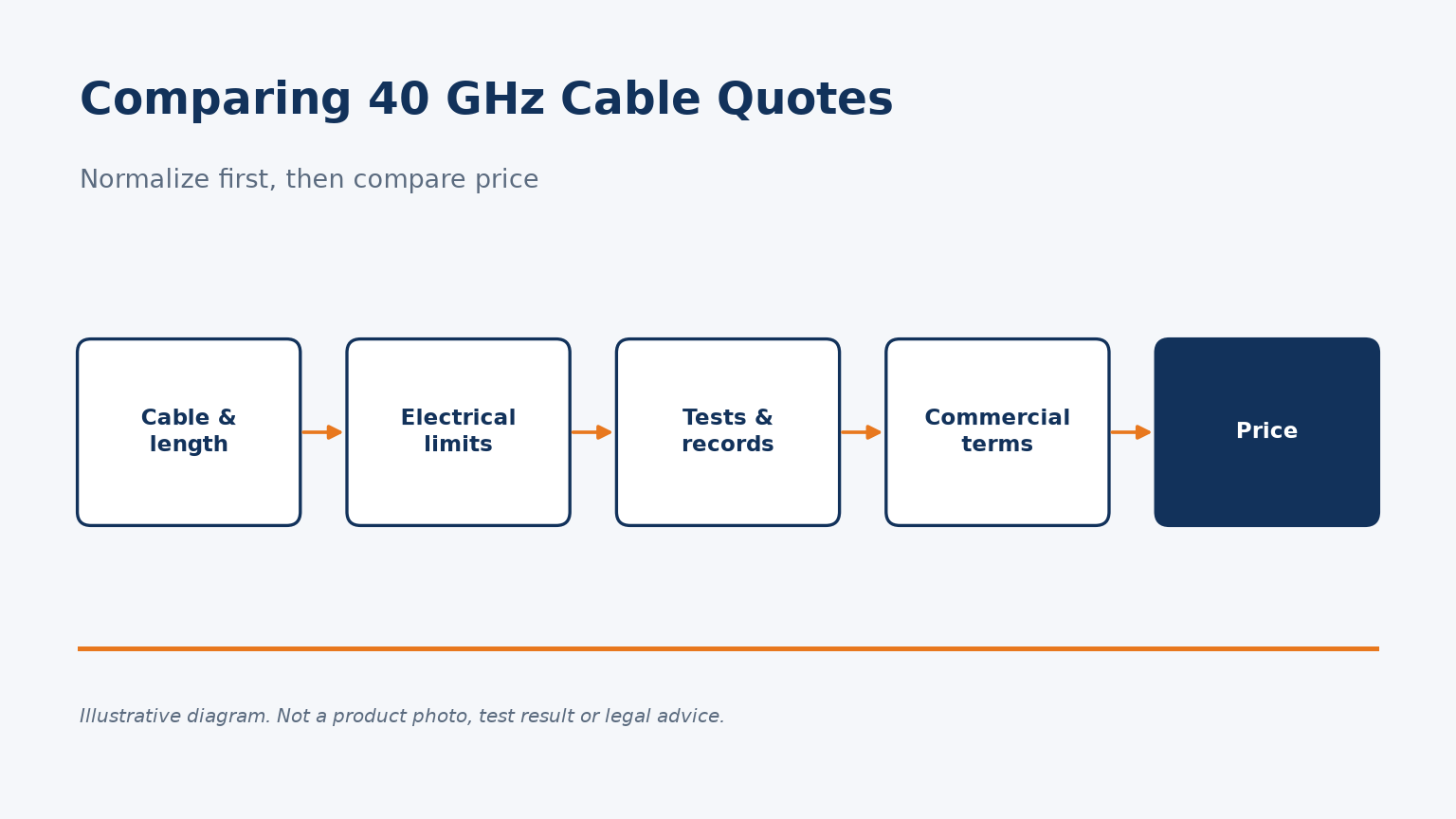
How to compare 2.92mm 40 GHz cable assembly quotes fairly: normalize cable, length, guaranteed limits, test records and commercial terms.
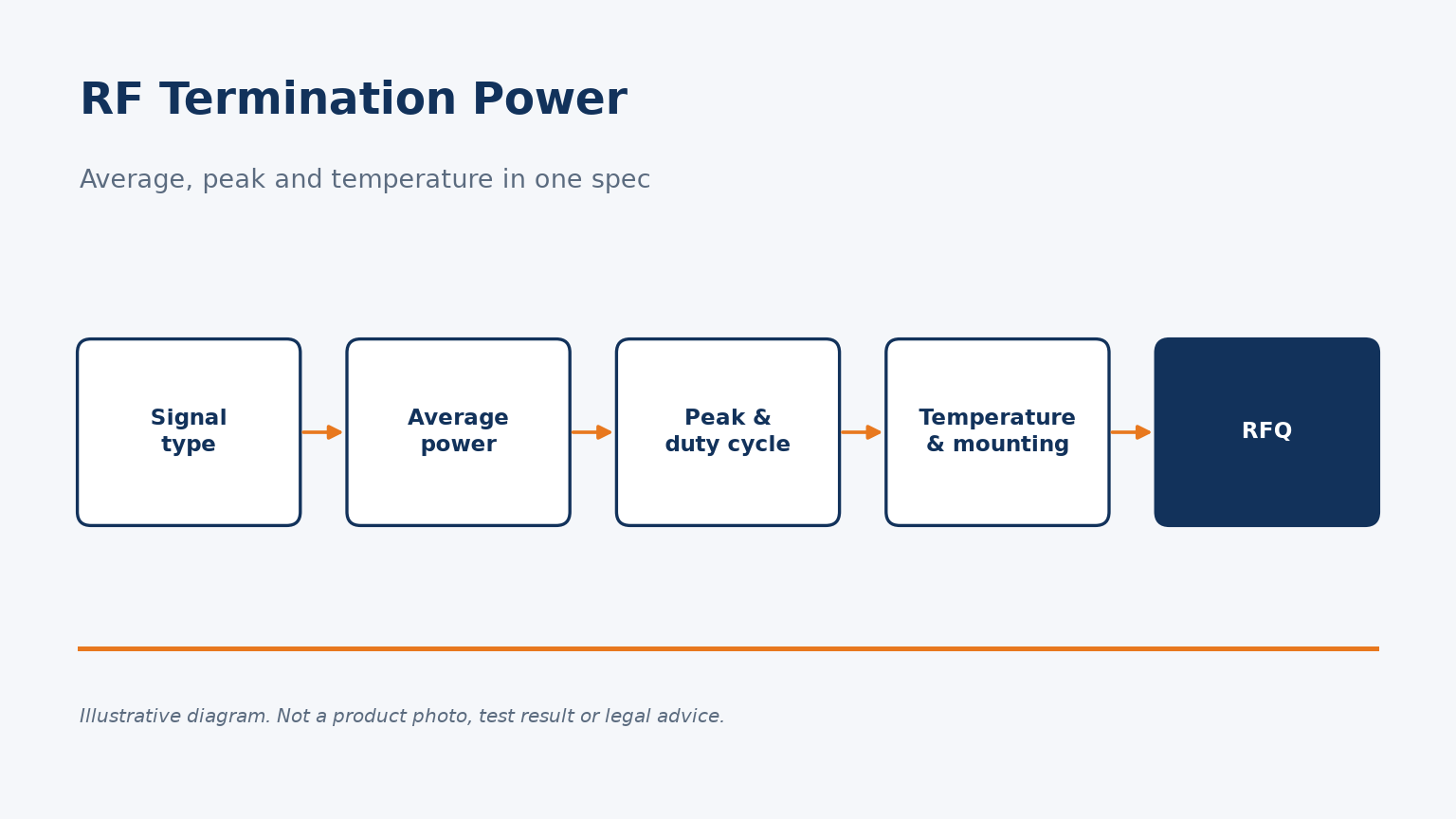
How to specify RF termination power for CW and pulsed signals: average vs peak, duty cycle, temperature derating, and an RFQ checklist.
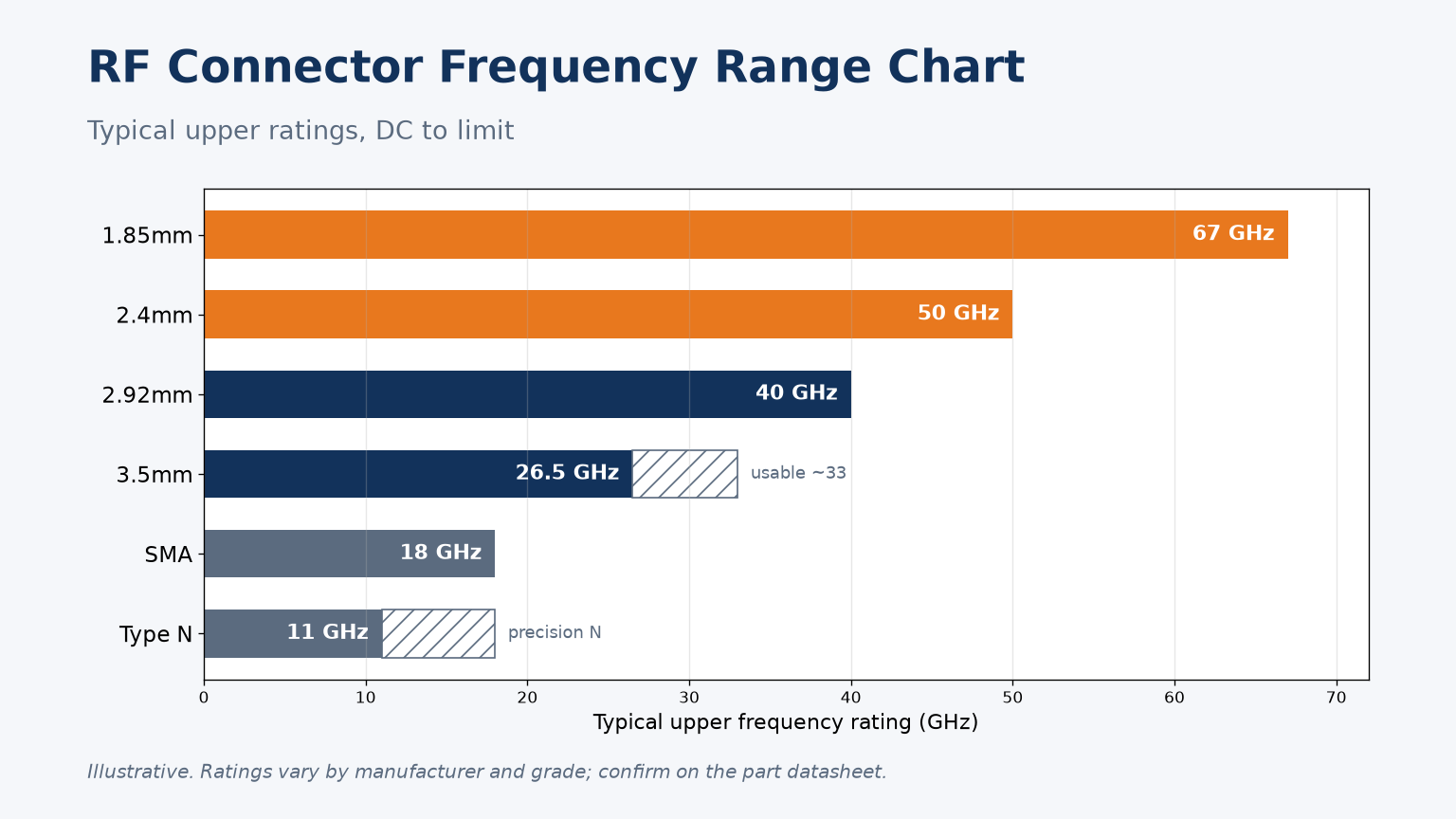
Frequency range chart for Type N, SMA, 3.5mm, 2.92mm, 2.4mm and 1.85mm connectors, why the limits exist, which ones mate, and how to specify a path.
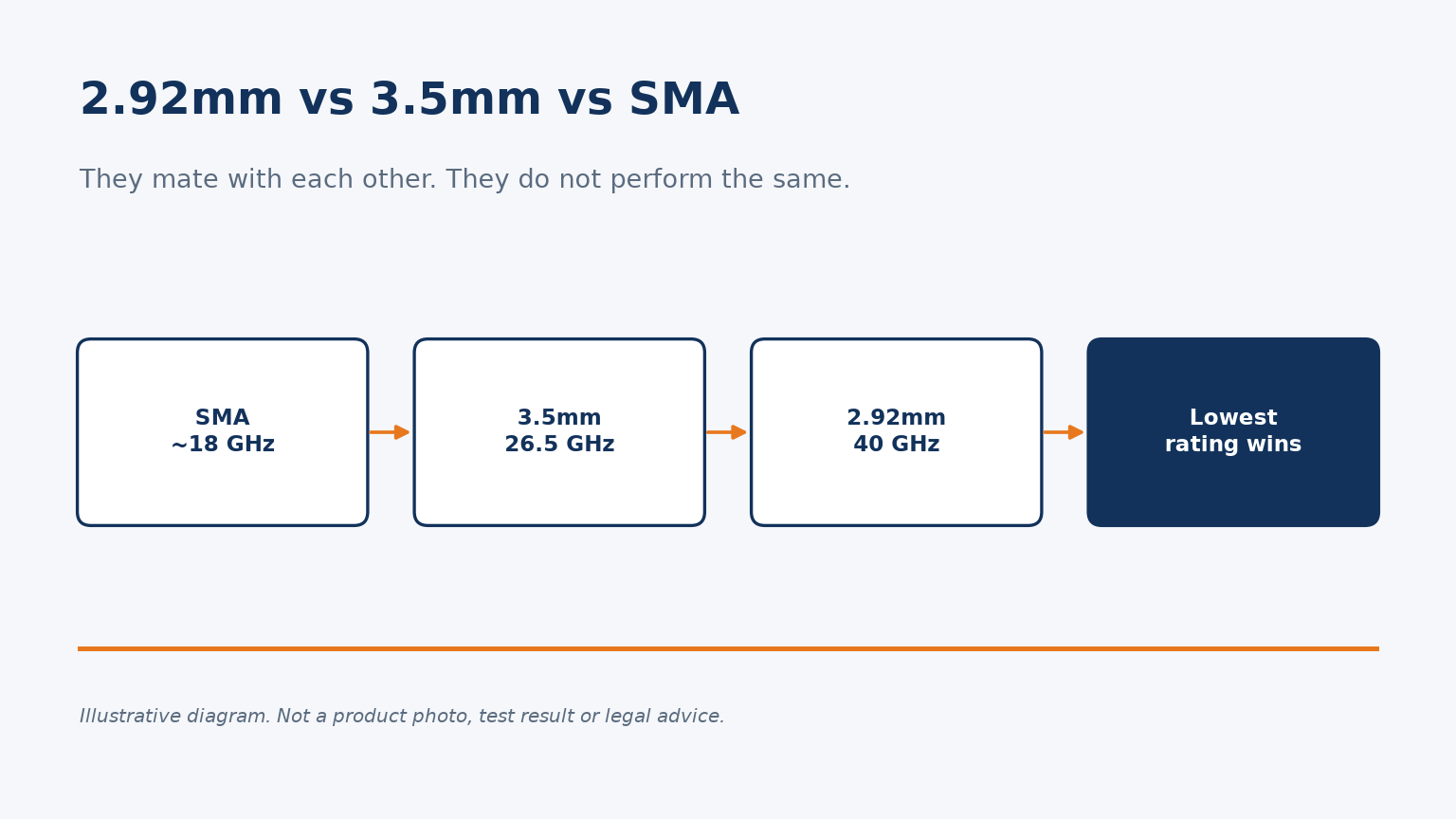
SMA, 3.5mm and 2.92mm connectors intermate, but not at the same frequency. Ratings, mixing rules, torque and when to choose each one.
