by Angela
Share
Introduction
RF cable assemblies are essential components in modern communication systems, allowing high-frequency signals to travel seamlessly between electronic devices. These assemblies typically consist of coaxial cables paired with RF connectors, ensuring reliable signal transmission with minimal loss.
In this guide, we’ll explore what an RF cable assembly is, its key components, different types of assemblies, common applications, and tips for choosing the right one for your system.
What Is an RF Cable Assembly?
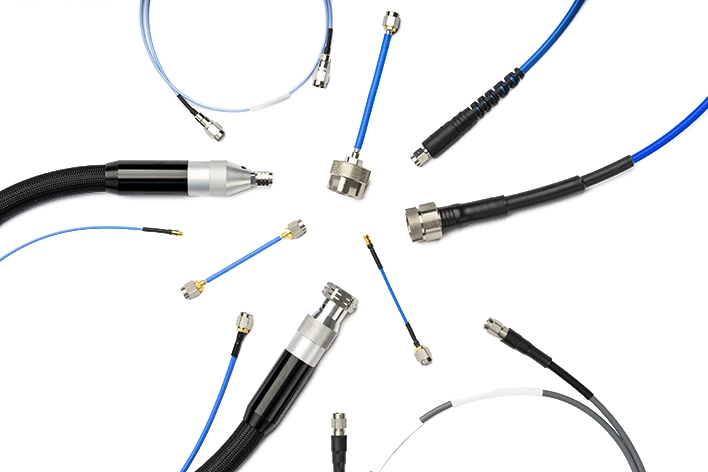
An RF cable assembly is a system that combines a coaxial cable with RF connectors at both ends. The assembly serves as a complete solution for transmitting RF signals between devices.
These assemblies are widely used in industries like telecommunications, aerospace, and test equipment to ensure efficient and stable signal transfer.
Components of RF Cable Assemblies
1. Coaxial Cable
The core of an RF cable assembly is the coaxial cable, which carries the RF signals. A typical coaxial cable consists of:
-
Center Conductor: The wire that carries the RF signal.
-
Dielectric Insulation: Provides electrical insulation between the center conductor and outer conductor.
-
Shielding Layer: Helps protect the signal from external interference and ensures minimal signal loss.
-
Outer Jacket: The protective outer layer that shields the internal components from physical damage and environmental elements.
2. RF Connectors
The connectors on both ends of the cable enable the assembly to be connected to different devices, systems, or instruments. Common RF connector types include:
-
SMA
-
N type
-
BNC
-
TNC
-
2.92mm
Each connector type has its specific application and performance characteristics, which should be matched to the system requirements.
Types of RF Cable Assemblies
RF cable assemblies come in various types, depending on the cable construction and the intended application.
1. Flexible Cable Assemblies
Flexible RF cable assemblies are used when the installation requires the ability to bend and maneuver cables easily. These are ideal for environments where space constraints or physical flexibility are needed.
2. Semi-Rigid Cable Assemblies
Semi-rigid cables are less flexible than their flexible counterparts but offer superior performance, especially in high-frequency applications. These assemblies are often used in test and measurement setups where signal integrity is critical.
3. Low Loss Cable Assemblies
Low-loss RF cable assemblies are designed to minimize signal loss, making them ideal for high-frequency applications and systems where signal strength and clarity are essential, such as satellite communication and microwave systems.
4. High-Frequency Microwave Cable Assemblies
These assemblies are specifically designed for microwave and millimeter-wave applications. They offer high performance at frequencies above 1 GHz and are critical for high-frequency telecommunications and radar systems.
Applications of RF Cable Assemblies
RF cable assemblies are used in a wide range of industries and applications, including:
1. Wireless Communication Systems
In wireless communication networks, RF cable assemblies provide the reliable signal transmission needed between antennas, base stations, and other communication devices.
2. Satellite Communication
For satellite communication systems, RF cable assemblies are essential for transmitting signals between ground stations and satellite antennas. Low-loss and high-frequency cable assemblies are typically used in this field to maintain signal integrity over long distances.
3. Radar Systems
RF cable assemblies are used in radar systems to ensure accurate signal transmission between radar equipment and sensors, helping improve the detection and tracking capabilities.
4. Aerospace Electronics
In aerospace systems, RF cable assemblies are used for communication between avionics systems, radars, and sensors. The reliability and low-loss characteristics of these assemblies are critical for mission success in challenging environments.
5. Test and Measurement Equipment
Test equipment such as vector network analyzers (VNAs) and signal generators requires high-quality RF cable assemblies to ensure precise measurements and minimize errors caused by signal degradation.
How to Choose the Right RF Cable Assembly
Selecting the correct RF cable assembly for your application is crucial for ensuring optimal performance and long-term reliability. Here are some key factors to consider:
1. Frequency Range
Make sure the cable assembly can handle the frequency range required for your application. For high-frequency systems, select low-loss cables that support the necessary bandwidth.
2. Cable Loss
Minimize signal loss by choosing a low-loss cable assembly, especially for microwave systems, where even small losses can affect performance.
3. Connector Type
Choose the appropriate RF connector type based on the devices or systems you are connecting. SMA, N-type, and BNC are some of the most common connectors used in RF cable assemblies.
4. Environmental Conditions
Consider the environmental conditions where the assembly will be used. For outdoor or harsh environments, ensure the cable has robust weatherproofing and can withstand temperature fluctuations.
5. Cable Flexibility
If the system requires movement or positioning flexibility, opt for a flexible cable assembly. For more rigid or space-constrained setups, a semi-rigid option might be more suitable.
| Learn more about our RF products here.
https://reach-line.com/product-category/precision-rf-microwave-mmwave-cable-assemblies/ |
Conclusion
RF cable assemblies play a vital role in ensuring signal integrity and system performance in RF and microwave communication systems. By carefully selecting the right type of assembly based on frequency range, connector type, cable loss, and other factors, you can enhance the efficiency and reliability of your system.
Whether used in wireless communication, satellite systems, radar systems, or test equipment, RF cable assemblies are critical components in ensuring seamless signal transmission. Selecting the right assembly is crucial for minimizing signal loss and maintaining high-performance system operation.
STAY IN FOR MORE NEWS
Subscribe to our free newsletter.

In the world of high-frequency communication systems, **RF cables** are often the unsung heroes that carry critical signals. Whether it's for wireless communication, satellite links, or laboratory setups, selecting the right RF cable can make or break the reliability and performance of your system.

First of all, in the OTA environment, it is necessary to establish communication between the corresponding measurement tool and the measuring device, and then perform the corresponding measurement through the air test.

As a flexible customer-focused company, we offer several options to meet your different needs.

Choosing the wrong RF adapter can ruin your signal integrity. With so many connector types, how do you pick the right one? Let's simplify the process.
