
by Angela
Share

Introduction
RF connectors are essential components used in communication systems to transmit high-frequency signals. Among the many types of RF connectors available, SMA connectors and N type connectors are two of the most widely used.
Both connectors are designed for coaxial cable connections, but they differ significantly in size, frequency performance, power handling capability, and application scenarios. Understanding these differences is important for engineers and system designers who need reliable signal transmission.
This article explains the key differences between SMA and N type connectors and helps you determine which connector is best suited for your RF system.
What Is an SMA Connector?
SMA (SubMiniature version A) connectors are compact RF connectors designed for high-frequency applications. They use a threaded coupling mechanism that ensures a secure and stable connection.
SMA connectors are commonly used in microwave systems and wireless communication equipment due to their excellent electrical performance.
Key Features
-
Compact size
-
Threaded coupling design
-
Frequency range up to 18 GHz or higher
-
50 ohm impedance
-
Excellent performance for high-frequency signals
Typical Applications
-
antennas
-
wireless communication devices
-
GPS modules
-
RF test equipment
What Is an N Type Connector?
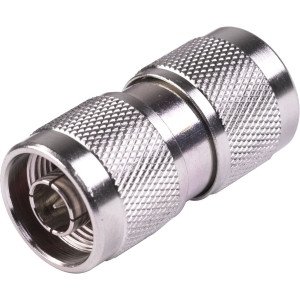
The N type connector is a medium-size RF connector designed for high power and outdoor applications. It also uses a threaded coupling mechanism, which provides a strong and reliable connection.
N type connectors are widely used in base stations, antenna systems, and microwave communication equipment.
Key Features
-
durable and robust design
-
weather-resistant structure
-
supports higher power handling
-
frequency range up to about 11 GHz
Typical Applications
-
wireless base stations
-
antenna systems
-
outdoor communication equipment
-
RF transmission systems
Key Differences Between SMA and N Type Connectors
| Feature | SMA Connector | N Type Connector |
|---|---|---|
| Size | Small | Larger |
| Frequency Range | Up to 18 GHz | Up to 11 GHz |
| Power Handling | Moderate | Higher |
| Installation | Compact devices | Outdoor systems |
Which Connector Should You Choose?
Choose SMA connectors when:
-
high frequency performance is required
-
equipment size is limited
-
precision RF applications are involved
Choose N type connectors when:
-
higher power transmission is required
-
outdoor installation is needed
-
durability is a priority
Conclusion
Both SMA and N type connectors play important roles in RF communication systems. SMA connectors are ideal for compact and high-frequency devices, while N type connectors are better suited for high-power and outdoor applications.
Understanding their differences helps engineers select the right connector for optimal signal performance.
Learn more about our SMA Connector and N Type Connector here.
SMA Connector https://reach-line.com/product-category/precision-coaxial-rf-microwave-mmwave-adapters/in-series/precision-sma-series/
N Type Connector https://reach-line.com/product-category/precision-coaxial-rf-microwave-mmwave-adapters/in-series/precision-n-series/
STAY IN FOR MORE NEWS
Subscribe to our free newsletter.
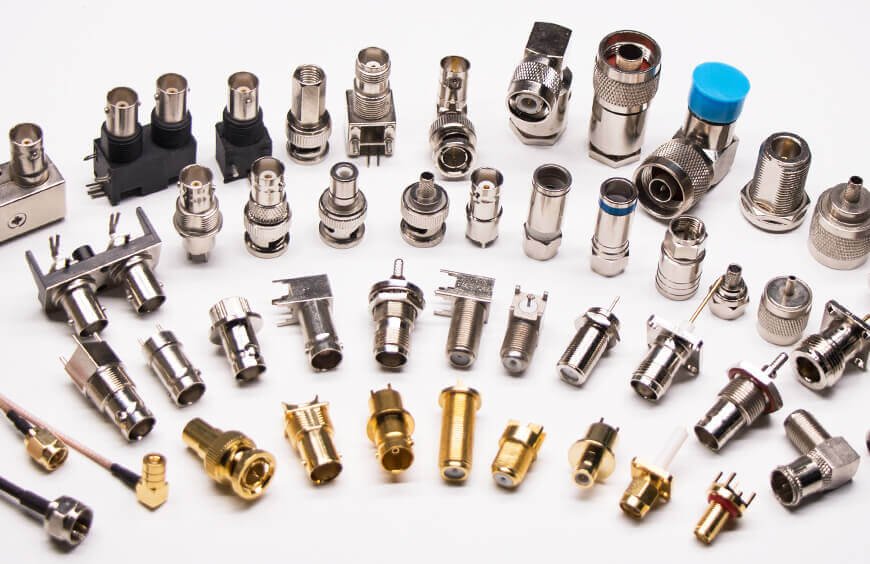
Introduction RF connectors are essential components in modern communication and electronic systems. They are designed to connect coaxial cables to various RF devices while maintaining signal integrity and minimizing signal loss. From wireless communication and satellite systems to test equipment and radar technology, RF connectors play a critical role in ensuring reliable transmission of high-frequency
Discover Reach-Line’s precision RF and microwave terminations covering DC to 110 GHz and power levels 1 W to 1000 W. Reliable, low VSWR solutions for 5G, satellite, and lab applications.

Reach-Line offers high-frequency cable assemblies, fixed attenuators, and precision terminations. Partner for engineering support, rapid prototyping, and global logistics.

In the realm of high-frequency applications, the SMA (SubMiniature version A) connector stands out as a compact yet powerful component. Developed in the 1960s, SMA connectors are designed for applications up to 18 GHz, with some precision versions extending to 26.5 GHz.
