by Angela
Share
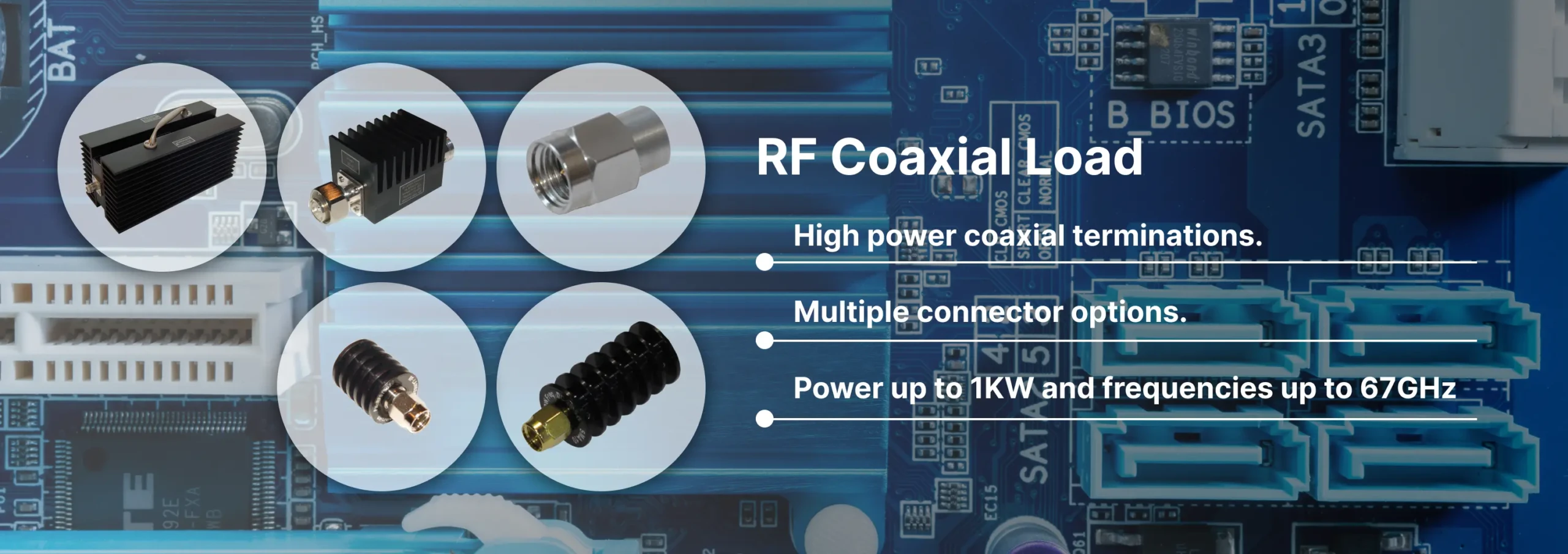
As RF systems evolve into millimeter-wave and sub-terahertz ranges, the need for precision terminations that can absorb power cleanly across wide frequency bands has never been greater. Reach-Line answers that need with a comprehensive line of terminations covering DC to 110 GHz and power levels from 1 W to 1000 W. For product details, visit Reach-Line terminations page: https://www.reach-line.com/terminations
Our termination series includes SMA, N-type, 2.92 mm, 2.4 mm and 1.85 mm connectors. With VSWR as low as 1.15, they provide the impedance match engineers depend on for accurate testing, load balancing and system protection. Whether tuning a 5G mmWave radio, validating satellite payloads or calibrating test benches, Reach-Line terminations ensure measurement confidence and operational stability. More info at https://www.reach-line.com/terminations
We also offer high-power terminations — up to 500 W and beyond — for demanding base-station, defense and laboratory applications. Every unit is built for durability, thermal stability and consistency over temperature and time.
As RF and microwave technologies accelerate toward higher frequencies and more complex waveforms, precision terminations are critical building blocks. Reach-Line supports projects with products engineered for performance, reliability and global standards compliance. Full catalog: https://www.reach-line.com/terminations
STAY IN FOR MORE NEWS
Subscribe to our free newsletter.

In the world of high-frequency communication systems, **RF cables** are often the unsung heroes that carry critical signals. Whether it's for wireless communication, satellite links, or laboratory setups, selecting the right RF cable can make or break the reliability and performance of your system.


An RF attenuator performing poorly can mess up your whole system. How do you know if that little component is actually doing its job right? Let's look at how you can check.

This guide will clarify key distinctions, explain common pitfalls, and help you make informed decisions when sourcing RF and microwave components.

If you are a newcomer in the RF industry, it must be difficult to distinguish VSWR and return loss. The following is a comparison table of VSWR and return loss.
