by Angela
Share
An HS code copied from a supplier invoice can be wrong for your import, and the duty difference lands on you.
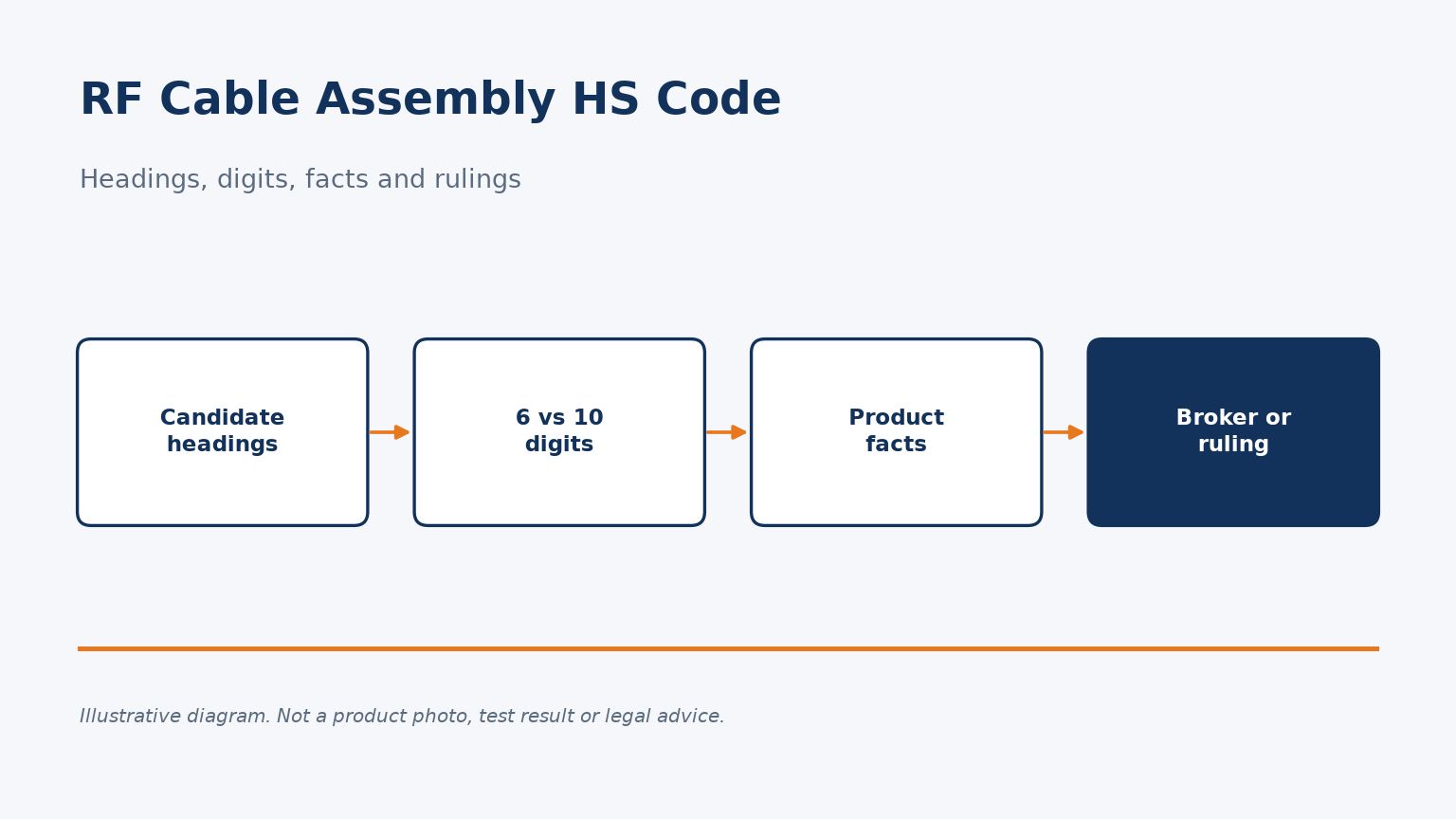
RF cable assemblies are commonly considered under HTS heading 8544, such as 8544.20 for coaxial cable or 8544.42 for conductors fitted with connectors, but the correct 10-digit code depends on the product and should be confirmed by a broker or CBP ruling.
Here is how the headings, digits, facts and ruling process fit together.
Which tariff headings are usually considered for RF cable assemblies?
Buyers and suppliers often look for one number to copy onto an invoice. Several headings in the tariff schedule can be relevant.
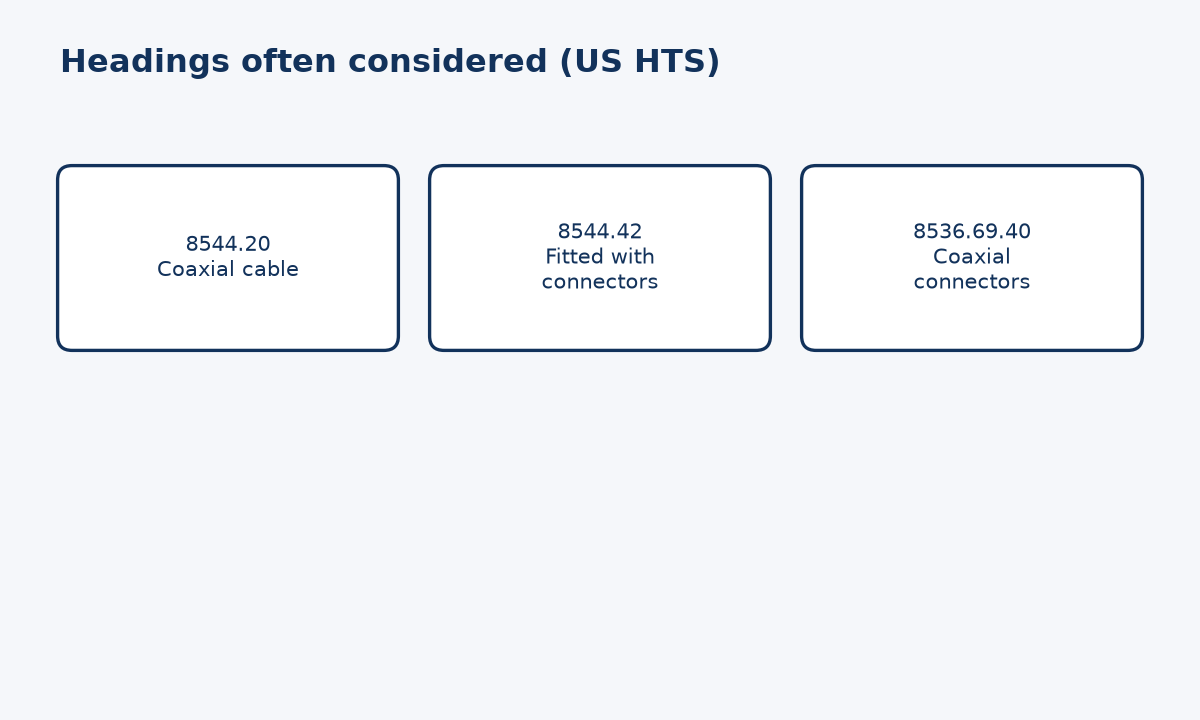
In the US Harmonized Tariff Schedule, coaxial cable falls under 8544.20, insulated conductors fitted with connectors appear under 8544.42, and coaxial connectors on their own under 8536.69.40. Which one fits a specific assembly is a classification decision, not a lookup.
What the schedule text says
The headings below are quoted from the USITC Harmonized Tariff Schedule as accessed on November 1, 2026. Rates are the column 1 general rates shown there; they can change at any time, and additional duties under chapter 99 or trade remedies may apply depending on country of origin and other factors.
| HTS number | Description in the schedule | General rate |
|---|---|---|
| 8544.20.00.00 | Coaxial cable and other coaxial electric conductors | 5.3% |
| 8544.42 | Other electric conductors, voltage not over 1,000 V, fitted with connectors | varies by subheading |
| 8536.69.40.10 | Coaxial connectors | Free |
Note the structure of 8544.42: it is split into subheadings for modular telephone connectors, conductors of a kind used for telecommunications, and other. A coaxial cable that has connectors fitted therefore sits where at least two descriptions could seem to apply, "coaxial cable" and "fitted with connectors". Resolving that kind of apparent overlap is exactly what the General Rules of Interpretation and official rulings are for. I deliberately do not state which result applies, because it depends on the product and on rules I would not want a buyer to take from a blog post. This article is general information, not classification or customs advice.
Why is a six-digit HS code not the full answer?
A supplier abroad and an importer in the US can both be "right" about a code and still show different numbers on their paperwork.
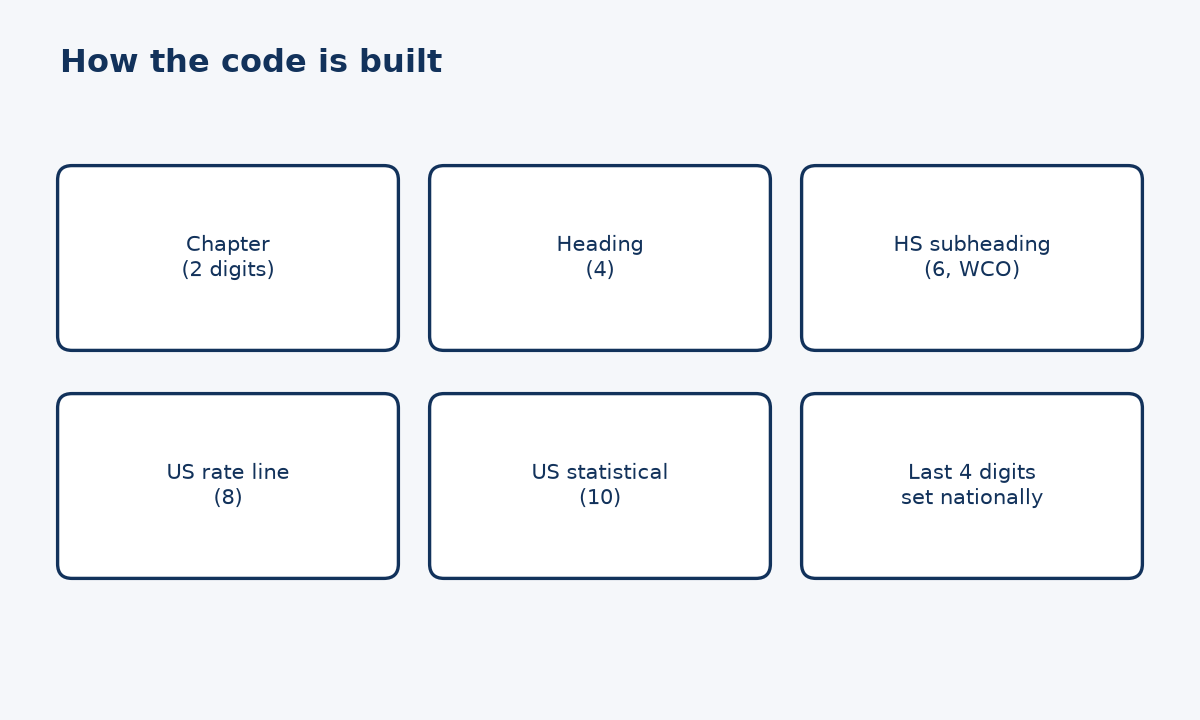
The Harmonized System, maintained by the World Customs Organization, is harmonized only to six digits. Each country adds its own digits, so a US import uses a 10-digit HTS number whose last four digits are set nationally and can differ from the exporter's code.
International base, national detail
According to the World Customs Organization, the Harmonized System is a multipurpose international product nomenclature developed by the WCO, comprising more than 5,000 commodity groups, each identified by a six-digit code, and governed by the International Convention on the Harmonized System. The six-digit level is the shared language that customs administrations use.
Beyond six digits, each country or customs union extends the code. The US HTS uses eight digits for the tariff rate line and ten digits for statistical reporting; the 8536.69.40.10 entry above shows a statistical suffix under an eight-digit rate line. An exporter's national code from another country may share the first six digits and then diverge.
In practical terms, this means a code on a supplier's commercial invoice is useful information but not a substitute for the importer's own classification under the importing country's schedule. The importer of record carries responsibility for the entry in the US, so in my view the safest habit is to treat a supplier's code as a starting point to verify. The WCO also revises the HS periodically, which is another reason to check codes against the current schedule rather than an old invoice.
Which product facts can affect the classification?
Classifiers decide based on what the goods actually are as imported. Vague descriptions make that harder and slower.
Facts that are commonly relevant include whether the cable is coaxial, whether connectors are fitted, the voltage rating, the intended use, and how goods are packaged or shipped. Prepare these facts clearly; do not choose a code from them on your own.
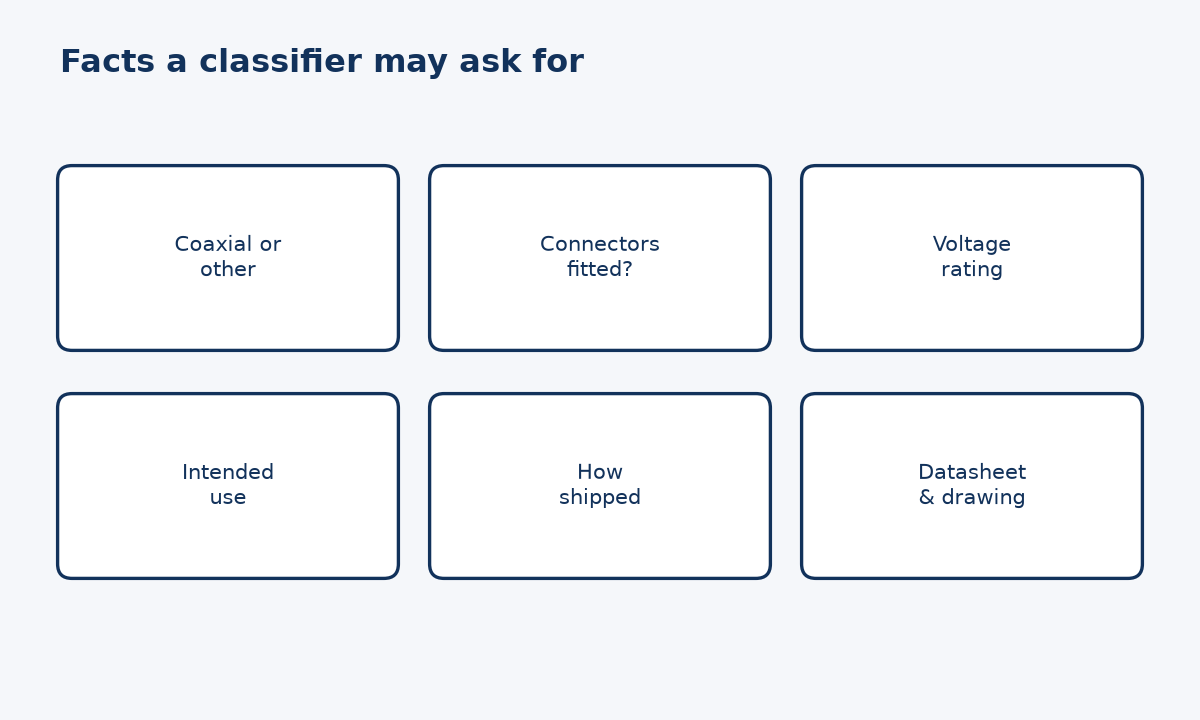
Describe the goods, not the hoped-for code
Reading the HTS text itself shows which facts the descriptions turn on. The 8544 headings refer to coaxial construction, voltage ratings such as "not exceeding 1,000 V", and whether conductors are "fitted with connectors". The 8544.42 subheadings refer to a kind "used for telecommunications". A classifier will need to know how your product relates to each of these words, and missing information is a common reason for delays, follow-up questions or a classification you did not expect. It is better to answer these questions in writing up front than to reconstruct them after goods are held at the border.
| Fact to document | Why a classifier may ask |
|---|---|
| Coaxial or other construction | Appears in heading text |
| Connectors fitted or not | Appears in subheading text |
| Voltage rating | Appears in subheading text |
| Intended use | Some subheadings refer to use |
| How shipped (sets, kits, loose) | Affects what is being classified |
A useful package for your broker or a ruling request is a datasheet, a drawing or photo, the cable and connector part numbers, and a plain description of the application. If your parts are specified by military numbers, such as a MIL-DTL-17 cable, include the number, because it defines the construction precisely. This article is general information, not classification or customs advice.
How can you get a classification you can rely on?
If a classification affects your landed cost or compliance, an informal answer from a supplier or a forum is a weak foundation.
Work with a licensed customs broker, search existing CBP rulings for similar products, and for certainty on a future import, request a binding ruling from US Customs and Border Protection under 19 CFR Part 177. Oral advice is not binding.
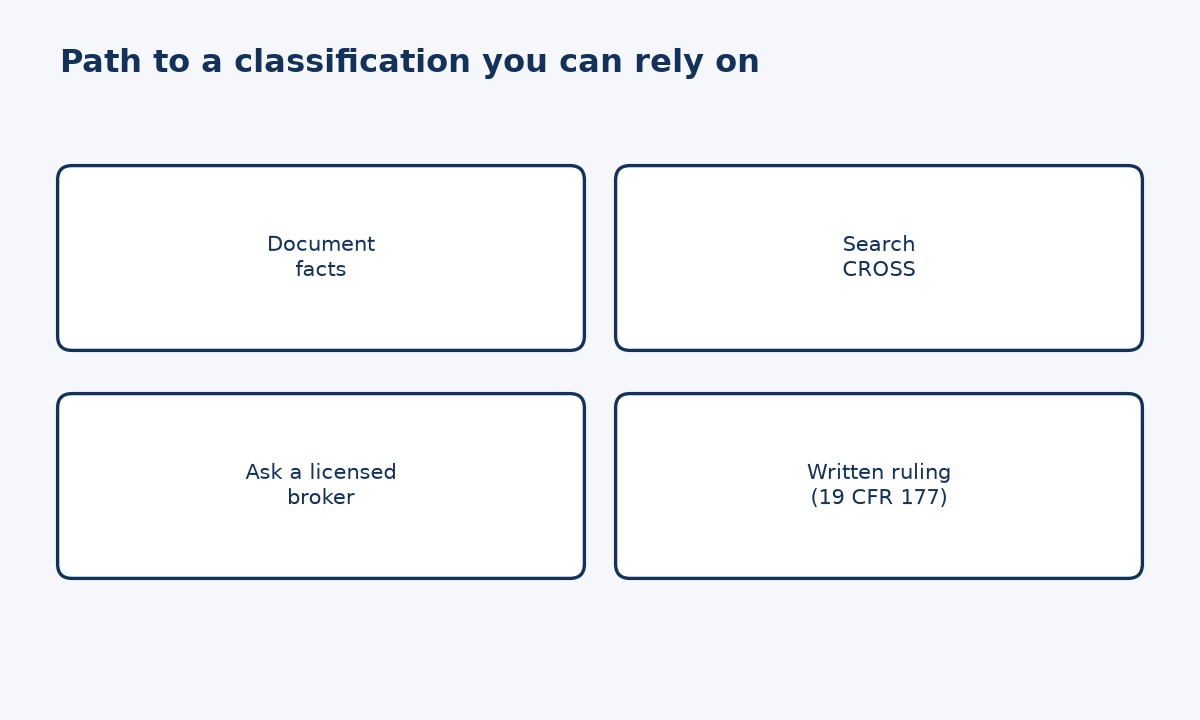
Rulings, research and professional help
Under 19 CFR 177.1, CBP issues rulings in response to written requests concerning prospective transactions, meaning imports that have not yet happened. A ruling is a written statement interpreting and applying the law to a specific set of facts, and the regulation states that oral advice is not binding. Rulings are not issued on transactions already completed, so the time to ask is before the first shipment.
Before requesting a ruling, search the CBP Customs Rulings Online Search System for products like yours. Existing rulings show how CBP reasoned about similar goods, though each ruling applies to the facts in it, and a near match is not a guarantee for your product.
My recommendation for buyers is simple: give your customs broker the documented product facts, ask for the reasoning behind the code they choose, and consider a binding ruling when volumes or duty differences are significant. As a supplier, we can provide product documentation through our contact page, but we cannot classify goods on your behalf. This article is general information, not classification or customs advice.
Conclusion
Treat any HS code, including a supplier's, as a hypothesis: document the facts, check the current schedule, and confirm with a broker or CBP ruling.
STAY IN FOR MORE NEWS
Subscribe to our free newsletter.
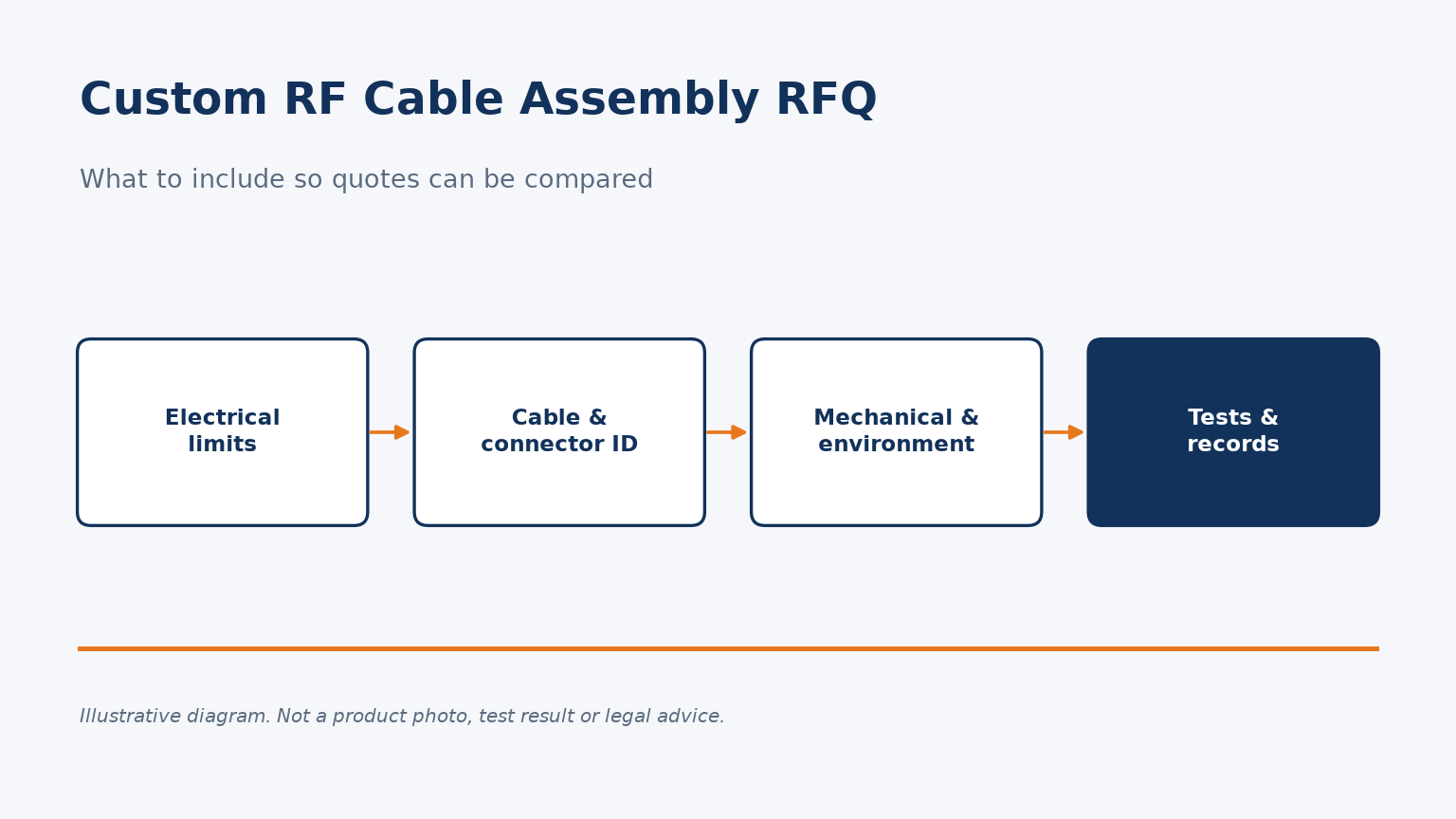
A checklist for custom RF cable assembly quote requests: electrical limits, part identity, mechanical and environmental details, and test records.
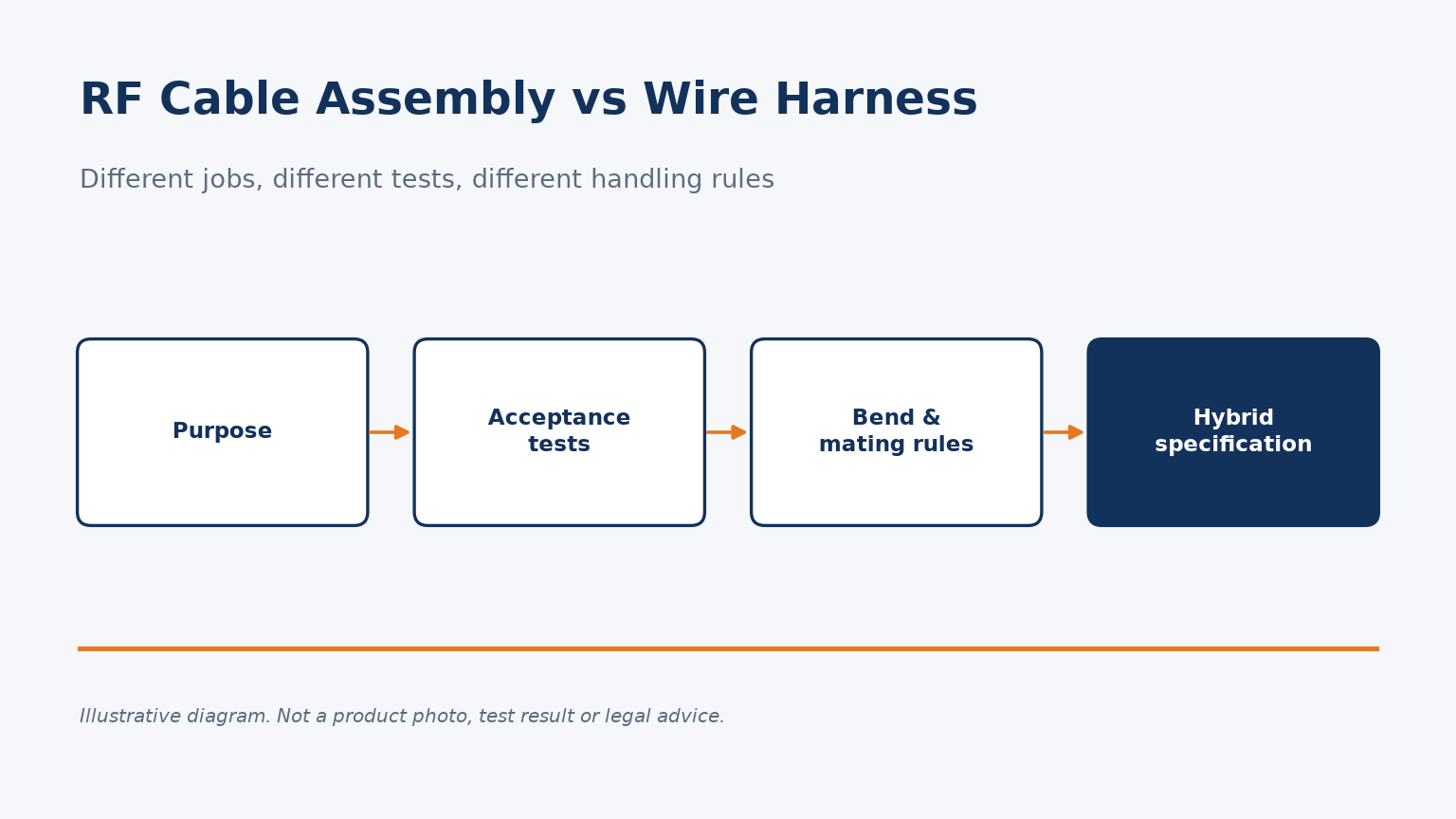
RF cable assemblies and wire harnesses differ in purpose, acceptance tests, bend limits and interfaces. Here is how to specify each, and hybrids.
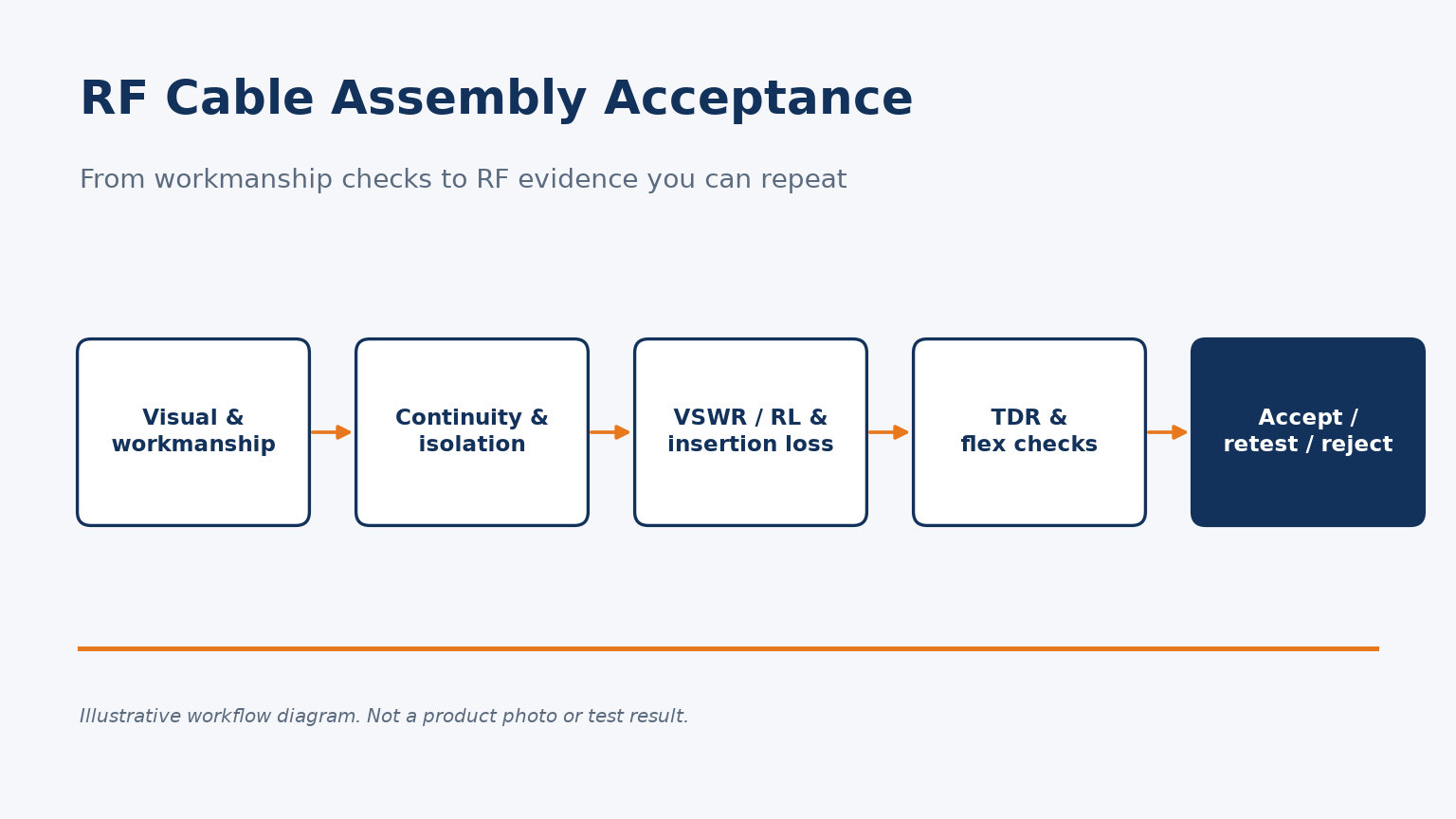
Which tests, conditions and retest rules turn an RF cable assembly quality check into acceptance evidence you can repeat.

In the world of high-frequency communication systems, **RF cables** are often the unsung heroes that carry critical signals. Whether it's for wireless communication, satellite links, or laboratory setups, selecting the right RF cable can make or break the reliability and performance of your system.
