by Angela
Share
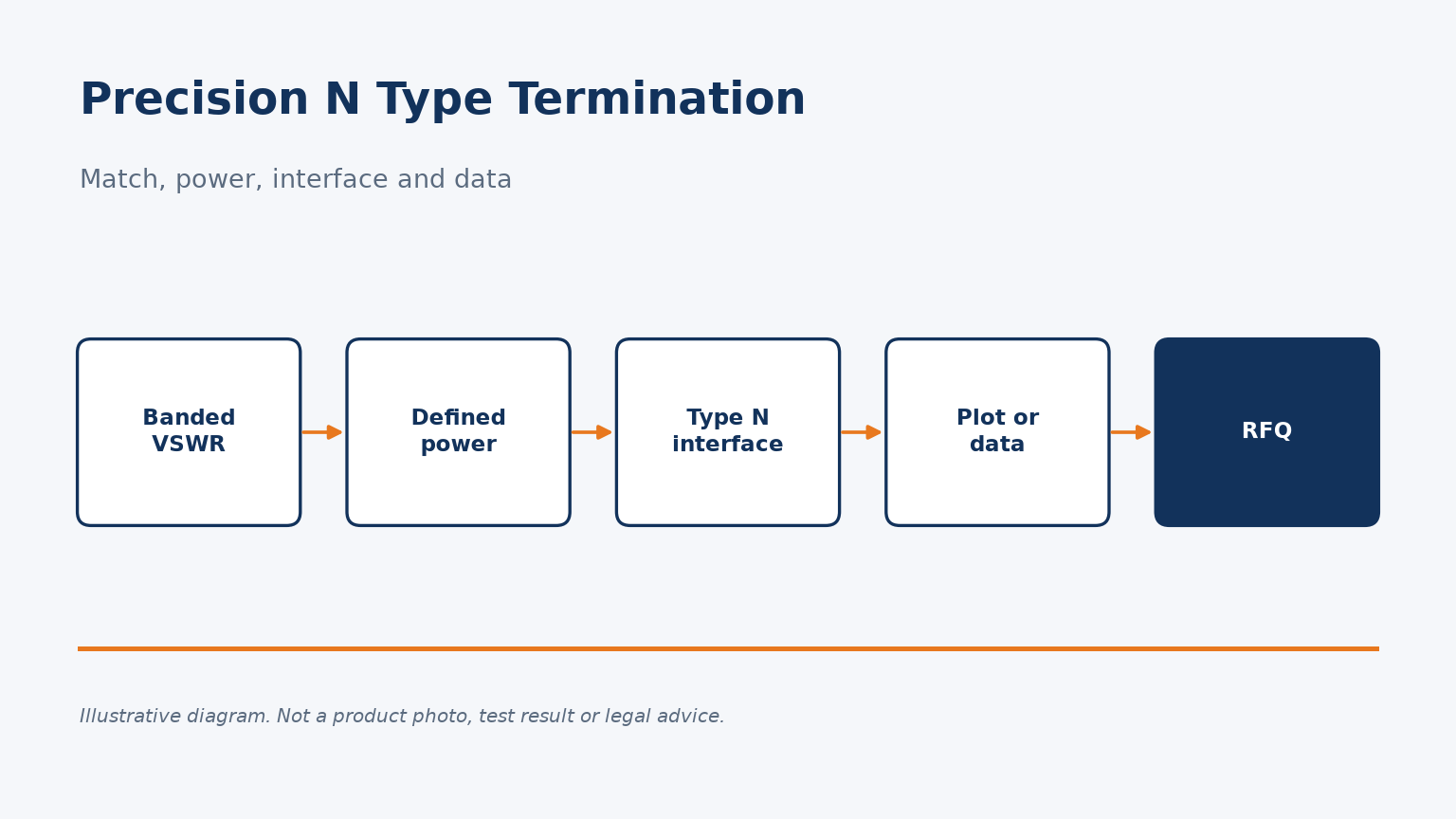
Calling a load “precision” does not tell a supplier the match, the band or the watt rating you actually need.
A precision N type termination is specified by a VSWR or return-loss limit across a stated band, a defined power rating, a controlled Type N interface, and the data that ships with the part. Use those items in the RFQ; do not rely on the word “precision” alone.
Below I compare catalog listings and a checklist; or send the band, match and power and we will recommend a load.
What does “precision” mean on an N type termination?
The word is used as if it were a grade, but catalogs rarely define it in one place.
A precision N type termination is defined by the evidence you can inspect: a VSWR or return-loss limit across a stated band, a defined power rating, a controlled Type N interface, and the data that comes with the part. The label alone does not make a load a calibration-grade standard.
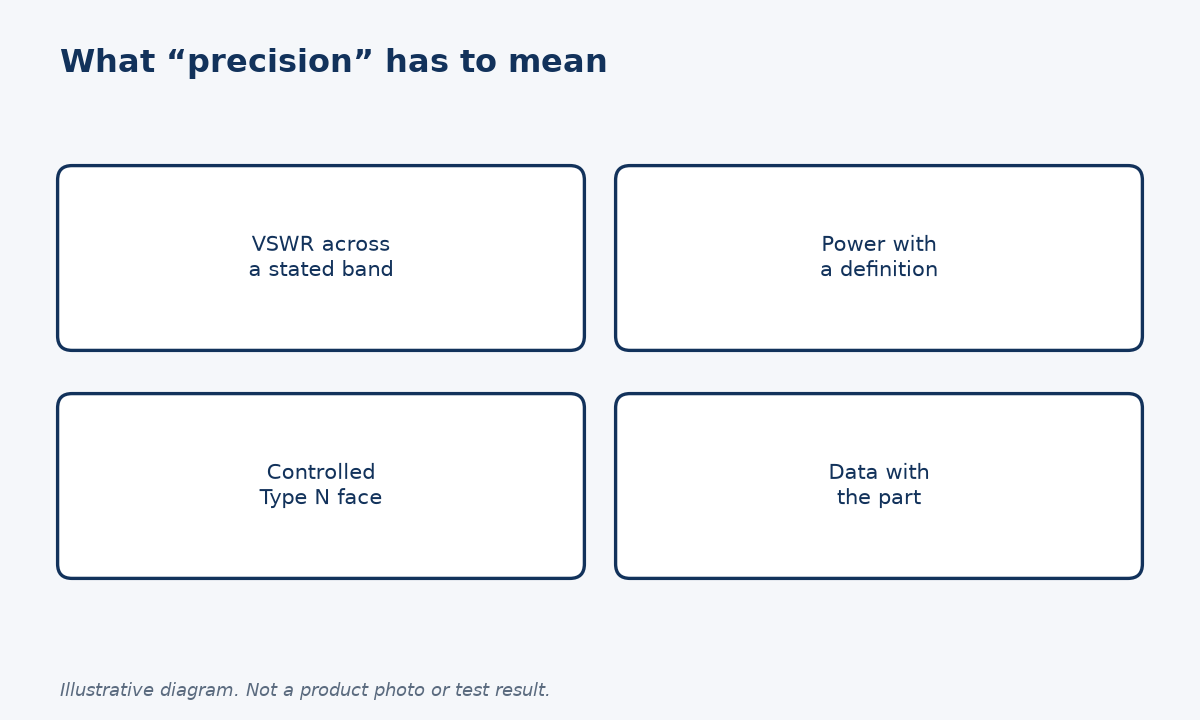
Precision is a set of numbers, not a badge
Buyers say “precision N termination” when they want a load they can trust on a test port or a coupler: a tight match, a known band, and data they can file. That is a reasonable want. It is not the same thing as buying any N-male load that happens to look well made.
MIL-STD-348 defines the Type N interface. A precision request should still name that interface and the gender, then add the electrical limits. Our overview of high-frequency terminations introduces the product family. This page is about how to tell a precision N type termination from a general-purpose catalog load, and what to write in the RFQ so the two are not quoted as if they were the same part.
A useful contrast sits on our own site. The N male termination, DC to 18 G (P/N RL-N-JR) lists 50 Ω, DC to 18 GHz, a VSWR attribute of 1.20, a −55 °C to +85 °C range, at least 500 matings, and stainless-steel construction. It does not, on that page, publish a watt rating. Other catalog N loads do publish power in the title, for example an N male termination rated to 5 W up to 18 G and an N male 10 W, 18 G part, and there are much higher-power N loads as well. Power-rated is not automatically “precision,” and a 1.20 VSWR attribute is not automatically a calibration standard. The difference is whether the banded match, the power definition and the data are all stated and, if you need it, measured.
If you already know the band and the match you need, send them with the gender and the power and we will recommend a termination from the terminations range rather than arguing about the word “precision.”
Which electrical specs should you require on a precision N type termination?
Three numbers do most of the work: band, match and power, each with a definition.
Require 50 Ω, the frequency band, a VSWR or return-loss limit across that band, and a power rating that says whether it is average or peak and at what temperature. If the page does not publish one of those items, ask for it before you treat the part as specified.
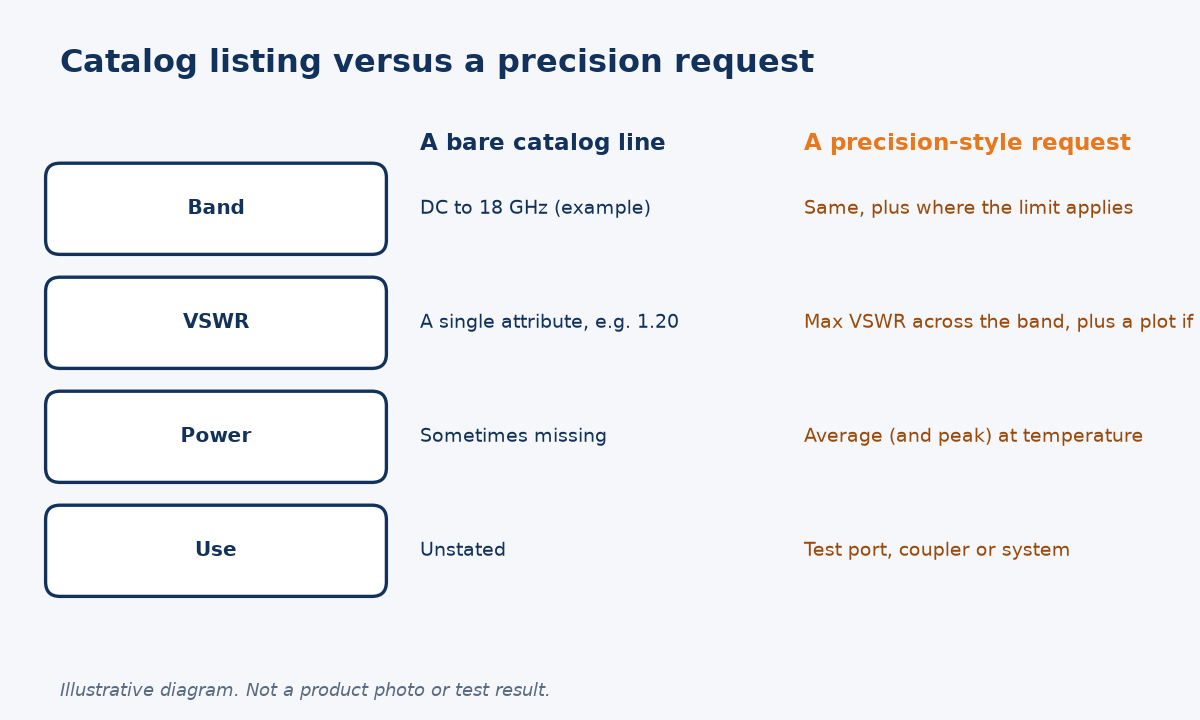
Match and power are easy to leave half-defined
VSWR and return loss describe the same reflection in different units; our VSWR vs return loss article is the conversion background. For a precision N type termination, the important part is the limit versus frequency. A single attribute such as 1.20 may be a maximum, a typical value, or a figure that is only met over part of the band. Write “maximum VSWR 1.xx from DC to 18 GHz” (or your real band) and, if the port is critical, ask for a plot.
Power is the other half. NBS Circular 536 treats RF power as average unless a peak-reading instrument is specified. A termination’s watt rating is a thermal limit. We covered how to write average, peak and duty cycle in specifying RF termination power. A “precision” 18 GHz load used on a test port is often a low-watt part; a 50 W or 300 W N load is a different thermal design and often a different match. Do not assume the high-power family has the same VSWR as a small precision load, and do not assume the small load can absorb an amplifier’s full output.
On RL-N-JR, because the product page does not list a watt figure, I would not invent one. I would ask for the power rating and for the match across the band before using it as a reference load. On the 5 W and 10 W 18 GHz N male listings, the power is at least named in the title; you should still confirm whether that is average power and at what temperature, and ask for the banded VSWR.
Impedance (50 Ω on these listings), temperature range and materials belong in the RFQ as well, but they do not replace the match and the power definition.
How do connector wear and repeatability affect a precision N type termination?
A tight VSWR on day one is only useful if the interface still behaves after many mates.
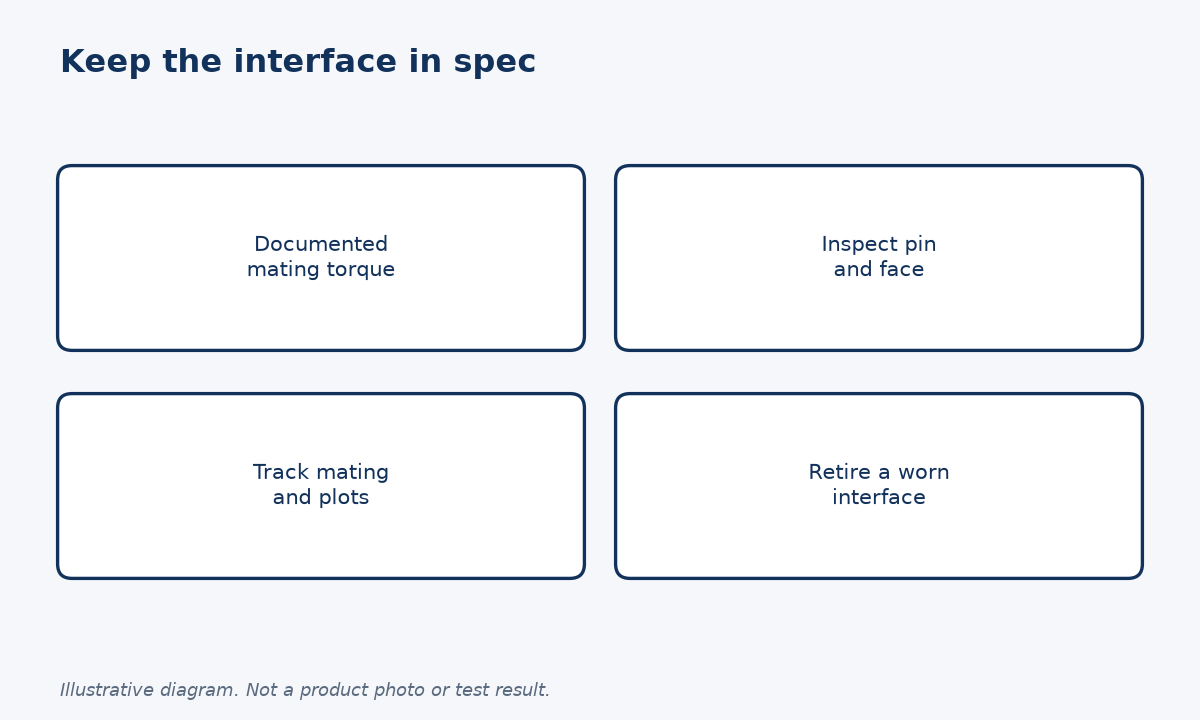
Treat the Type N face as a wear part. Ask for the mating-cycle rating, inspect the interface, and use the correct torque. Repeat connections are a known source of scatter in precision measurements, so a frequently used port load may need gauge checks or a replacement plan.
The interface is part of the precision
NIST work with Type N shows that disconnect and reconnect contribute to the scatter in repeated S-parameter measurements. Connector repeatability research makes the same broader point: the mated pair is often the dominant random error in coaxial measurements. A precision N type termination lives on that pair. If the pin or the reference plane is damaged, the excellent VSWR on the certificate no longer describes the part in your system.
Catalog durability on the N male listings above is at least 500 matings. That is a wear figure, not a promise that the 500th mate will still meet a tight VSWR. For a load that stays on a VNA port or a coupler, I would add an inspection interval, a torque from the engineering documentation (NASA-STD-8739.4A), and a rule for retiring a visibly worn interface. Turning only the coupling nut, and not the body, is part of that discipline.
If several people share the load, label the part and keep the plot with it. A “precision” termination without its data is just a well-machined 50 Ω load.
What should a precision N type termination RFQ include?
The RFQ is where you replace the word “precision” with numbers another engineer can check.
State Type N and the gender, 50 Ω, the band, a VSWR limit across that band, average power at temperature, any data you need, quantity, and how the part will be used. Then a catalog load and a tighter test-port load can be quoted honestly.
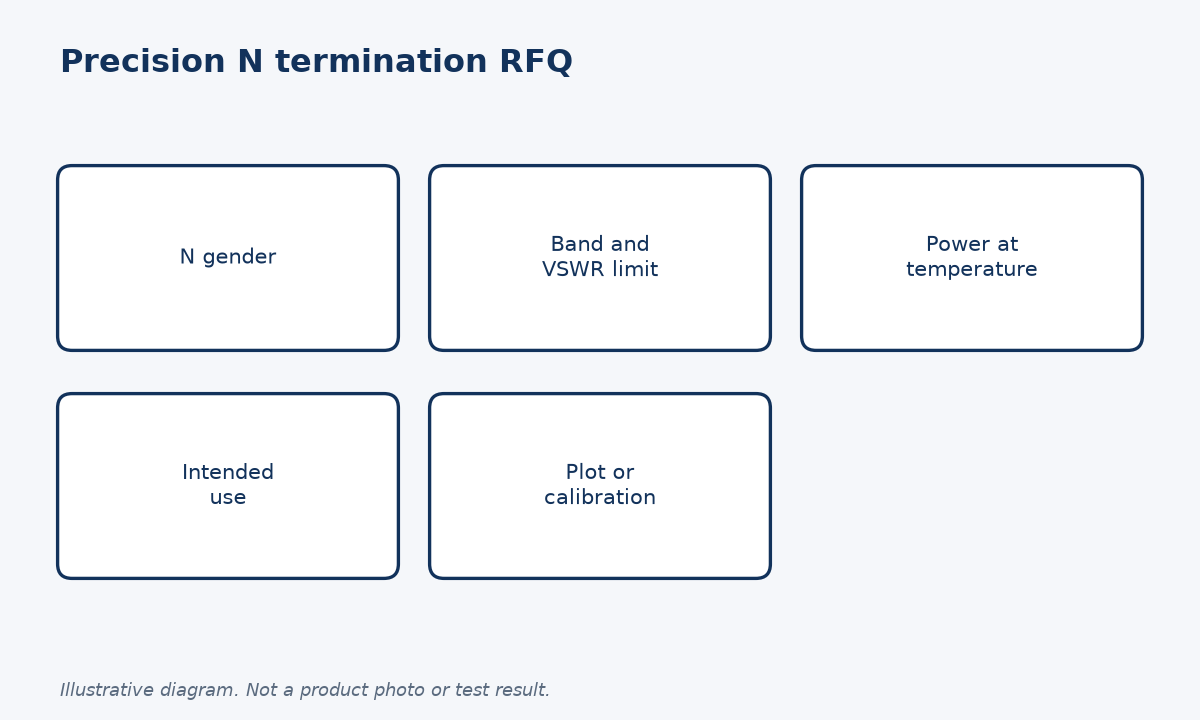
A checklist you can paste into the RFQ
| RFQ line | What to state |
|---|---|
| Interface | Type N, gender, any gauging requirement |
| Electrical | 50 Ω, band, VSWR or return loss across the band |
| Power | Average watts at temperature; peak if pulsed |
| Use | Test-port reference, coupler load, or system termination |
| Records | Typical plot, per-unit data, or calibration needs |
If you are replacing RL-N-JR with a tighter or power-rated part, point at the catalog page and list what must be added (watt rating, a harder VSWR, a plot). If you already know you need a 5 W, 18 GHz N male load, start from that listing and add the match and the data.
When the list is ready, request a quote with frequency range, connector gender, power, quantity and the application. Please confirm the band and the match with us before you order; we will not treat the word “precision” as a substitute for those numbers.
It also helps to say whether the termination will stay on a port for months or will be treated as a shared tool. A shared precision N type termination needs a home, a plot, and a visual-inspection rule more than a one-time catalog purchase does. If you are outfitting several couplers, consider ordering labelled units with individual data rather than a bag of unmarked loads.
High-power N terminations on our site — for example 50 W, 100 W or 300 W families up to 18 GHz — are the right conversation when the load must absorb real power. They are not automatically the right conversation when you need a tight, banded match on a test port. Put both the power and the VSWR in the same request so we do not quote the wrong family.
If a previous shipment used RL-N-JR and you now need a documented watt rating or a tighter match, say that you are tightening the specification, not only “upgrading to precision.” That language is easier for both sides to check.
Frequently asked questions
What VSWR should I specify for a precision N type termination? Write a maximum across your band, not only a single catalog attribute. A listed 1.20 figure may be typical or may not apply at the top of the band. Ask for a plot if the port is critical.
Why doesn’t every N termination listing show a watt rating? Some catalog pages, including RL-N-JR on this site, do not publish a watt figure. Ask for the rating and its definition (average or peak, at what temperature) before you use the part as a specified load.
Is a high-power N termination a precision termination? Not automatically. High-power parts are thermal designs and may have a different match than a small test-port load. Specify both the power and the VSWR you need.
Do I need a calibration certificate for an N termination? Only if your process requires it. Many buyers need a factory plot and a clear VSWR specification. If you need a lab calibration, say so in the RFQ.
Conclusion
Write the banded match, the power definition and the data you need; then “precision” is something a supplier can quote.
STAY IN FOR MORE NEWS
Subscribe to our free newsletter.
Vibration resistance is not a part number. Specify coupling style, torque, strain relief and the test method in your RF connector or cable RFQ.
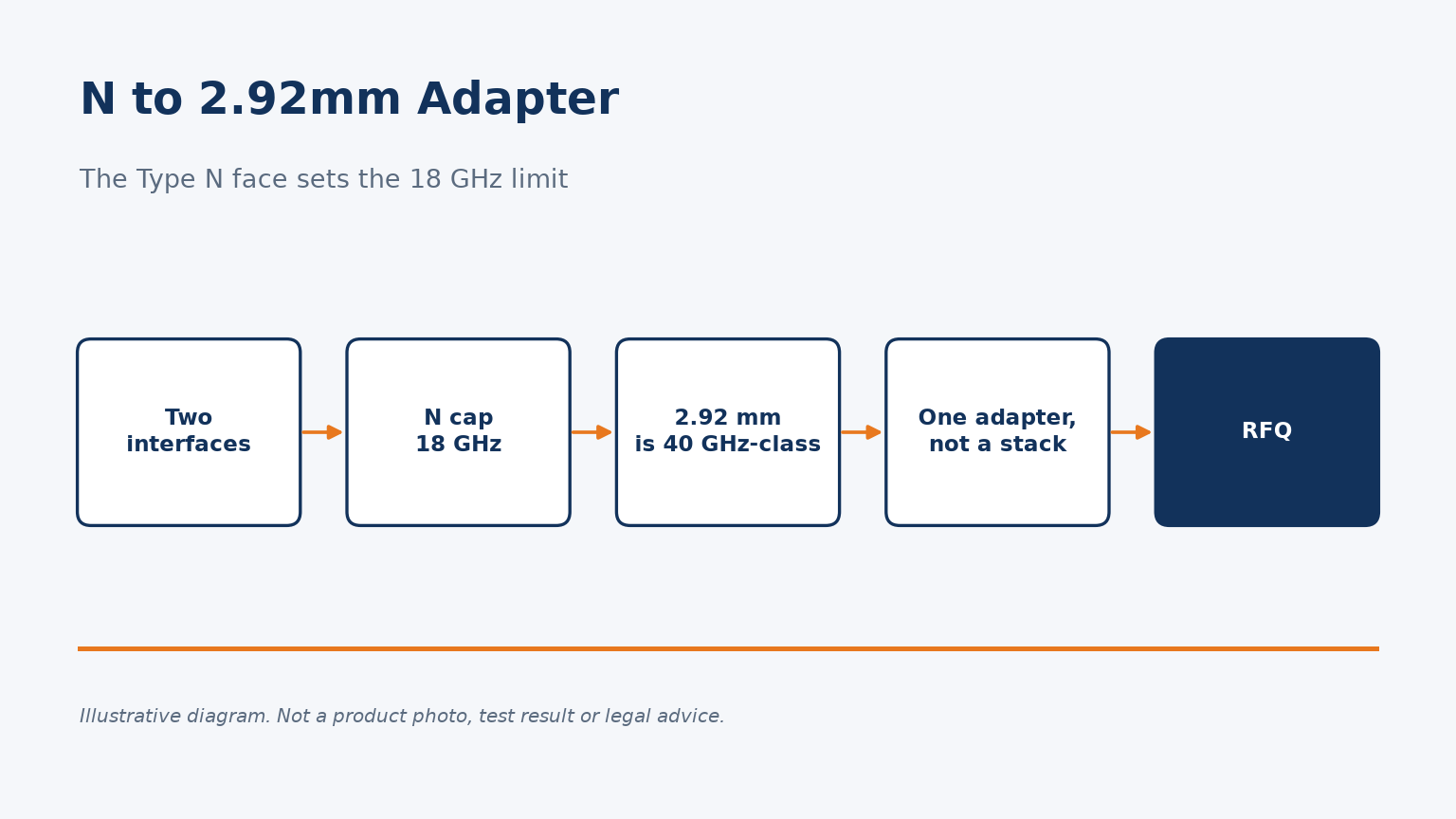
An N to 2.92mm adapter is limited by the Type N side, usually to 18 GHz. Do not expect a 40 GHz path. See genders, VSWR and a short RFQ list.
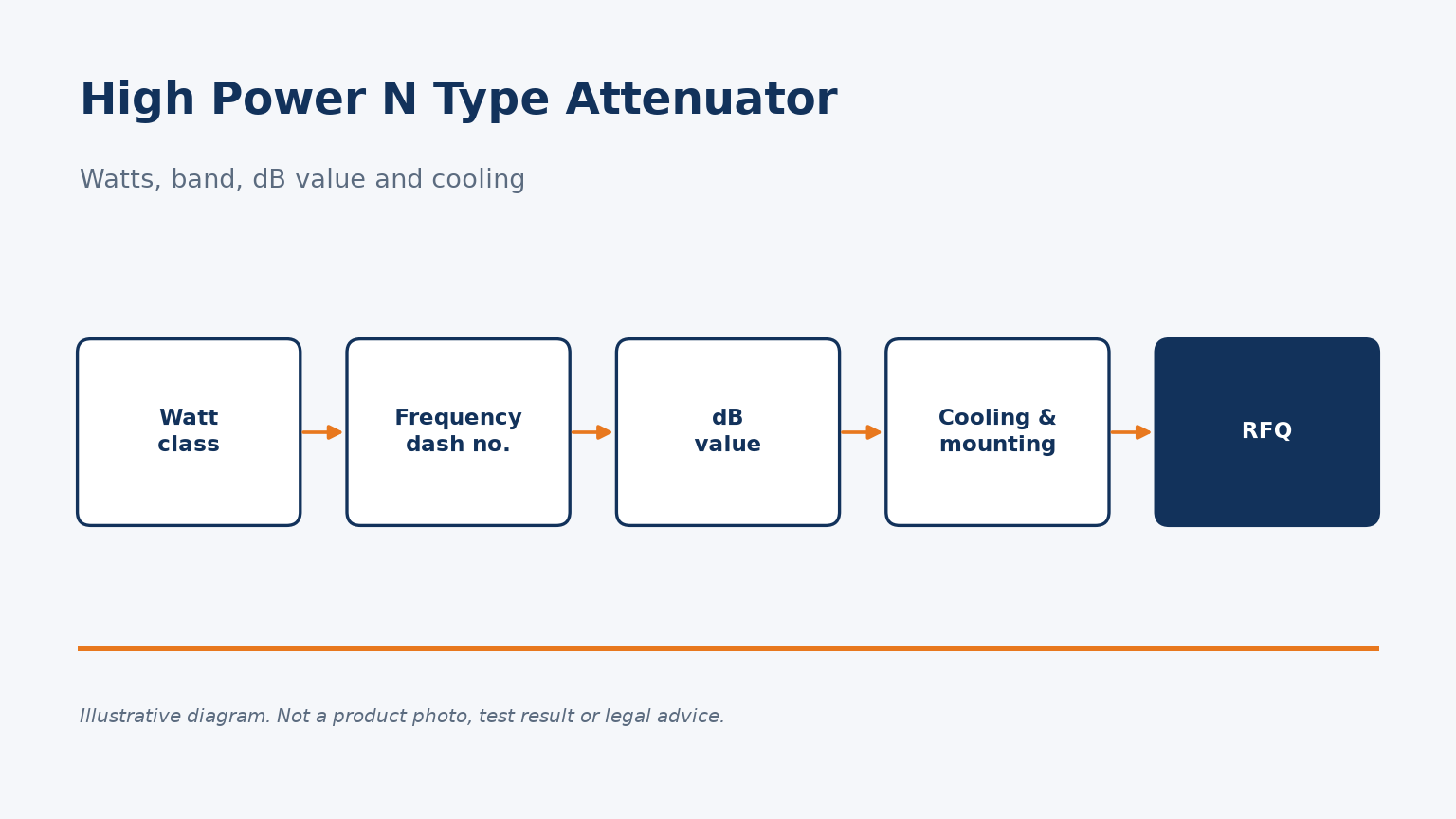
A high power N type attenuator RFQ needs wattage, band, VSWR, dB value and cooling. Compare published 5 W and 250 W listings before you buy.
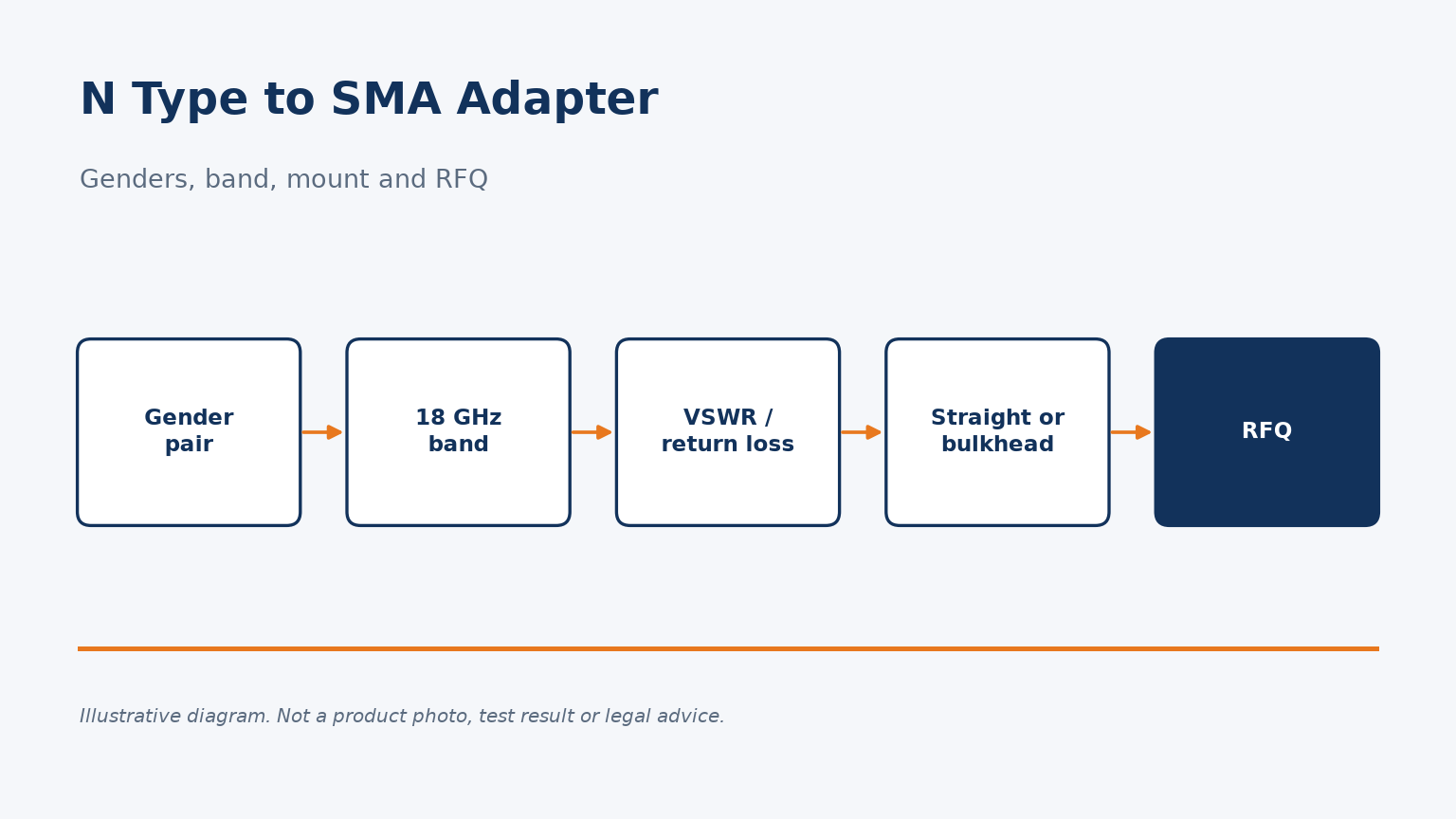
Specify an N type to SMA adapter by gender pair, 18 GHz band, VSWR and mount. See four catalog options plus a short RFQ checklist for buyers.
