
by Angela
Share
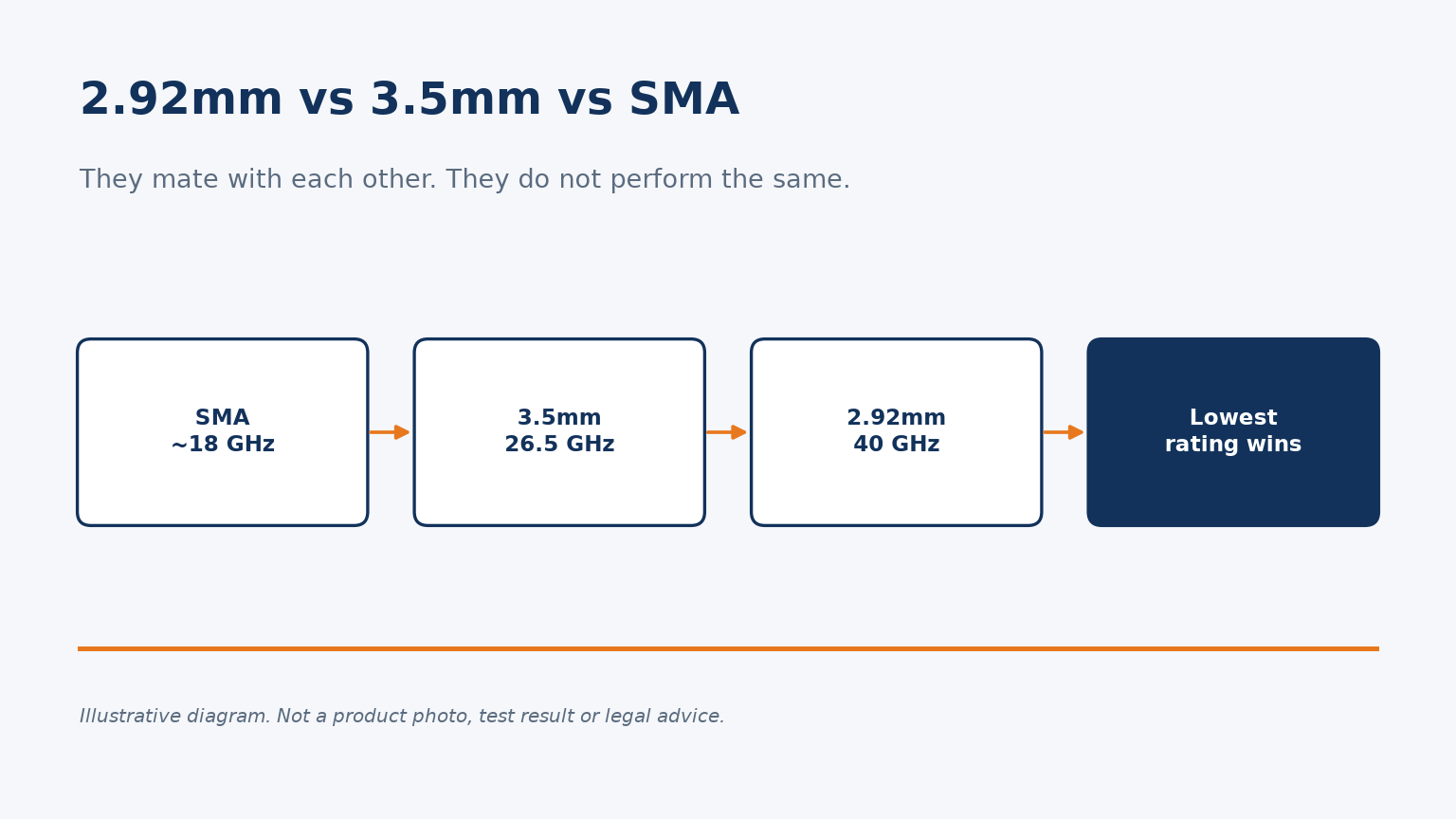
An SMA cable on a 40 GHz port will thread on perfectly and still ruin your measurement above 18 GHz.
SMA, 3.5mm and 2.92mm connectors are mechanically compatible, but they are rated to about 18, 26.5 and 40 GHz respectively. A mixed path performs only to its lowest-rated interface, and careless mating can damage precision ports.
Here is how compatibility, frequency ratings and selection work in practice.
Are 2.92mm, 3.5mm and SMA connectors compatible?
This is one of the most common questions we get with adapter and cable orders, and the short answer hides an important caveat.
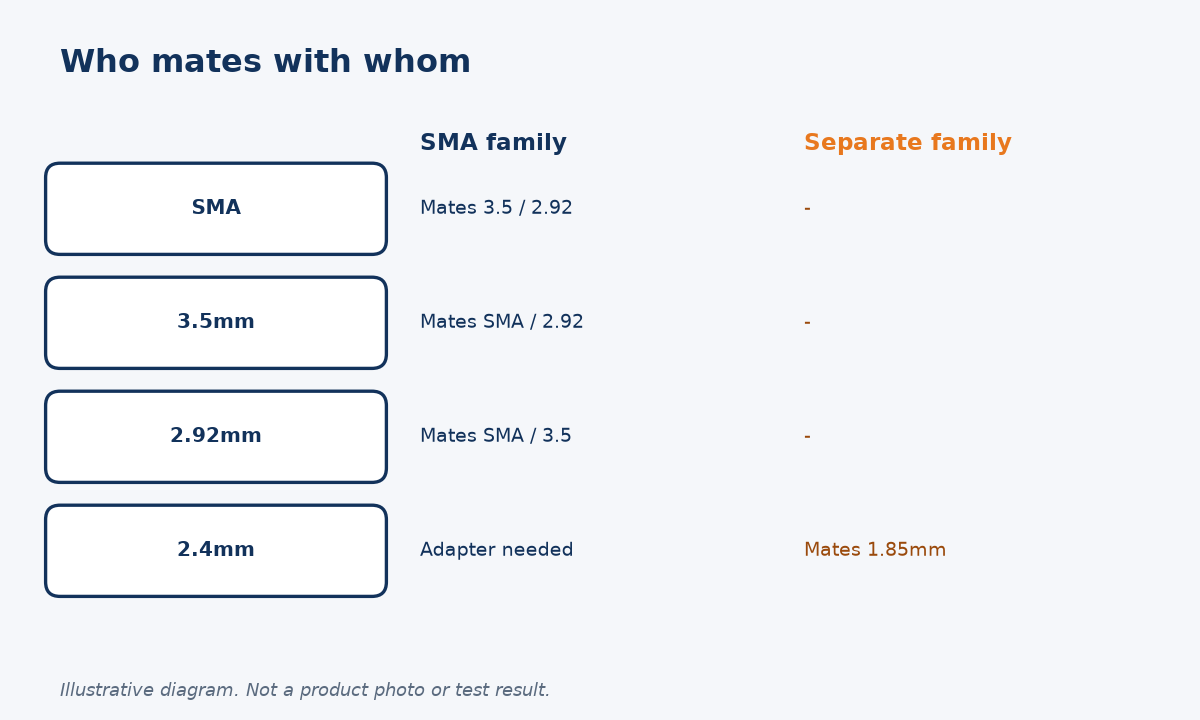
Yes, mechanically. SMA, 3.5mm and 2.92mm connectors are designed to intermate, so a 2.92mm male will thread onto an SMA female. Electrically the combination only performs to the lowest-rated interface, and a worn or out-of-tolerance SMA can damage a precision 3.5mm or 2.92mm port.
One family, three performance levels
The three connectors share a compatible coupling interface but differ inside. SMA normally uses a PTFE dielectric at the mating plane, while 3.5mm and 2.92mm are air-dielectric precision designs with tighter tolerances. That is why they mate with each other but are not interchangeable in performance. Our earlier overview of SMA, N-type and 2.92mm connectors covers the general background.
| Connector | Interface dielectric | Typical upper rating | Mates directly with |
|---|---|---|---|
| SMA | PTFE | 18 GHz (precision versions higher) | 3.5mm, 2.92mm |
| 3.5mm | Air | 26.5 GHz | SMA, 2.92mm |
| 2.92mm | Air | 40 GHz | SMA, 3.5mm |
| 2.4mm (for contrast) | Air | 50 GHz | Not the SMA family; needs an adapter |
The interface dimensions of mil-spec SMA connectors are controlled by MIL-STD-348, which also covers gauging. In my view gauging is the most underrated step in mixed setups. A male pin that protrudes beyond its limit can push into the female contact of a precision port, and the expensive part is usually the one that suffers. Check pin depth on SMA parts before you mate them to a 3.5mm or 2.92mm test port, and treat any SMA that has seen heavy use as suspect. A few seconds with a gauge is cheaper than a repair of an analyzer port.
How high in frequency can each connector go?
The usable top frequency is set by the smallest coaxial dimensions and by where the first higher-order mode appears.
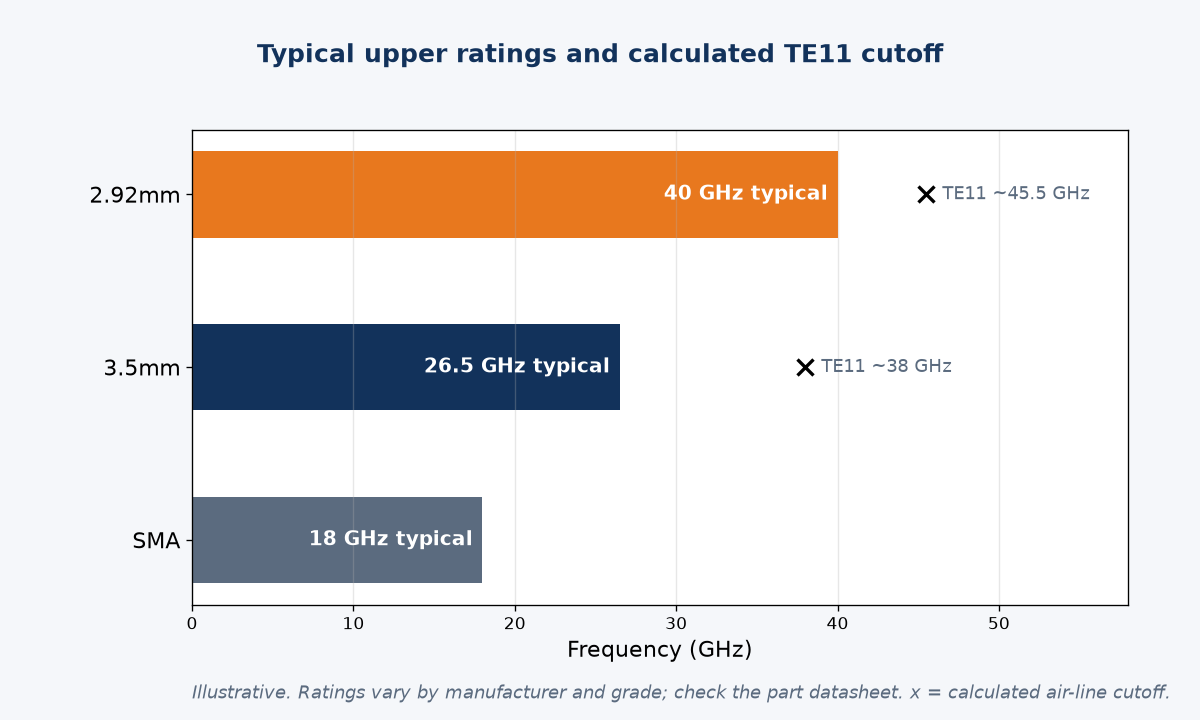
SMA is typically rated to 18 GHz, with precision versions to 26.5 GHz or slightly higher. 3.5mm is rated to 26.5 GHz and can be used to about 33 GHz. 2.92mm is rated to 40 GHz, the usual choice for Ka band.
Ratings, metrology and physics
National metrology work reflects the same split. NIST's NISTIR 6613 describes a 2.92mm power detector calibration service covering 0.05 GHz to 40 GHz and an international 3.5mm comparison covering 0.05 GHz to 26.5 GHz. An earlier NIST plan in NISTIR 5092 describes an expanded 3.5mm service from 0.05 to 33 GHz, initially offered to 26.5 GHz. That gap between 26.5 and 33 GHz is exactly where many buyers get confused.
The physics explains it. The first higher-order mode in an air coaxial line (TE11) starts at roughly fc ≈ c / (π · (D + d) / 2). Using nominal 50 ohm dimensions I calculate:
| Connector | Outer / inner conductor (mm) | Approx. TE11 cutoff | Common rating |
|---|---|---|---|
| 3.5mm | 3.50 / 1.52 | 38 GHz | 26.5 GHz (usable to ~33 GHz) |
| 2.92mm | 2.92 / 1.27 | 45.5 GHz | 40 GHz |
Ratings sit below cutoff to leave margin. Our own parts follow this pattern: the SMA male-male adapter is rated DC to 26.5 GHz, the 3.5mm male-female adapter DC to 26.5 GHz, and the 2.92mm bulkhead adapter DC to 40 GHz. Treat the calculated cutoffs as an explanation, not a specification; always use the rating on the datasheet of the actual part.
What happens to performance when you mix connector types?
Mixed setups are normal in labs and in production. The mistakes are in the assumptions people make about them.
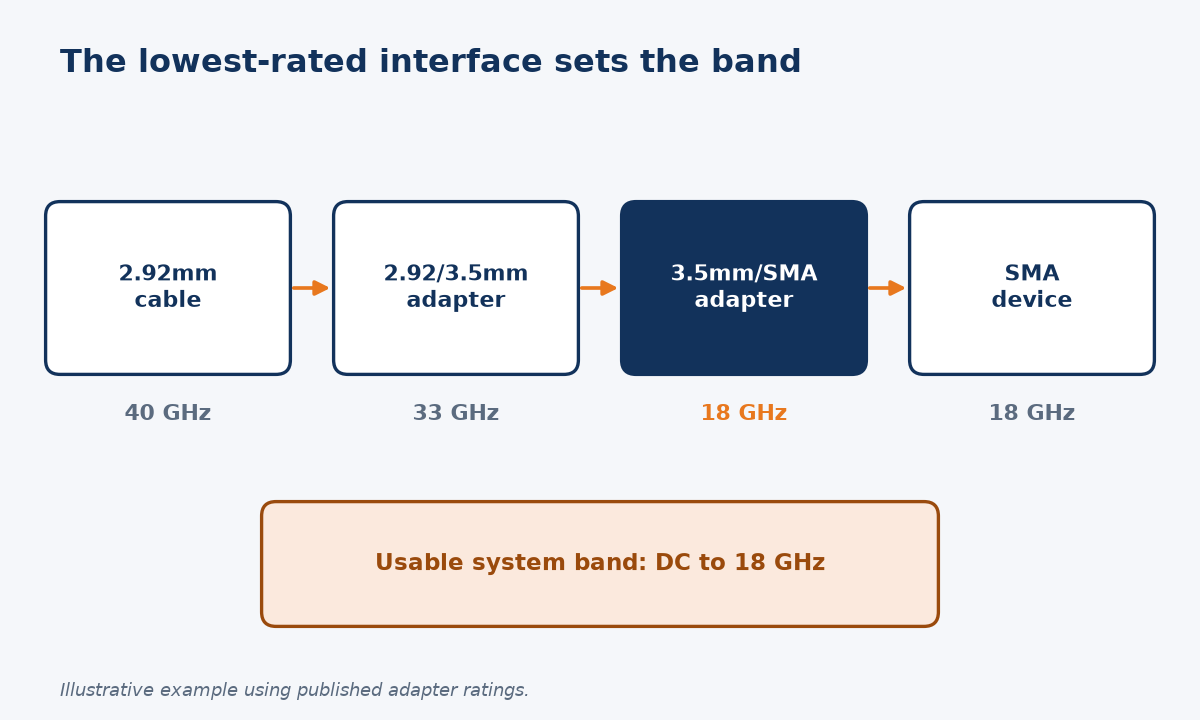
The whole path is limited by its lowest-rated interface, so one SMA connection can cap a 40 GHz setup at 18 GHz. Each adapter also adds a connection with its own reflection and repeatability error. Use the fewest transitions you can and the lower torque of any mated pair.
The weakest link sets the band
Look at how adapter ratings behave. Our 2.92mm to 3.5mm adapters are rated DC to 33 GHz, not 40 GHz, because the 3.5mm side sets the limit. Our 3.5mm to SMA adapters are rated DC to 18 GHz for the same reason on the SMA side. A setup that runs 2.92mm cable, a 2.92/3.5mm adapter, a 3.5mm/SMA adapter and an SMA device under test is therefore an 18 GHz setup, whatever the cable says.
Every connection also adds random error. NIST researchers describe connector repeatability errors as the primary source of random errors in coaxial power and S-parameter measurements. Two extra adapters mean two extra interfaces that can shift slightly every time someone reconnects. In my experience a fixed connector saver on the instrument port, left in place, is better than swapping adapters directly on the instrument.
Torque matters too. Instrument makers' handling guides commonly list about 5 lb-in (0.56 N·m) for SMA and 8 lb-in (0.9 N·m) for 3.5mm and 2.92mm, and recommend the lower value when mating mixed types. Over-torquing an SMA to the precision value is a common way to damage it. Finally, remember that 2.4mm will not mate with any of these; for that transition you need an adapter such as our 2.4mm to 2.92mm adapters, rated DC to 40 GHz.
When should you use SMA, 3.5mm or 2.92mm?
Choose by the highest frequency you need, how often the connector will be mated, and what it must connect to.
Use SMA for cost-sensitive modules and fixed connections up to about 18 GHz. Use 3.5mm for test ports and frequently mated parts up to 26.5 GHz. Use 2.92mm when you need up to 40 GHz while still mating with SMA and 3.5mm hardware.
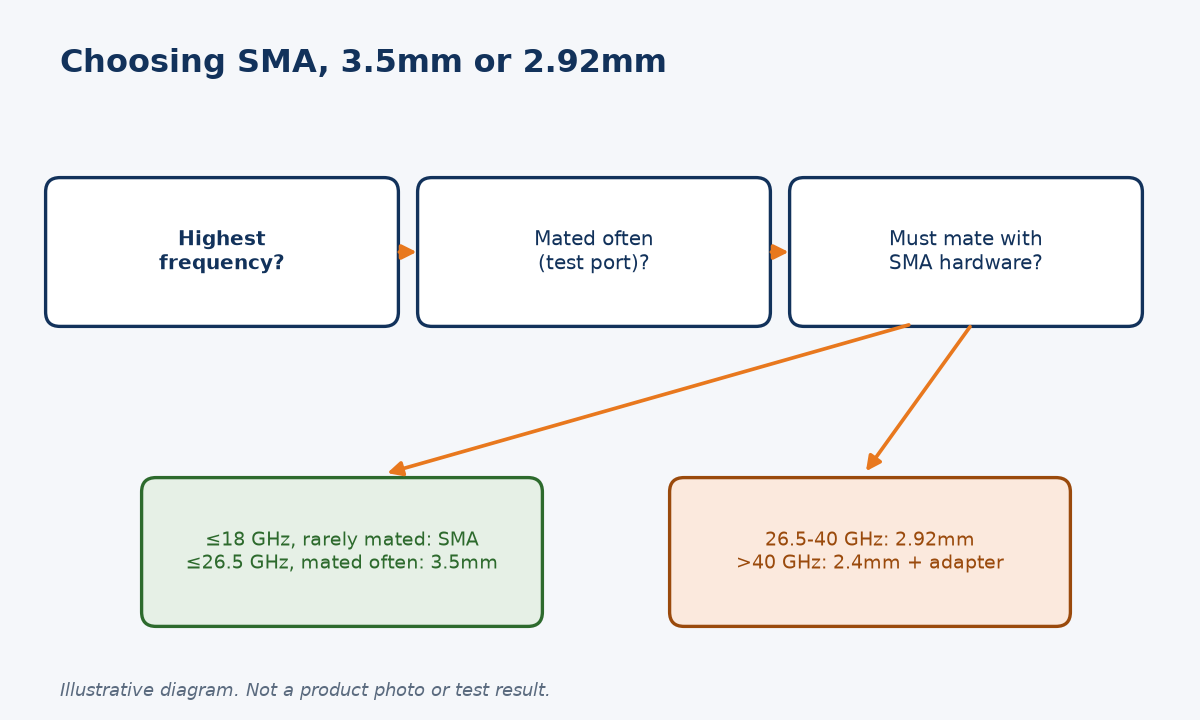
A practical selection table
| Requirement | My recommendation |
|---|---|
| Up to 18 GHz, fixed or rarely mated | SMA |
| Up to 26.5 GHz, frequent mating on a test bench | 3.5mm |
| 26.5 to 40 GHz | 2.92mm |
| Above 40 GHz | 2.4mm (to 50 GHz) or smaller; adapter needed to the SMA family |
| Mixed legacy SMA hardware | 2.92mm or 3.5mm port with a connector saver |
The table is a starting point, not a rule. A device that only works to 12 GHz may still deserve a 3.5mm port if it will be connected hundreds of times, because precision connectors are built for repeatable mating. A Ka-band module may still use SMA on its DC and IF ports while only the RF port uses 2.92mm. For more general guidance, see how to choose the right RF connector and our RF adapter guide.
If you are building a mixed setup, list every interface from the instrument port to the device and check the lowest rating before you order anything. Our between-series adapters cover 2.92mm to 3.5mm, 3.5mm to SMA and 2.4mm to 2.92mm. Send us your frequency range, genders and quantity through our contact page and we will suggest the right parts and quote them. If you are unsure of a gender or interface, a photo or a drawing is enough to start.
Conclusion
They mate, but the lowest-rated interface sets the band. Tell us your frequency, genders and quantity, and we will quote the right adapters.
STAY IN FOR MORE NEWS
Subscribe to our free newsletter.
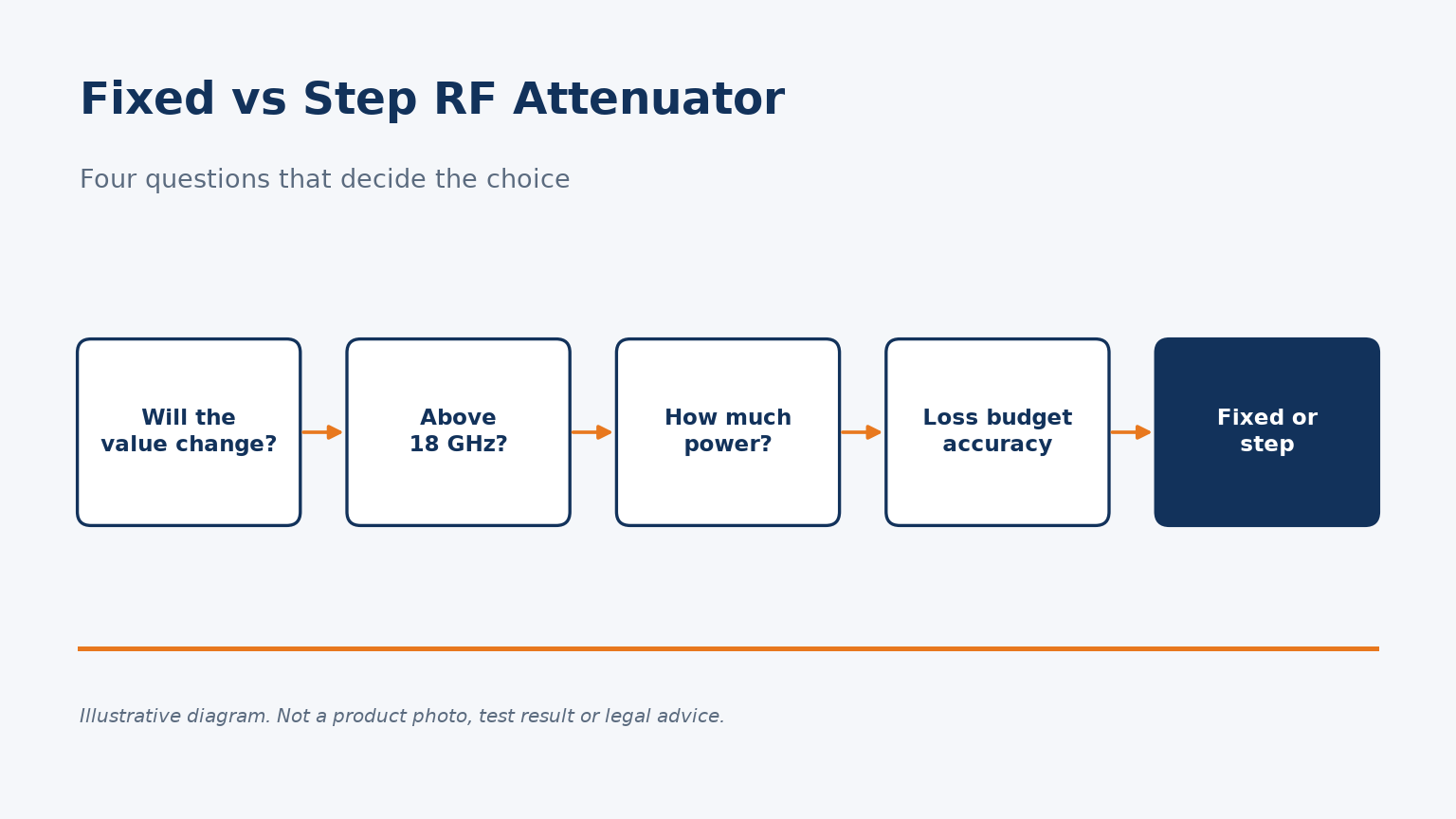
Fixed vs step RF attenuators compared with real specs: incremental vs total loss, mismatch and repeatability, and a decision table by frequency and power.
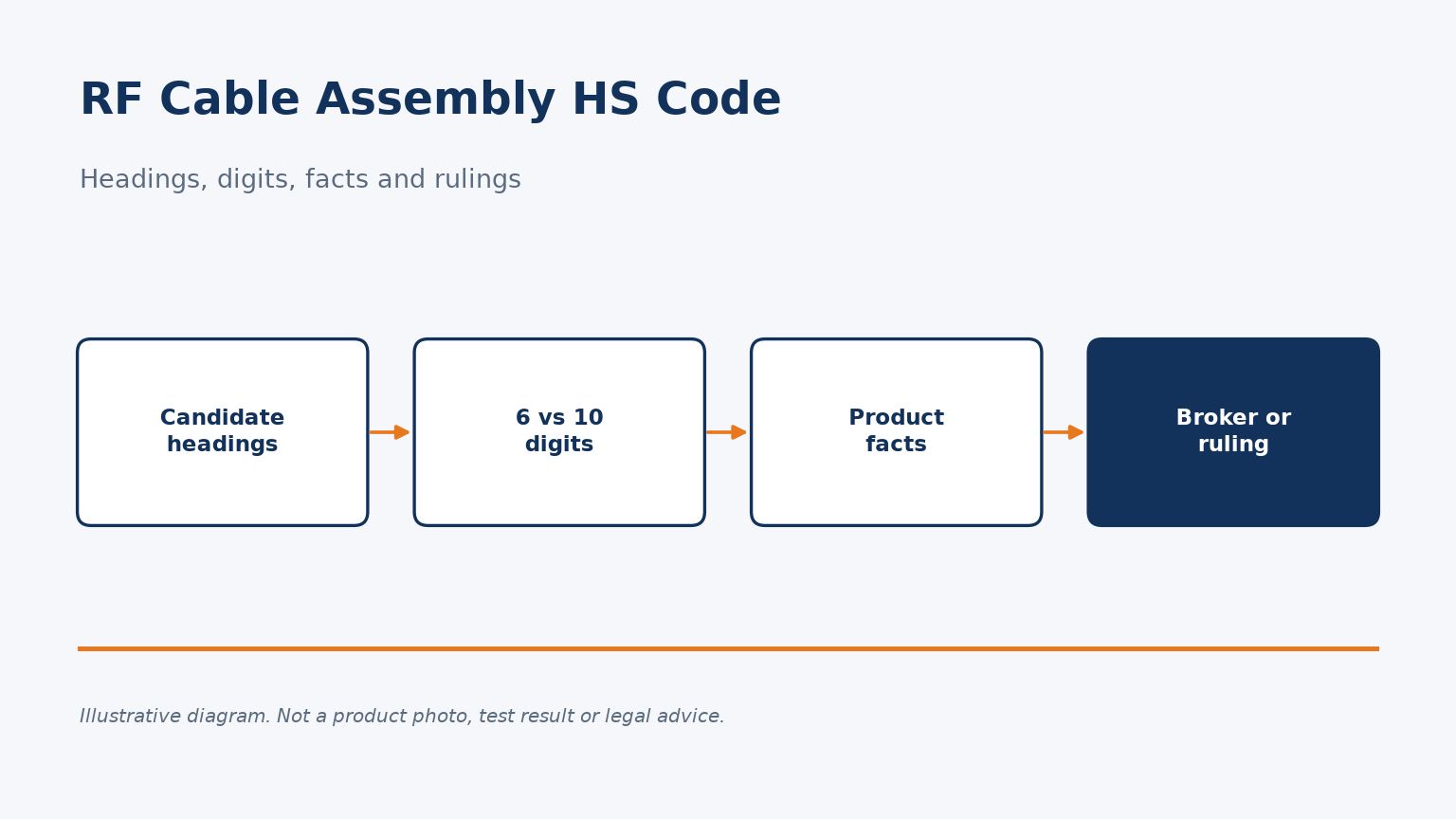
Which HTS headings are considered for RF cable assemblies, why six digits are not enough, which facts matter, and how to get a reliable classification.
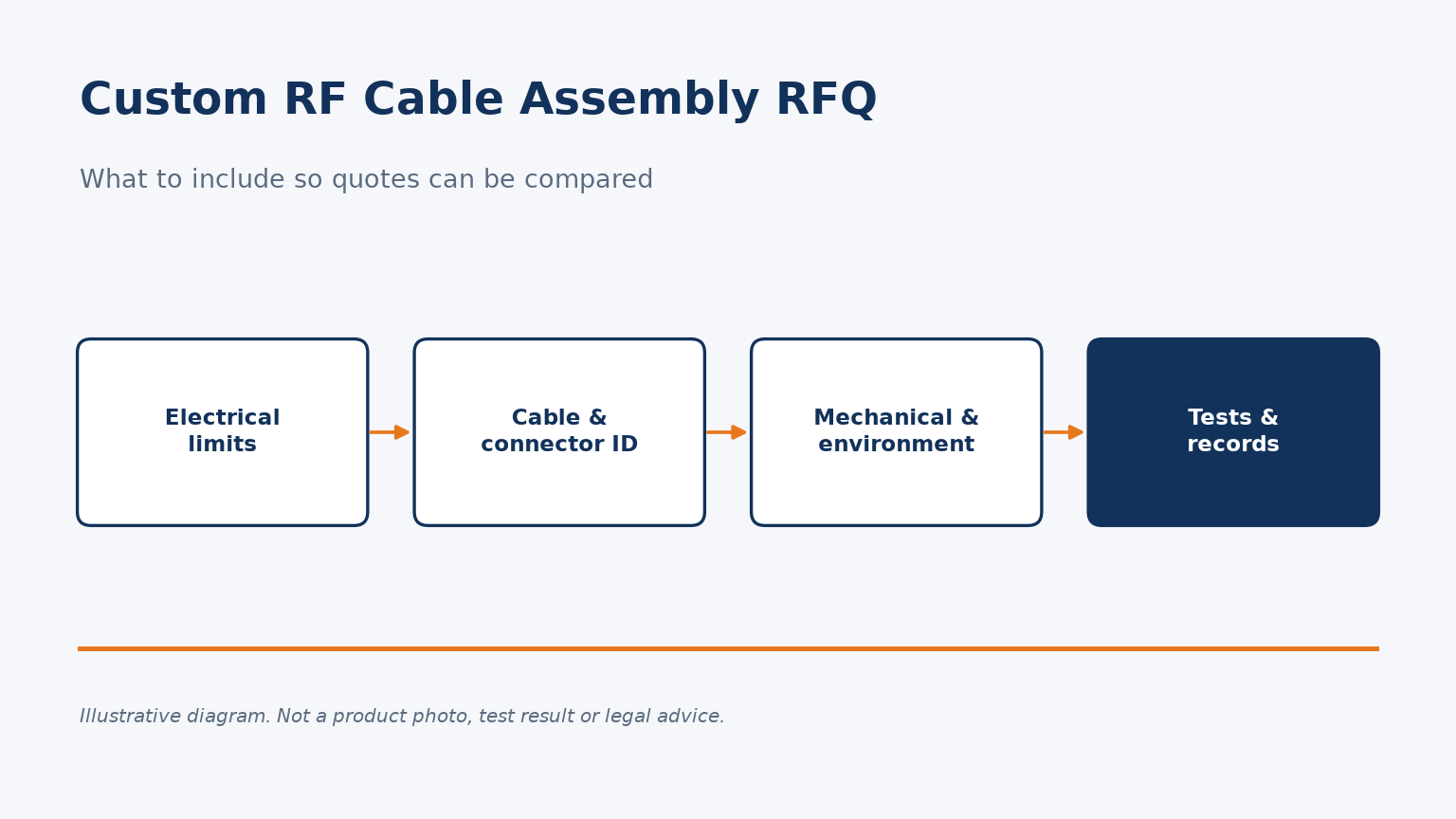
A checklist for custom RF cable assembly quote requests: electrical limits, part identity, mechanical and environmental details, and test records.
RF cable assemblies and wire harnesses differ in purpose, acceptance tests, bend limits and interfaces. Here is how to specify each, and hybrids.
