by Angela
Share
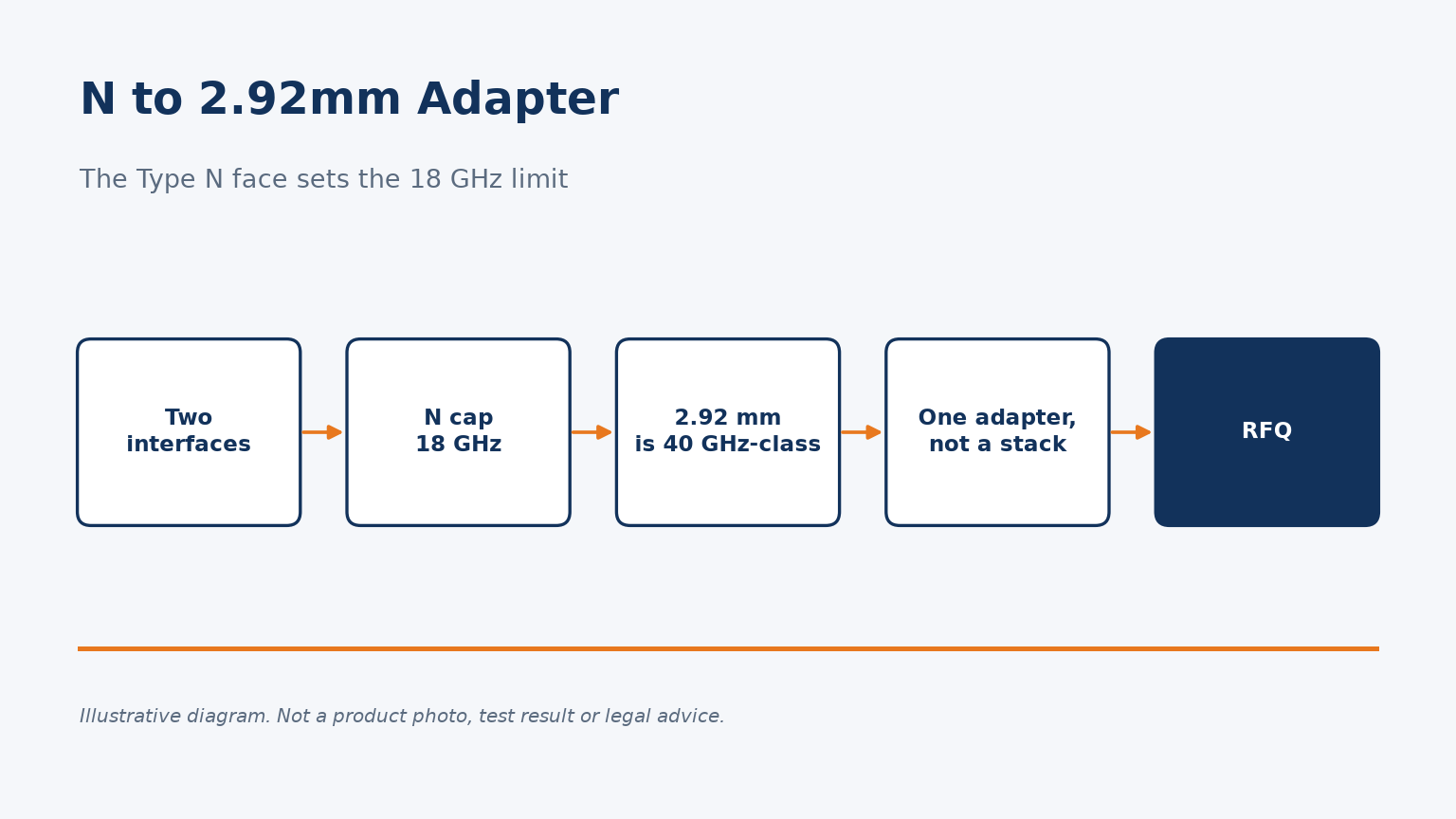
A 2.92 mm connector on one end of an adapter does not make the Type N end a 40 GHz port.
An N to 2.92mm adapter is limited by the Type N interface. Catalog parts are listed to 18 GHz, and a stack will not raise that ceiling. Use it to join an 18 GHz N port to a 2.92 mm face, not to reach 40 GHz.
Below I cover the limit, stacking, genders and the RFQ; or send both faces and the band and we will confirm the right part.
Why does an N to 2.92mm adapter stop at 18 GHz if 2.92mm is a 40 GHz interface?
The 2.92 mm name is easy to misread as a 40 GHz guarantee for the whole adapter.
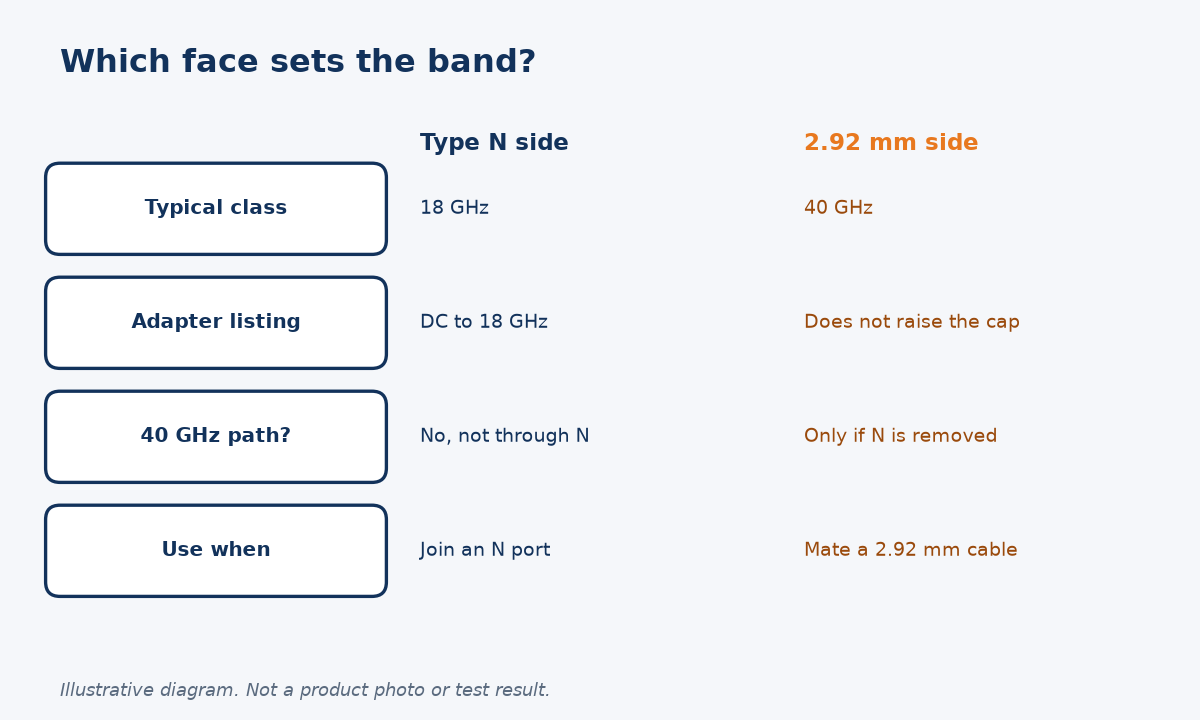
An N to 2.92mm adapter is limited by the Type N interface, not by the 2.92 mm face. Our catalog parts are listed DC to 18 GHz for that reason. The 2.92 mm side does not turn a Type N port into a 40 GHz path.
The lower-frequency interface always wins
2.92 mm (sometimes called K) is a 40 GHz-class precision interface. Type N, in ordinary catalog practice, is an 18 GHz-class interface. An adapter that has both faces can only be used as high as the lower of the two. That is a geometry and mode-limit issue, not a marketing choice.
Our RF connector frequency range chart sets out the usual ceilings for Type N, SMA, 3.5 mm, 2.92 mm, 2.4 mm and 1.85 mm. NIST’s own coaxial power work treats 2.92 mm as a 40 GHz-class family and uses still higher-frequency connectors, such as 2.4 mm, above that. None of that changes the Type N face on the other end of the adapter.
We list the four gender combinations as DC to 18 GHz, 50 Ω adapters, each with a VSWR attribute of 1.20, a temperature range of −55 °C to +85 °C and a durability of at least 500 matings:
| Gender pair | P/N | Band (listed) |
|---|---|---|
| 2.92 mm male to N female | RL-2.92/N-JKG | DC to 18 GHz |
| 2.92 mm female to N male | RL-2.92/N-KJG | DC to 18 GHz |
| 2.92 mm male to N male | RL-2.92/N-JJG | DC to 18 GHz |
| 2.92 mm female to N female | RL-2.92/N-KKG | DC to 18 GHz |
If you need a 40 GHz path, the Type N end has to disappear from the chain. Use a 2.92 mm, 2.4 mm or 1.85 mm instrument port and a matching cable or adapter. An N to 2.92mm adapter is the right part when you must join an 18 GHz-class Type N port to a 2.92 mm cable or device, and you accept that the path is an 18 GHz path.
Need an N to 2.92mm adapter for a Type N instrument? See the four catalog genders or send both faces and the band so we can confirm the 18 GHz limit against your setup.
Should you use one N to 2.92mm adapter or a stack of adapters?
A stack does not raise the Type N frequency limit, and it usually makes the match worse.
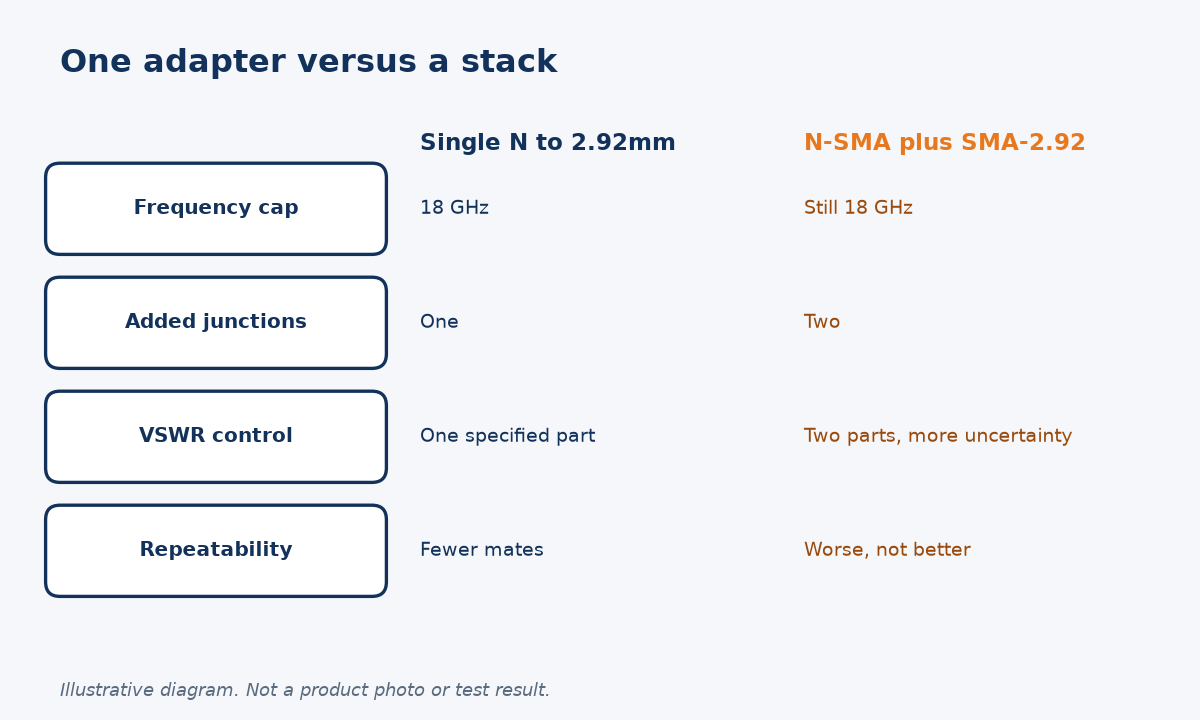
Use a single N to 2.92mm adapter when you must join those two series. Do not stack N-to-SMA and SMA-to-2.92 mm adapters to “get to 40 GHz”; the Type N face still caps the path at 18 GHz, and the extra junctions add loss and mismatch.
One transition is cleaner; it is still an 18 GHz transition
We wrote separately about when to use one 2.92 mm to 1.85 mm adapter instead of a stack. The same mechanical logic applies here, with one important difference: stacking cannot create bandwidth that the Type N interface does not have. An N-to-SMA adapter plus an SMA-to-2.92 mm adapter still begins on Type N. You have spent two junctions to stay at 18 GHz.
A single between-series adapter is the cleaner 18 GHz solution. You have one added pair, one specified VSWR, and one part to torque. NIST work on connector repeatability is a reminder that every extra mating is a source of random error. If the goal is a stable measurement on a Type N port, fewer junctions are better.
A stack is only worth considering when you already own the pieces and you are doing a short, non-critical check, or when a single N to 2.92mm adapter in the right genders is not available in time. Even then, keep the 18 GHz ceiling in the test plan. If a 2.92 mm cable is attached, people sometimes assume the cable’s 40 GHz rating describes the whole path. It does not.
For gender and compatibility notes on the 2.92 mm side itself, see 2.92 mm vs 3.5 mm vs SMA. Type N is not mechanically compatible with 2.92 mm without the adapter; do not force the parts.
How should you choose gender and VSWR on an N to 2.92mm adapter?
The band is only half of the specification; the two faces still have to mate, and the match has to be good enough.
Name both genders explicitly and give a VSWR or return-loss limit across your band. Catalog parts use a VSWR attribute of 1.20, but you should still ask for the figure or a plot at the frequencies you use, especially near 18 GHz.
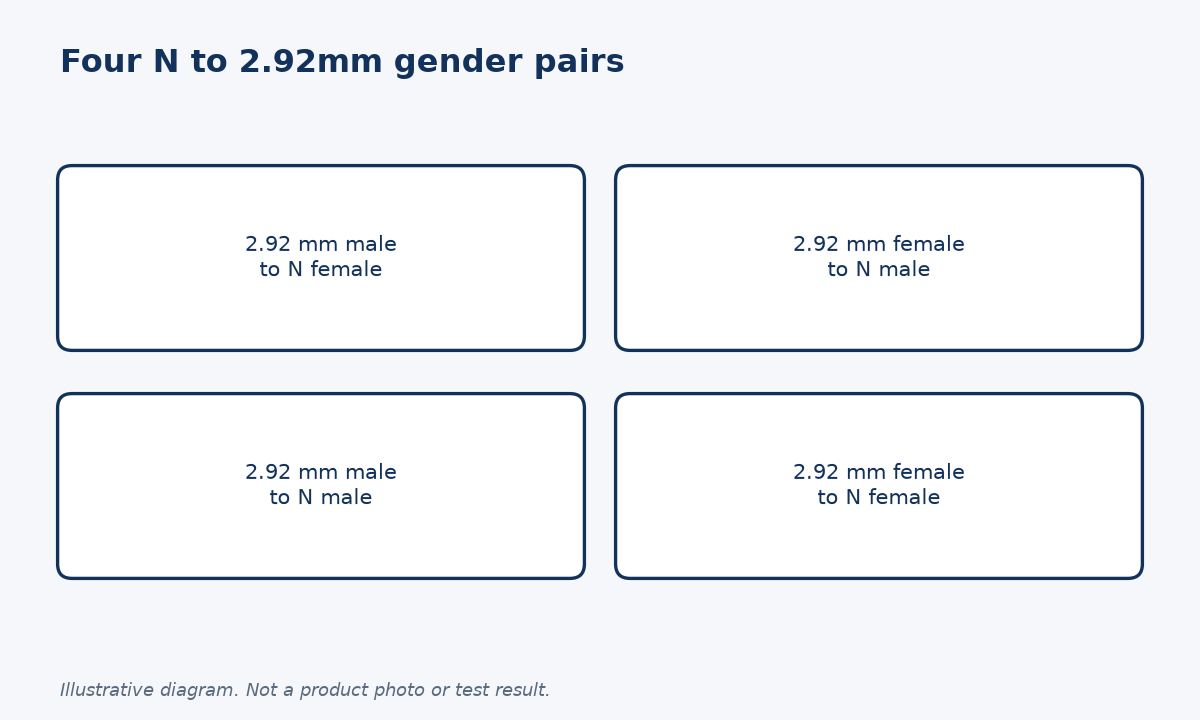
Write the two faces the way they will be mated
The four P/Ns above exist because “N to 2.92” is not a single part. A Type N female instrument port needs an N-male adapter face; a 2.92 mm male cable needs a 2.92 mm female face. MIL-STD-348 is the interface standard; naming series and gender is how you point at the correct interface.
On VSWR, the product attributes for these four adapters are listed as 1.20, with stainless-steel bodies, gold-plated beryllium-copper contacts and PTFE insulators. I would still put the limit in the RFQ and, if the measurement is tight, ask for a plot. A single attribute does not say whether 1.20 is a maximum across DC to 18 GHz or a typical figure. If your work only goes to 8 GHz, you can also ask for the match in that narrower band.
Materials and durability (at least 500 matings on these listings) matter when the adapter will live on a test port and be connected often. They are not a substitute for a stated reflection limit.
If you are building a mixed drawer of N, SMA and 2.92 mm leads, label the adapters by both faces and by the 18 GHz cap so a later user does not drop one into a 40 GHz setup.
What should an N to 2.92mm adapter RFQ include?
A short checklist keeps the 18 GHz limit, the genders and the match in the same document.
State both series and both genders, 50 Ω, the frequency band (and that you understand the Type N cap), a VSWR or return-loss limit, quantity, and any test data you need. Do not ask for a 40 GHz N to 2.92mm adapter as if the N face can be ignored.
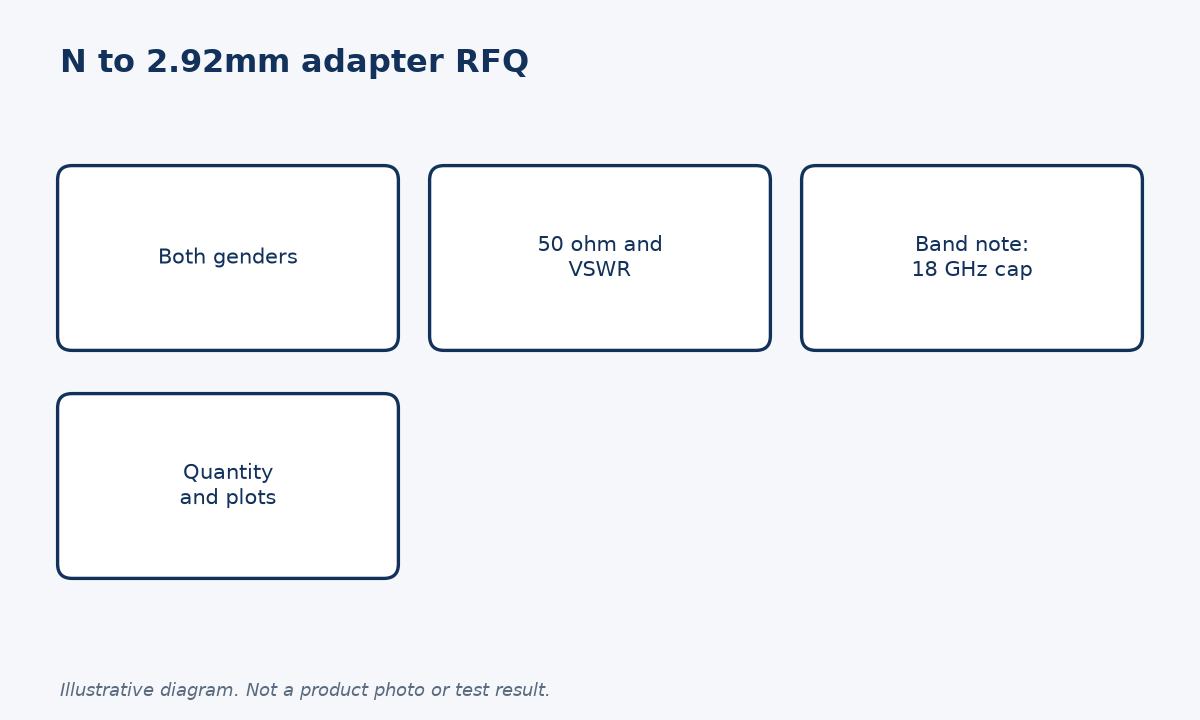
A checklist you can paste into the RFQ
| RFQ line | What to state |
|---|---|
| Interfaces | 2.92 mm and Type N, with genders |
| Electrical | 50 Ω, band, VSWR or return loss |
| Band note | Path is limited by Type N, typically 18 GHz |
| Mechanical | Straight unless you need another body style |
| Records | Typical plot or per-unit data |
If someone has asked you for a “40 GHz N to 2.92 mm adapter,” the RFQ is the place to close that gap. Either the Type N end must go, or the requirement must be rewritten to 18 GHz.
When the list is ready, request a quote with both connector types and genders, the frequency range, quantity and the application. You can start from RL-2.92/N-JKG or another gender in the table. Please confirm the band with us before you order; we will not quote a 40 GHz rating on a Type N face.
If the instrument on the Type N side is itself specified only to 18 GHz, the adapter is not the weak link; it is simply honest about the same limit. The problem arises when a 40 GHz 2.92 mm cable or device is attached and the path is then described as a 40 GHz path. Write the lower figure on the test plan and on the traveler so later users do not inherit that mistake.
Custom body styles, such as a panel mount, should still carry the same 18 GHz cap unless a different interface is used. I would rather quote a standard straight N to 2.92mm adapter quickly than invent a 40 GHz rating on a Type N thread. If your project must go higher, the conversation should move to replacing the Type N port, not to stretching the adapter.
The same discipline helps when you already own mixed adapters. Label the N to 2.92mm units with the 18 GHz limit, and keep 2.92 mm to 2.4 mm or 2.92 mm to 1.85 mm parts in a separate, higher-band tray.
Frequently asked questions
Can I use an N to 2.92mm adapter at 40 GHz? Not if the Type N face is in the path. Catalog parts are listed DC to 18 GHz because Type N, not 2.92 mm, sets the limit. For 40 GHz, remove Type N from the chain.
Is 2.92 mm compatible with Type N without an adapter? No. They are different interfaces. Use a between-series adapter, and do not force the connectors together.
Is a stack of adapters better than one N to 2.92mm adapter? Usually not. A stack still stops at 18 GHz and adds mismatch and repeatability error. Use one correct-gender adapter unless you have no other option for a short 18 GHz check.
What VSWR should I specify? Our listed attribute on these catalog adapters is 1.20. Put a limit for your band in the RFQ and ask for a plot if the measurement is tight.
Conclusion
Treat an N to 2.92mm adapter as an 18 GHz Type N transition, with both genders named, not as a 40 GHz upgrade.
STAY IN FOR MORE NEWS
Subscribe to our free newsletter.
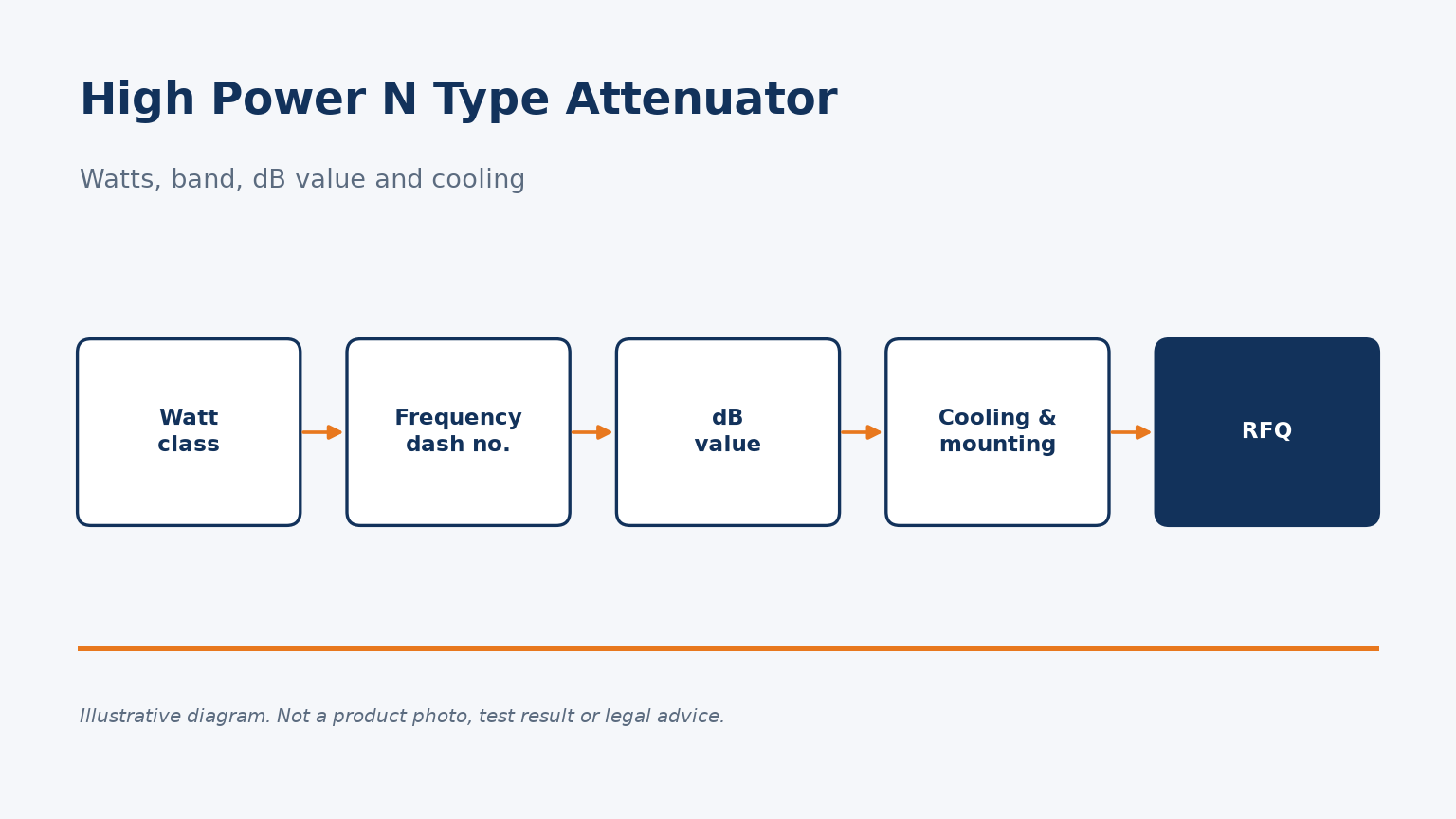
A high power N type attenuator RFQ needs wattage, band, VSWR, dB value and cooling. Compare published 5 W and 250 W listings before you buy.
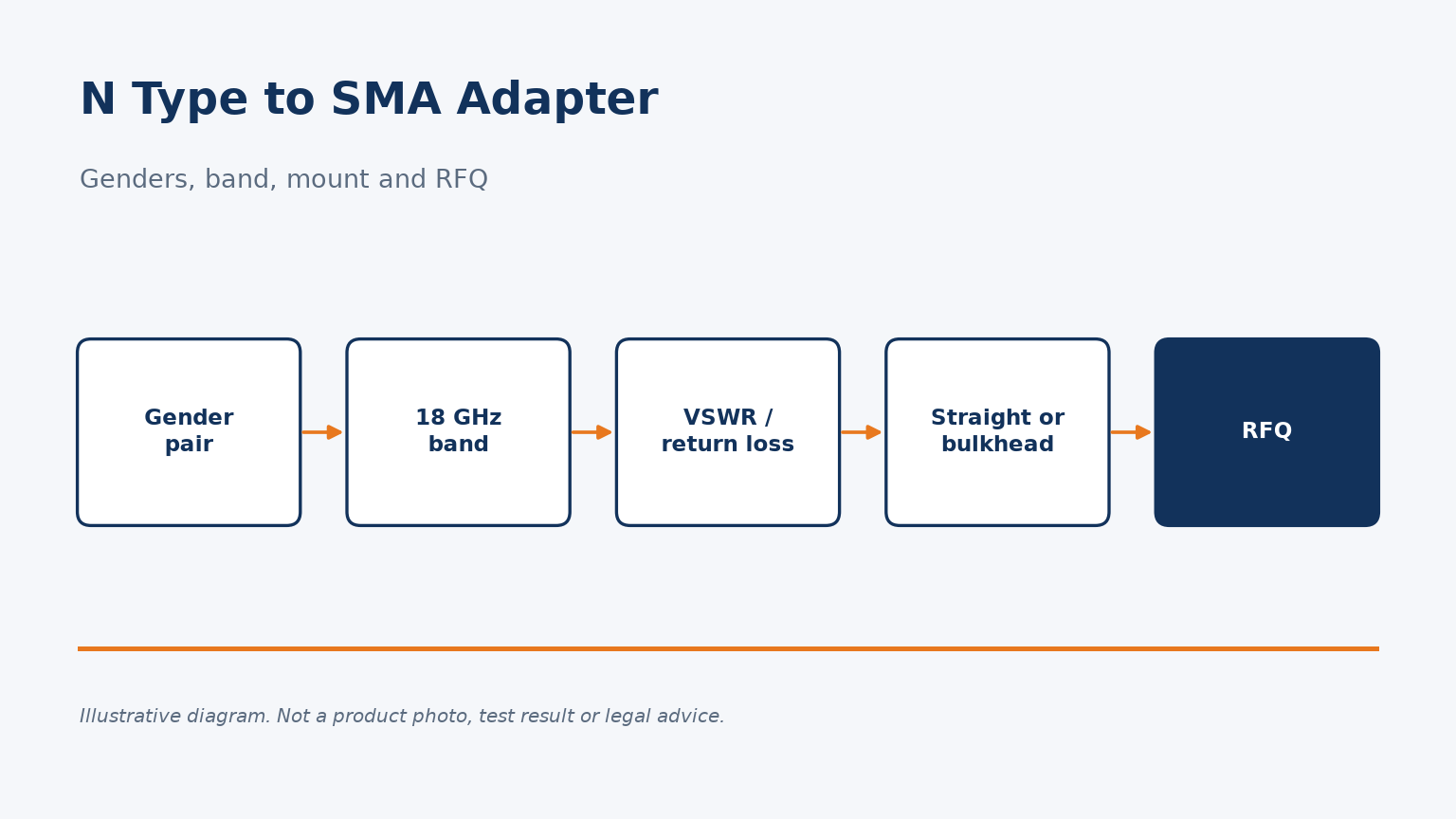
Specify an N type to SMA adapter by gender pair, 18 GHz band, VSWR and mount. See four catalog options plus a short RFQ checklist for buyers.
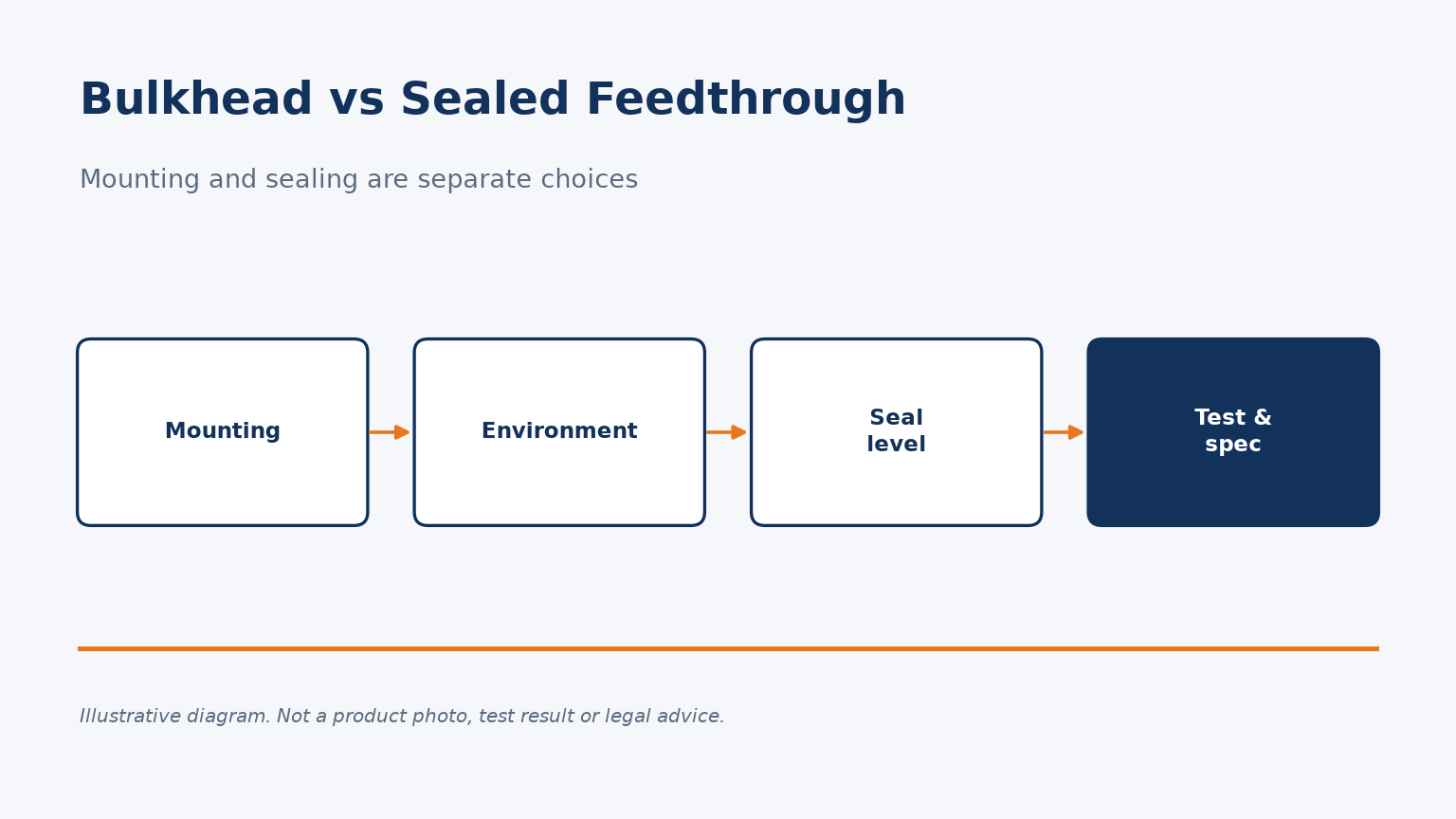
SMA bulkhead adapter vs sealed feedthrough: mounting versus sealing, levels from gasket to hermetic, how to choose, and what to specify.
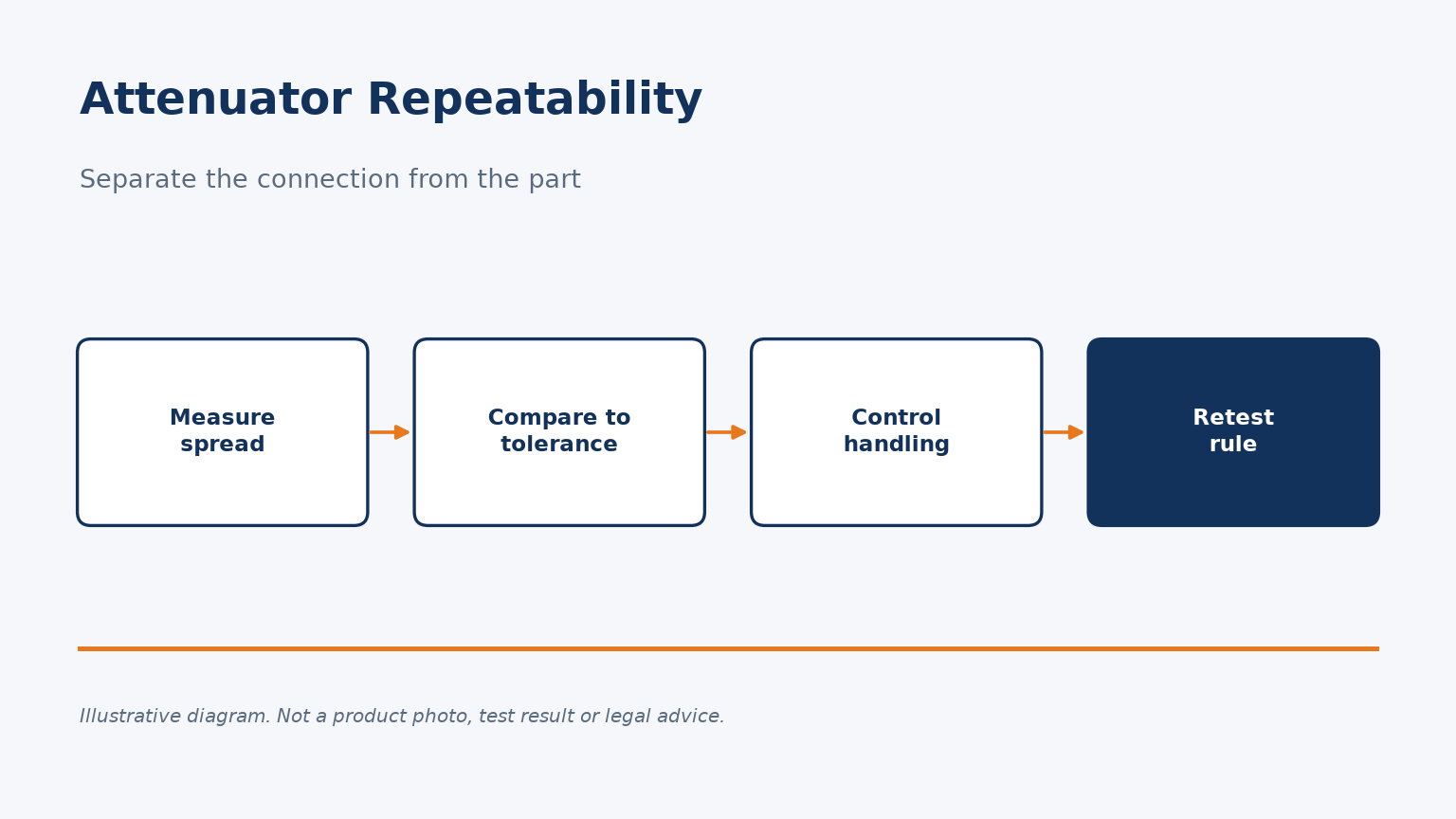
Why RF attenuator readings change on reconnection, how to compare that spread with tolerance, bench habits that reduce it, and a retest rule.
