by Angela
Share
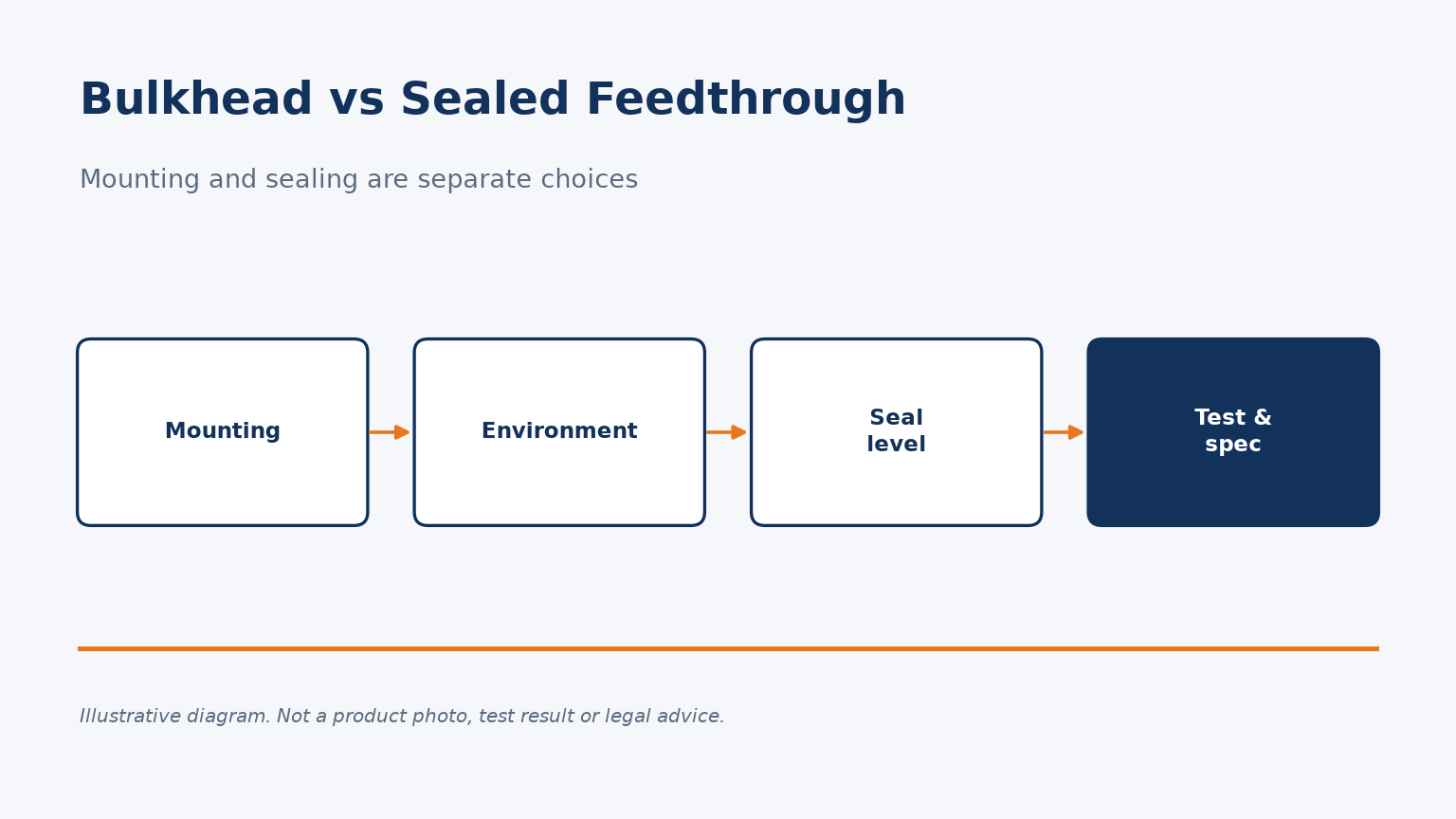
A bulkhead adapter holds a connector in a panel. Whether that panel stays dry is a separate question many orders forget to ask.
A bulkhead adapter is a mounting solution that passes RF through a panel; a sealed feedthrough adds a tested barrier against water, dust or gas. Choose by the environment, and specify the seal level and test separately from the mounting.
Below I compare them and give an ordering checklist; if you already know your panel and environment, send them to us.
What does a bulkhead adapter actually do?
"Bulkhead" describes how a connector mounts, not what it keeps out. Mixing the two ideas leads to wet enclosures.
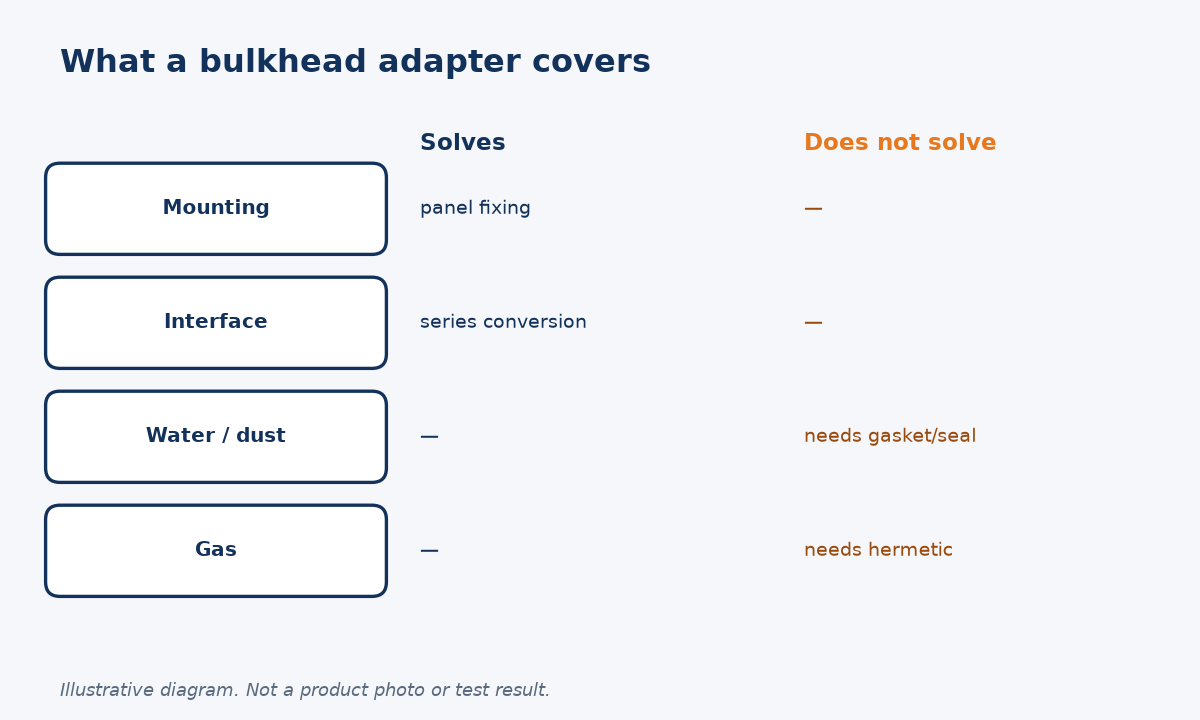
A bulkhead adapter passes an RF signal through a panel and is fixed to it, usually with a nut and lock washer through a cut-out. It solves mechanical mounting and interface conversion. By itself it makes no claim about blocking water, dust or gas.
Mounting is a mechanical job
A bulkhead adapter such as our SMA female to N female bulkhead adapter (RL-SMA/N-KYKG) has a threaded body that passes through a hole in the panel and is clamped by a nut. Its job is to hold the RF interface firmly at the wall, so cables can be connected and disconnected without stressing anything inside, and in this case to convert between two connector series.
The interfaces on each side are defined by standards such as MIL-STD-348, which covers dimensions for common RF connector series. That tells you the adapter will mate correctly; it says nothing about environmental sealing. Whether water can pass around the adapter depends on the panel joint, and whether gas can pass through it depends on how the internal dielectric is sealed.
My advice is to read "bulkhead" as an answer to "how is it mounted?" and to ask a separate question: "what must this wall keep out?" The listed data for RL-SMA/N-KYKG gives DC to 18 GHz, 50 ohms, stainless steel body and -55 °C to +85 °C. If your panel also needs sealing, tell us the environment before you order.
What is a sealed feedthrough, and what levels of sealing exist?
"Sealed" covers everything from a rubber O-ring to a glass-to-metal seal. The level you need depends on what the enclosure must exclude.
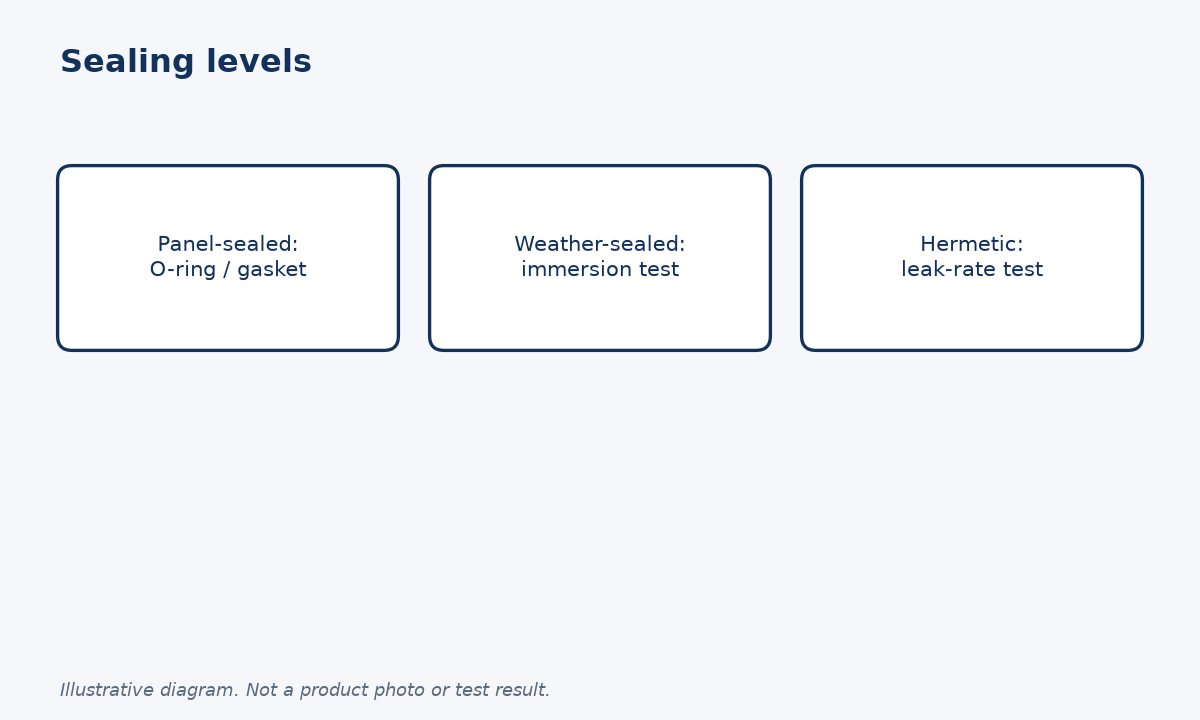
A sealed feedthrough adds a barrier against the environment. Levels range from panel gaskets that keep out splashes, through sealed designs tested by immersion, to hermetic glass seals verified by leak testing and specified with a leak rate.
Three practical levels
| Level | Typical barrier | How it is checked |
|---|---|---|
| Panel-sealed | O-ring or gasket at the panel | Visual, fit, immersion or spray |
| Weather-sealed | Gaskets plus sealed interface | Immersion / bubble observation |
| Hermetic | Glass or ceramic seal in the body | Leak test with stated rate |
The military seal test method MIL-STD-202 Method 112 is a useful dividing line. It determines the effectiveness of the seal of parts with internal cavities, and explicitly does not include lesser-sensitivity tests such as water tightness or moisture proofness that rely on watching for bubbles. In other words, a part can be genuinely water-tight and still not be hermetic. The reverse confusion also happens: buyers pay for hermetic parts when a gasket would have met the real requirement, simply because the specification said "sealed" without saying against what.
I suggest choosing the lowest level that meets your real requirement, because each step up adds cost, lead time and qualification effort. Outdoor equipment cabinets often need panel or weather sealing; pressurised or gas-filled housings and some long-life electronics need hermetic parts, such as our hermetically sealed 2.92mm panel-mount adapter. If you are unsure which level applies, describe your enclosure to us.
How do you choose between them for your enclosure?
The choice follows from what the wall must keep out and how often connectors will be mated.
Use a standard bulkhead adapter when the enclosure is indoors or the panel joint is sealed separately. Add a gasket or choose a weather-sealed part for outdoor exposure. Specify a hermetic feedthrough only when gas tightness is required and verified by leak testing.
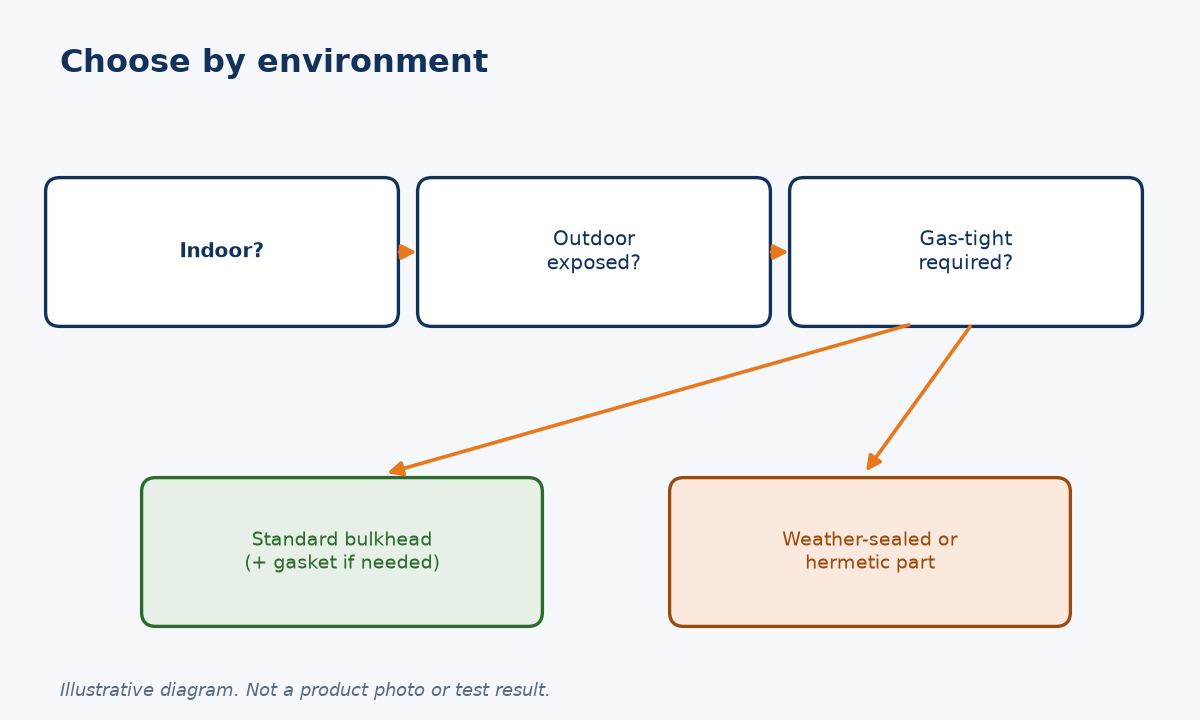
A short decision path
Start with the environment: indoor, sheltered outdoor, exposed outdoor, or a pressurised or gas-filled housing. Then consider who seals the panel joint. Many enclosures achieve their ingress rating with a gasket under the bulkhead nut, using an ordinary adapter, and that is often the most economical solution.
Next consider how often connectors will be mated. Mating torque matters for both performance and sealing; NASA-STD-8739.4A says coaxial mating torque should come from engineering documentation, with only the coupling nut turned. A bulkhead adapter also has a panel-nut torque, which compresses any gasket. Both values belong on your drawing.
Finally, decide whether a test is needed. If an ingress claim matters to your customer, the test that supports it should be named. A bulkhead adapter's datasheet will not show an ingress or leak test unless the part was designed and tested for it, and it is better to ask than to assume. In my experience, writing the environment into the RFQ prevents most of these misunderstandings.
What should you specify when ordering a bulkhead adapter?
A clear order for a bulkhead adapter covers interfaces, panel details and sealing ownership in a few lines.
Specify both interfaces and genders, frequency band, panel thickness range and cut-out (round or D-flat), mounting hardware, any gasket or O-ring, panel-nut and mating torques, environment, and whether any seal test is required.
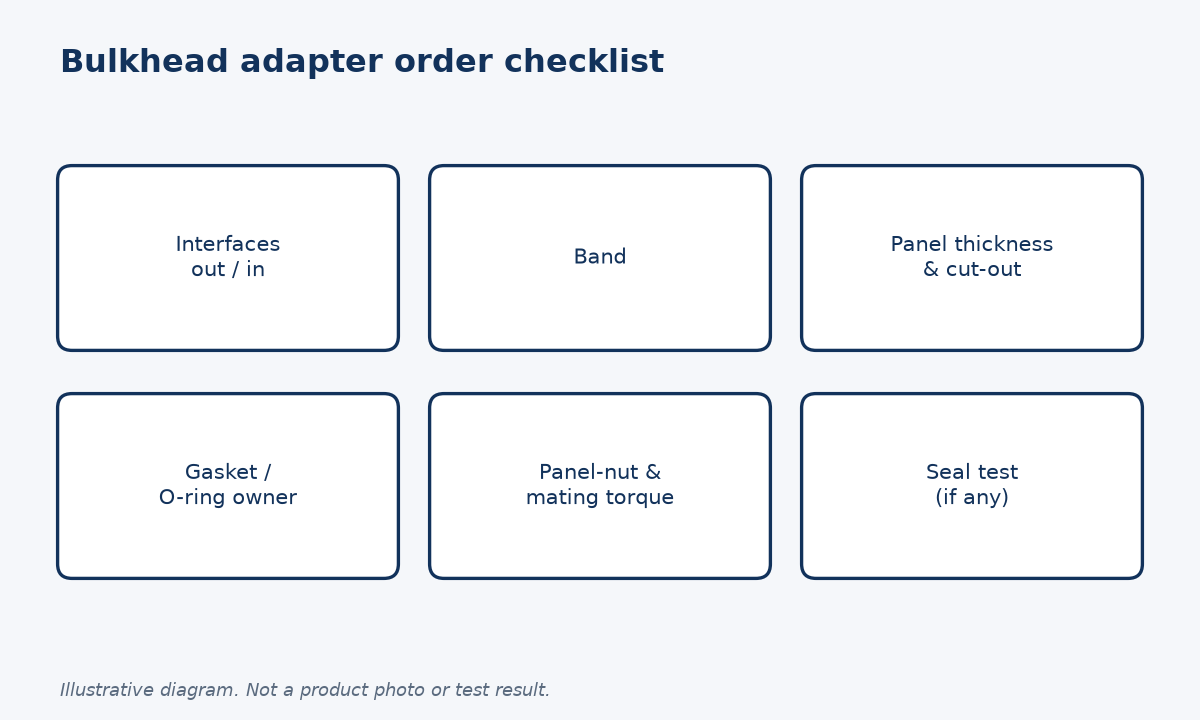
The lines that prevent rework
The interface line should read from outside the enclosure to inside, for example "SMA female (outside) to N female (inside)", since bulkhead parts are often asymmetric. Panel thickness and cut-out shape decide whether the part fits and whether it can rotate; a D-flat cut-out stops rotation when cables are tightened.
Sealing ownership should be explicit. If you will fit your own gasket, say so; if you expect the adapter to come with an O-ring, say that instead. If you need a hermetic or tested seal, name the test method and limit rather than writing "sealed". Add the operating environment in one line, such as indoor rack, outdoor cabinet or pressurised housing, so the supplier can flag a mismatch.
For broader guidance on adapter types, see our RF adapter guide and the SMA vs N-type comparison. When your list is ready, request a quote, or open the RL-SMA/N-KYKG bulkhead adapter page to check the listed data and ask for other interface combinations.
Conclusion
Specify mounting and sealing as two separate lines, and your bulkhead adapter will fit the panel and the environment.
STAY IN FOR MORE NEWS
Subscribe to our free newsletter.
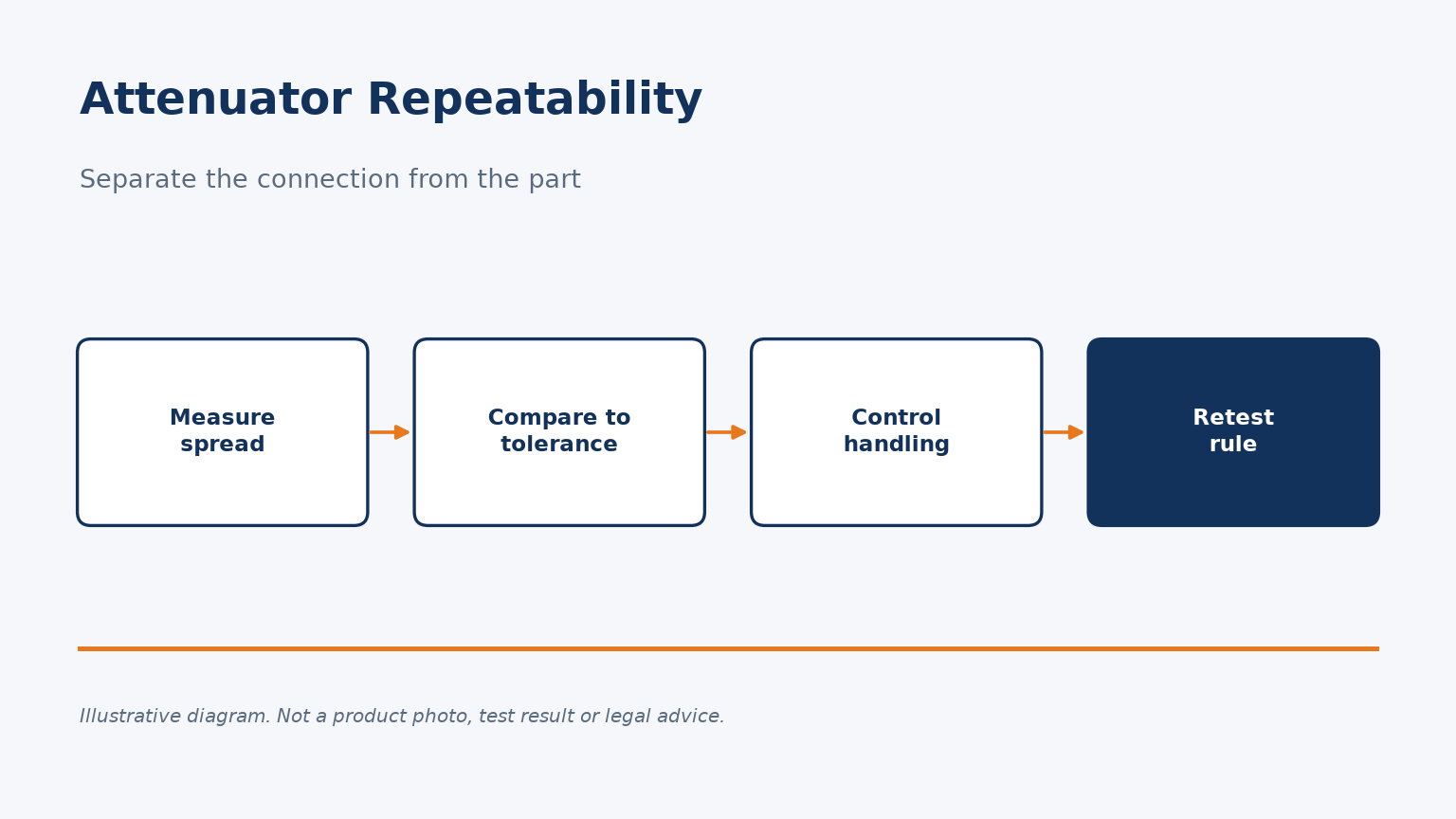
Why RF attenuator readings change on reconnection, how to compare that spread with tolerance, bench habits that reduce it, and a retest rule.
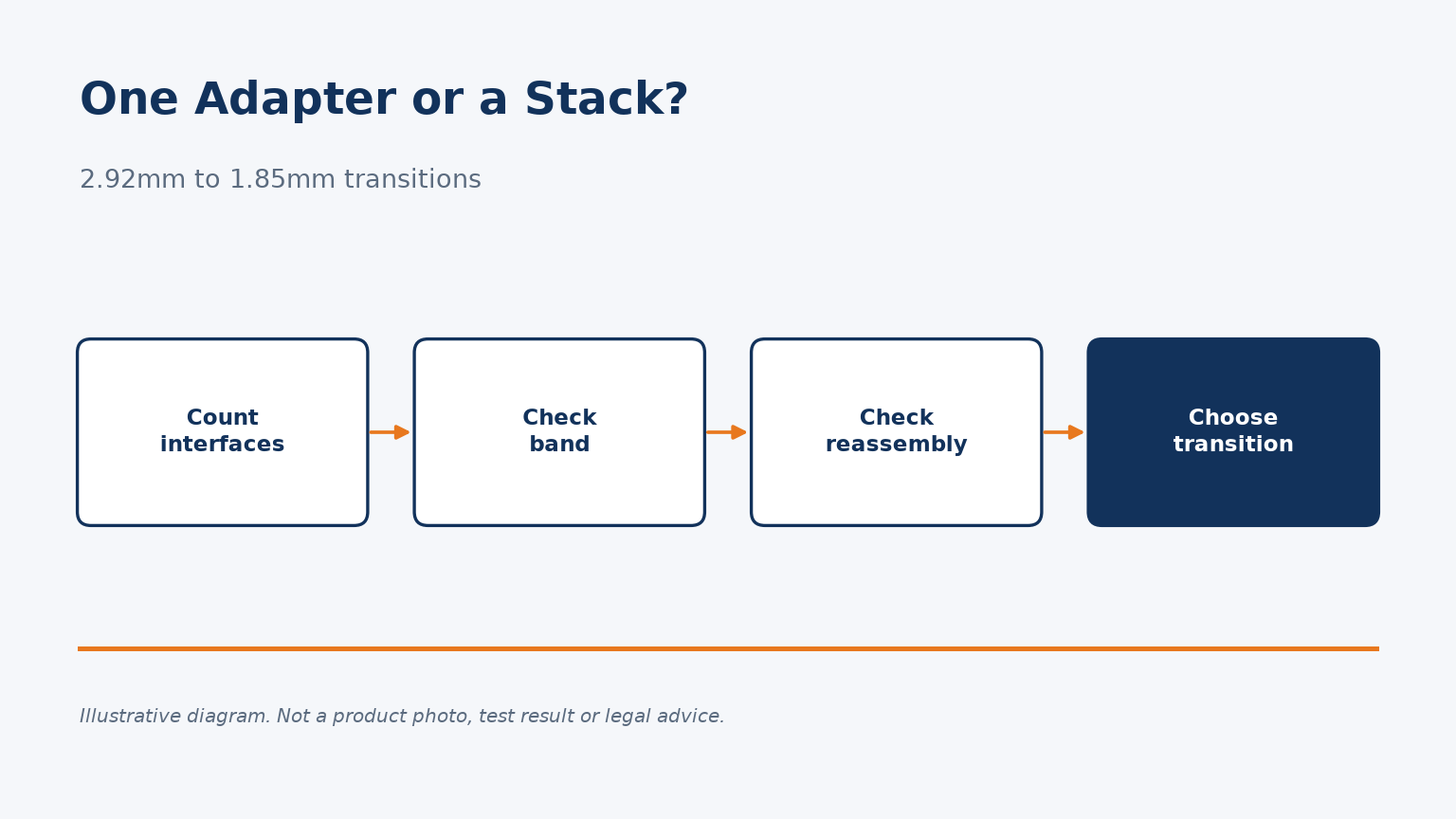
When to use one 2.92mm to 1.85mm transition adapter instead of an adapter stack: loss, reflection ripple, repeatability and how to order.
How to compare 2.92mm 40 GHz cable assembly quotes fairly: normalize cable, length, guaranteed limits, test records and commercial terms.
What OEM buyers should specify for a hermetically sealed RF bulkhead adapter: leak-test method and limit, mounting, torques and records.
