by Angela
Share
“Vibration resistant” looks like a specification until incoming inspection asks what was actually tested.
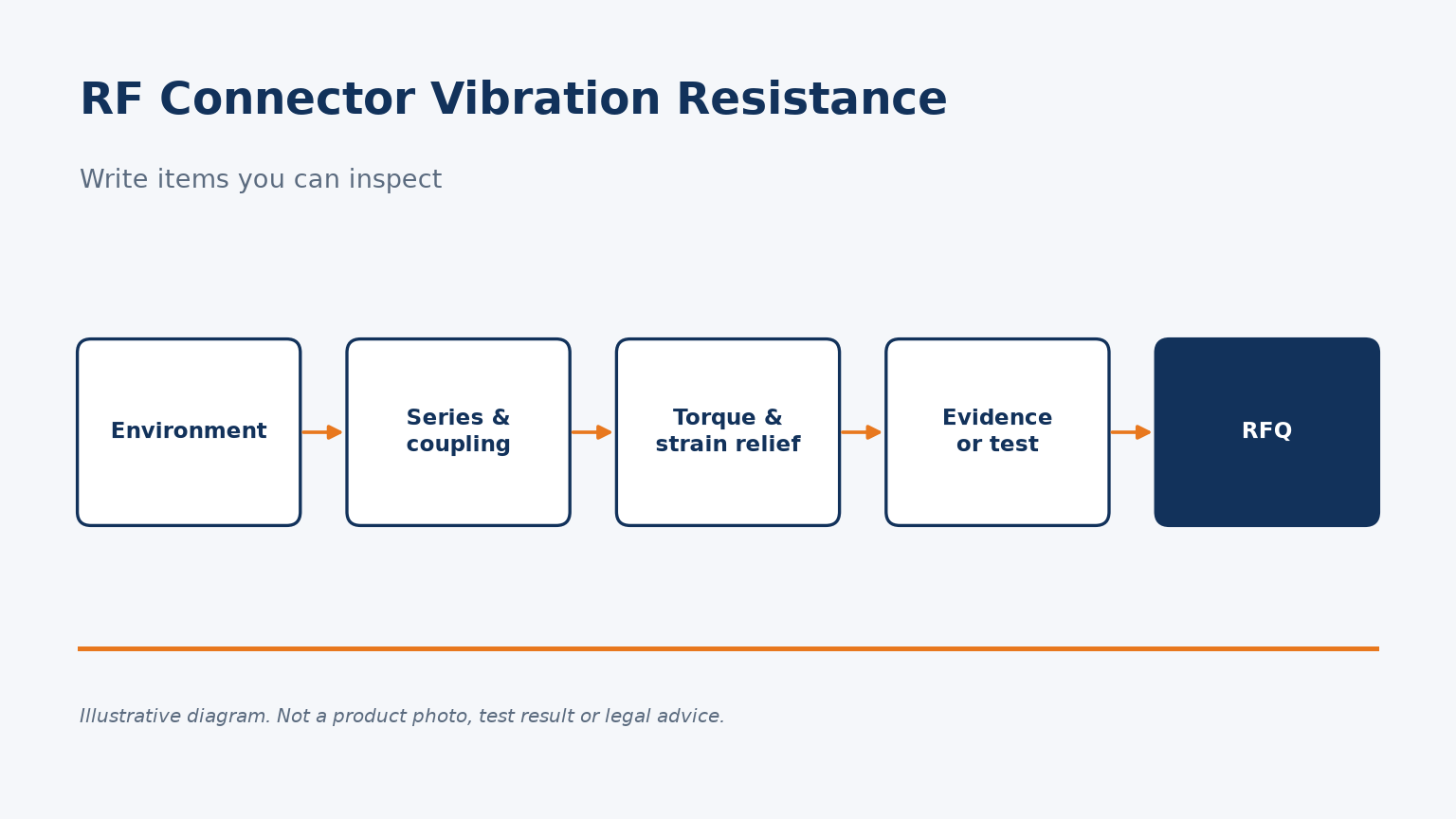
Write RF connector vibration resistance as an environment, a connector series and coupling style, a torque and strain-relief method, and — if you need proof — a named test method. A catalog adjective cannot be checked at goods-in, but those four items can.
Below I break those items down; or send the environment and the interfaces and we will say what we can build.
Why is “vibration resistant” too vague for an RF connector or cable assembly RFQ?
The phrase shows up in searches, but it is not a part number, a test method or an acceptance rule.
RF connector vibration resistance has to be written as an environment, a coupling style, a torque and strain-relief method, and — if you need evidence — a test method you actually want performed. A marketing adjective cannot be inspected at incoming goods.
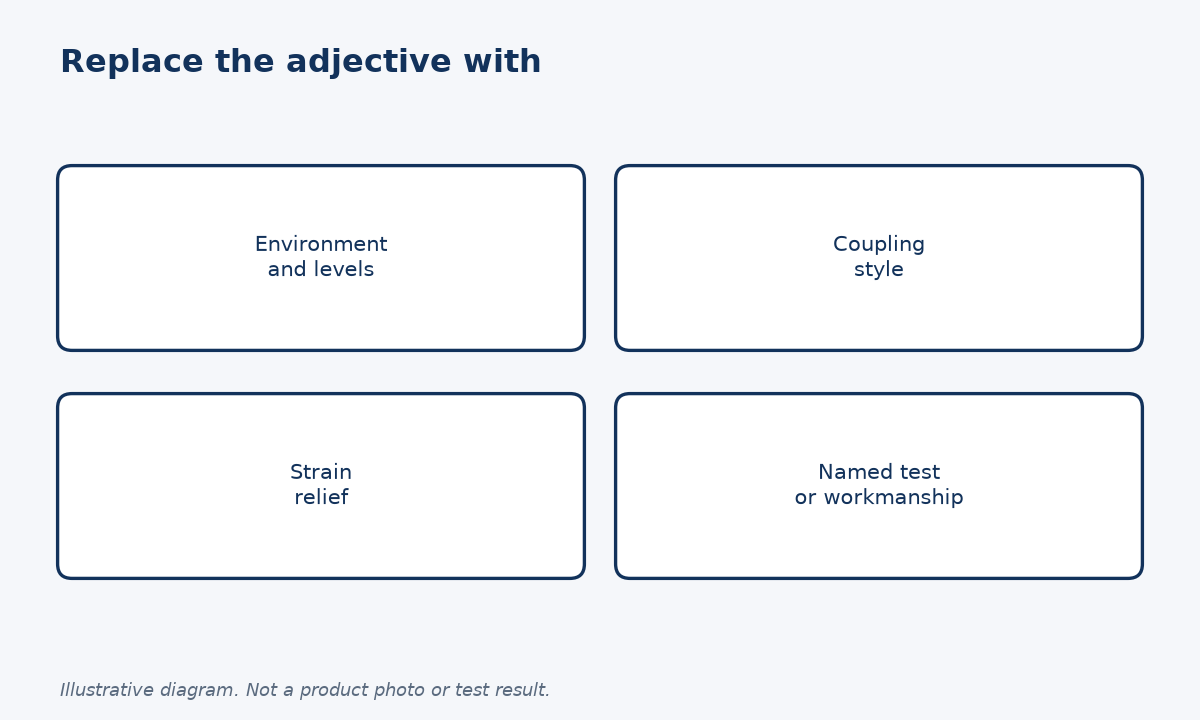
Write the environment, then the hardware, then the proof
Buyers usually mean one of three things: the mated pair must not back off, the contact must not open, or the cable must not fail at the back of the connector. Those are different designs and different tests. If the RFQ only says “vibration resistant,” each supplier will guess a different one.
I would start the request with the environment you actually have: frequency and amplitude of vibration, random or sinusoidal, duration, temperature, and whether the assembly is hanging, clamped or strain-relieved. Then ask the supplier which construction they recommend and what they will test or certify. If you do not have a formal test method, say so, and ask for a recommended practice rather than inventing a passing figure.
This is a procurement problem as much as a physics problem. Our custom RF cable assembly quote checklist already asks for application and mechanical details; this page focuses on the vibration and handling items that often get left out. For acceptance of a finished assembly, our quality-before-acceptance note is the broader process.
Need a cable assembly or an N-type transition that has to survive handling and vibration? Send the environment, connector types, length and quantity and we will tell you what we can build and what we would need from you as a test requirement. You can also start from the cable assembly category or a catalog N type to SMA adapter if the mechanical demand is only on a short transition.
How do connector series and coupling style affect mechanical robustness?
The series you name in the RFQ is already a mechanical choice, not only a frequency choice.
Threaded, larger interfaces such as Type N generally couple more securely than a small SMA nut in a vibrating setup, but the series also sets the frequency ceiling. Name the series for both reasons, and specify mating torque from your engineering documentation.
Coupling style is a specified feature, not a slogan
Type N uses a threaded coupling and a relatively large body. SMA uses a smaller threaded coupling. Those differences show up as handling robustness, not as a magic “vibration rating.” Our article on SMA vs N type connectors compares the two as connectors; here the point is that the RFQ should name the series because of mechanics as well as band.
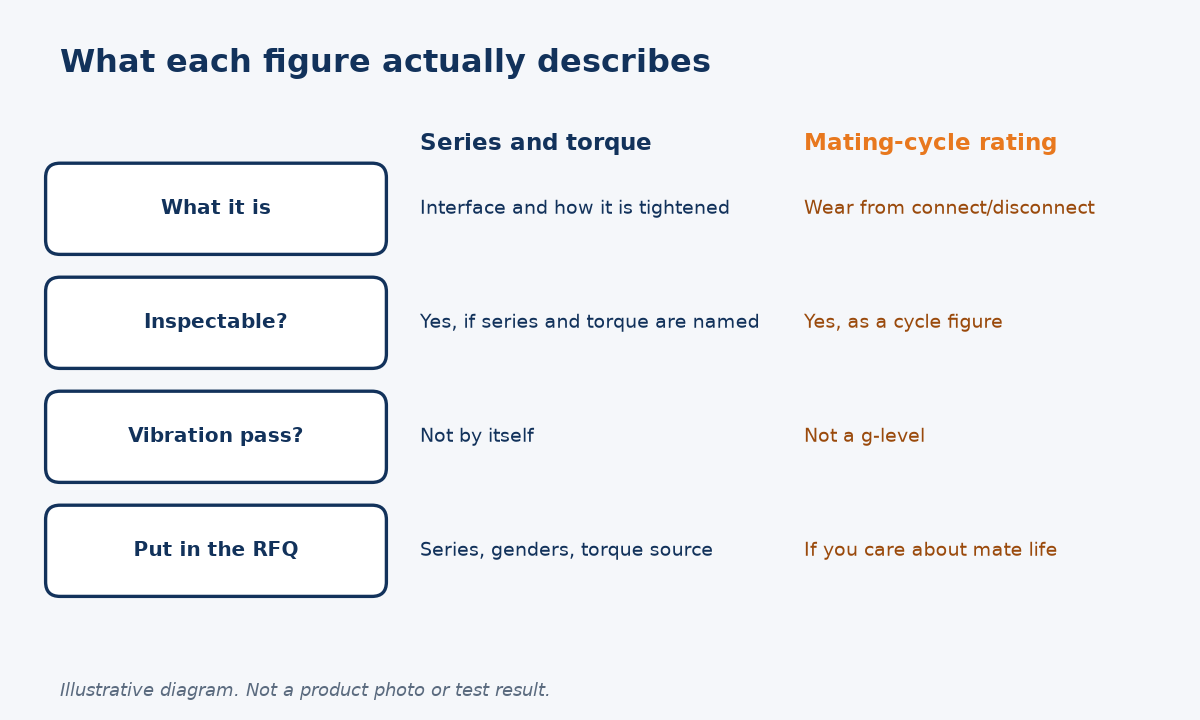
I will not invent a g-level or a hours-to-failure figure for either series. What we can say from catalog data is narrower and more useful: our N type to SMA adapters, for example RL-SMA/N-JKG, are listed with a durability of at least 500 matings, a passivated stainless-steel body and a −55 °C to +85 °C temperature range. Mating-cycle figures describe wear from connect and disconnect, which is related to but not the same as vibration of a mated pair. If you need a vibration test, name the method; do not treat “≥500 matings” as a vibration pass.
Torque is the other half of coupling. NASA-STD-8739.4A says coaxial mating torque should come from the engineering documentation and that only the coupling nut should be turned. Put the torque source in the RFQ or in your incoming-inspection note: “mate to the torque in drawing X” is inspectable; “tighten firmly” is not. MIL-STD-348 defines the interfaces themselves, so the series and gender still have to be written out.
If the assembly must stay mated in the field, also say whether you want a self-locking coupling, safety wire provisions, or a mechanical clamp. I will only quote those features when you ask for them; I will not assume a catalog adapter includes them.
What cable and strain-relief details should be in the RFQ?
Many vibration failures start behind the connector, where the cable is flexing, not at the contact itself.
Specify the cable type, length, minimum bend radius, how the cable is clamped, and the strain relief you want at each connector. A correctly chosen Type N or SMA interface will still fail if the jacket takes the vibration load at a sharp exit.
The back of the connector is part of the mechanical spec
A cable assembly RFQ that lists only “SMA male to N male, 1 m, 18 GHz” says nothing about how the cable leaves the connector or how it is tied down. In a vibrating rack, that missing information is often the difference between a stable VSWR and an intermittent open.
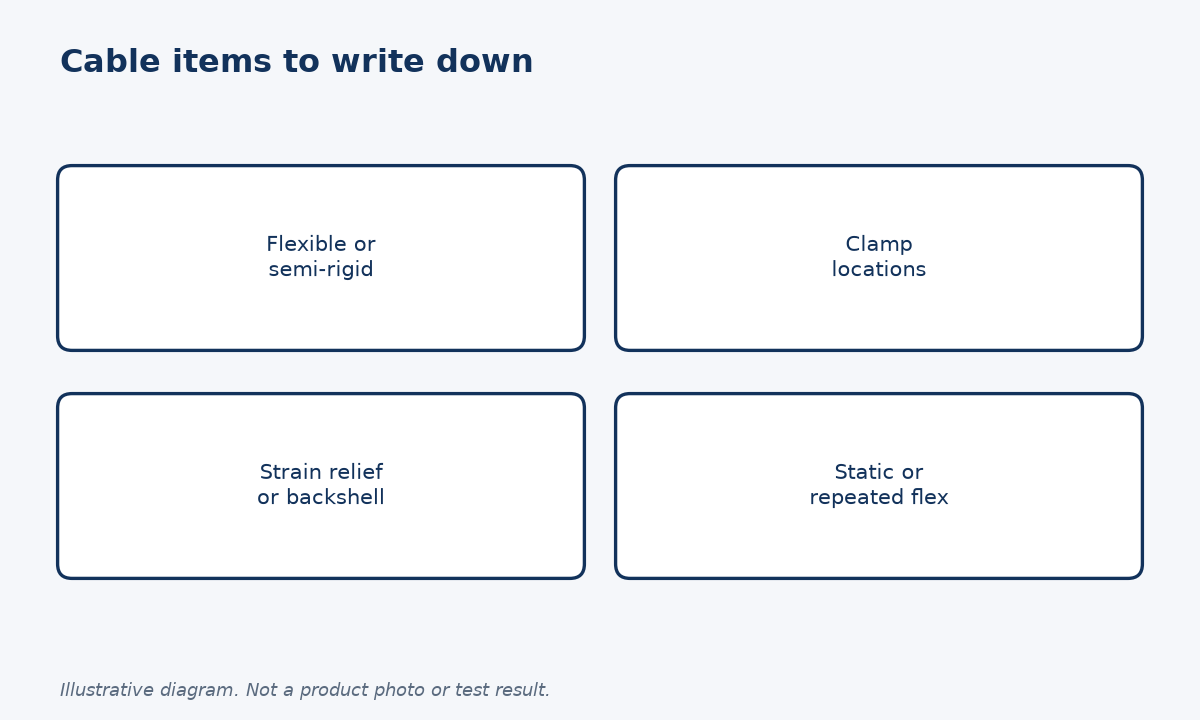
I would ask you (or you should tell the supplier) at least the following: flexible or semi-rigid cable; jacket and temperature; whether the path is static or repeatedly flexed; the clamp locations; and the strain-relief style (boot, heat-shrink, custom backshell, or a clamp on the panel). If the assembly is a pigtail into a moving platform, say so. If it is a short jumper that is supported at both ends, say that too — the same connectors can be quoted differently.
Do not copy a vibration adjective from a cable datasheet into the RFQ without the test method and the axis. If you need a formal test, name it and who will perform it. If you only need good workmanship and a supported cable, write that, and refer to a workmanship standard such as NASA-STD-8739.4A for termination practice rather than implying a qualified vibration program.
NIST work on connector repeatability is about measurement error from mating, but it is a useful reminder that mechanical disturbance at the interface shows up as electrical change. A vibration RFQ is, in the end, a request to keep that interface stable.
What mechanical tests and records should you ask the supplier to confirm?
If you need evidence, name the evidence. If you do not, do not imply that a catalog part is already qualified.
State whether you need a workmanship inspection, a mating-torque note, a mating-cycle statement, or a formal vibration test to a named method. Ask who performs the test and what record you will receive. Do not treat an unstated catalog adjective as a certificate.
Distinguish workmanship, durability and qualification
Those three words get mixed together. Workmanship is whether the assembly was built to a documented process (torque, strain relief, no damaged interfaces). Durability is often a mating-cycle figure, such as the ≥500 matings listed on our adapter pages. Qualification is a test program to a method you or your customer name. Only the third one answers a formal vibration requirement, and only if the method, levels and pass criteria are written down.
I will not invent a MIL-STD method or a passing g-level for Reach Line parts that is not on the product page. If your project requires a specific method, put the method, the levels, the axes, the duration and the electrical pass criterion (for example, no intermittent open, or VSWR remaining within a limit) in the RFQ. We can then say whether we can test, whether a third party must test, or whether the requirement is outside what a catalog adapter or a standard cable build can support.
A lighter, still useful RFQ line is: “Assemble to the torque in the drawing; provide a workmanship record; cable supported at [locations]; no formal vibration qualification required.” That is honest, and it is inspectable.
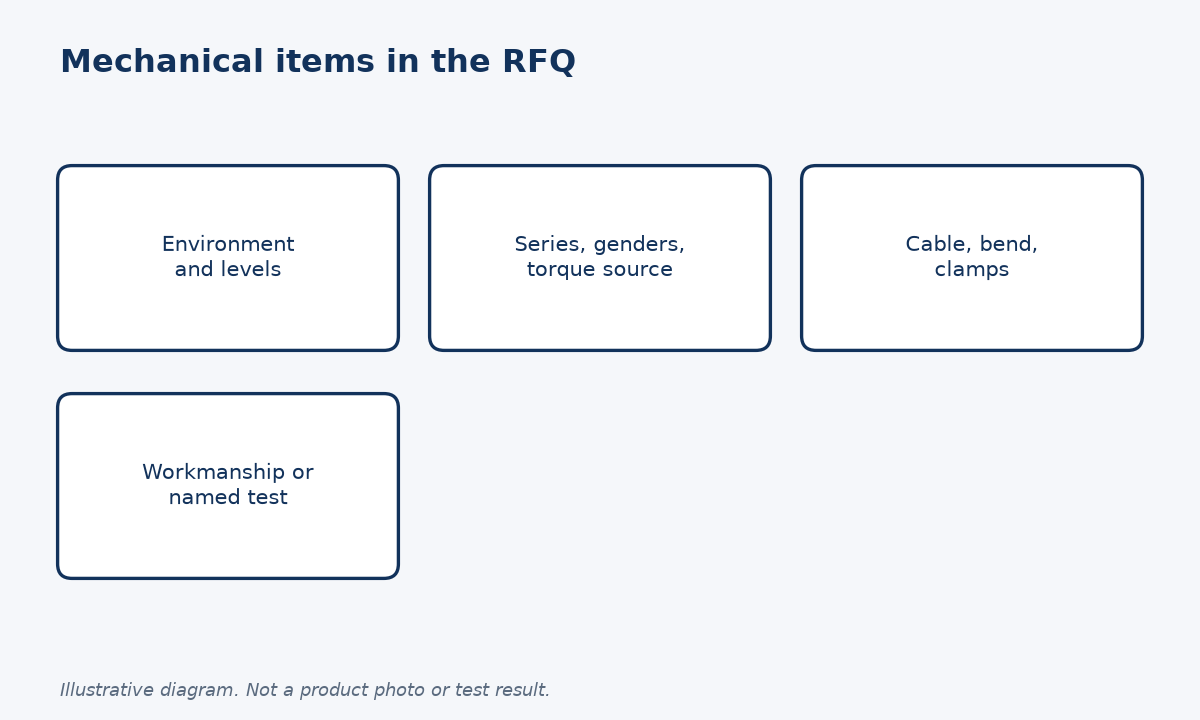
| RFQ line | What to state |
|---|---|
| Environment | Vibration type, levels, temperature, duration |
| Interfaces | Series, genders, torque source |
| Cable | Type, length, bend, clamps, strain relief |
| Evidence | Workmanship, mating cycles, or a named test |
When you are ready, request a quote with frequency range, connector types, cable length, quantity, the application and any mechanical test you need. We will reply with a construction we can actually support, not with a vague “vibration resistant” label.
Frequently asked questions
Is Type N more vibration resistant than SMA? Type N is a larger threaded interface and is often chosen when handling robustness matters, but I will not quote a g-level for either series that is not on the product page. Name the series and the environment in the RFQ.
Does a 500-mating rating mean the connector will pass a vibration test? No. A mating-cycle figure describes connect and disconnect wear. Vibration of a mated pair needs its own method, levels and pass criterion if you require that evidence.
What torque should I use on N or SMA connectors? Use the torque in your engineering documentation or the value the supplier states for that part. NASA-STD-8739.4A requires torque from documentation and turning only the coupling nut.
Can Reach Line qualify a cable assembly to my vibration standard? Send the method, levels, axes and electrical pass criterion with the quote request. We will say whether we can test, whether a third party must test, or whether a catalog build cannot support that requirement.
Conclusion
Replace “vibration resistant” with environment, torque, strain relief and, if needed, a named test method.
STAY IN FOR MORE NEWS
Subscribe to our free newsletter.
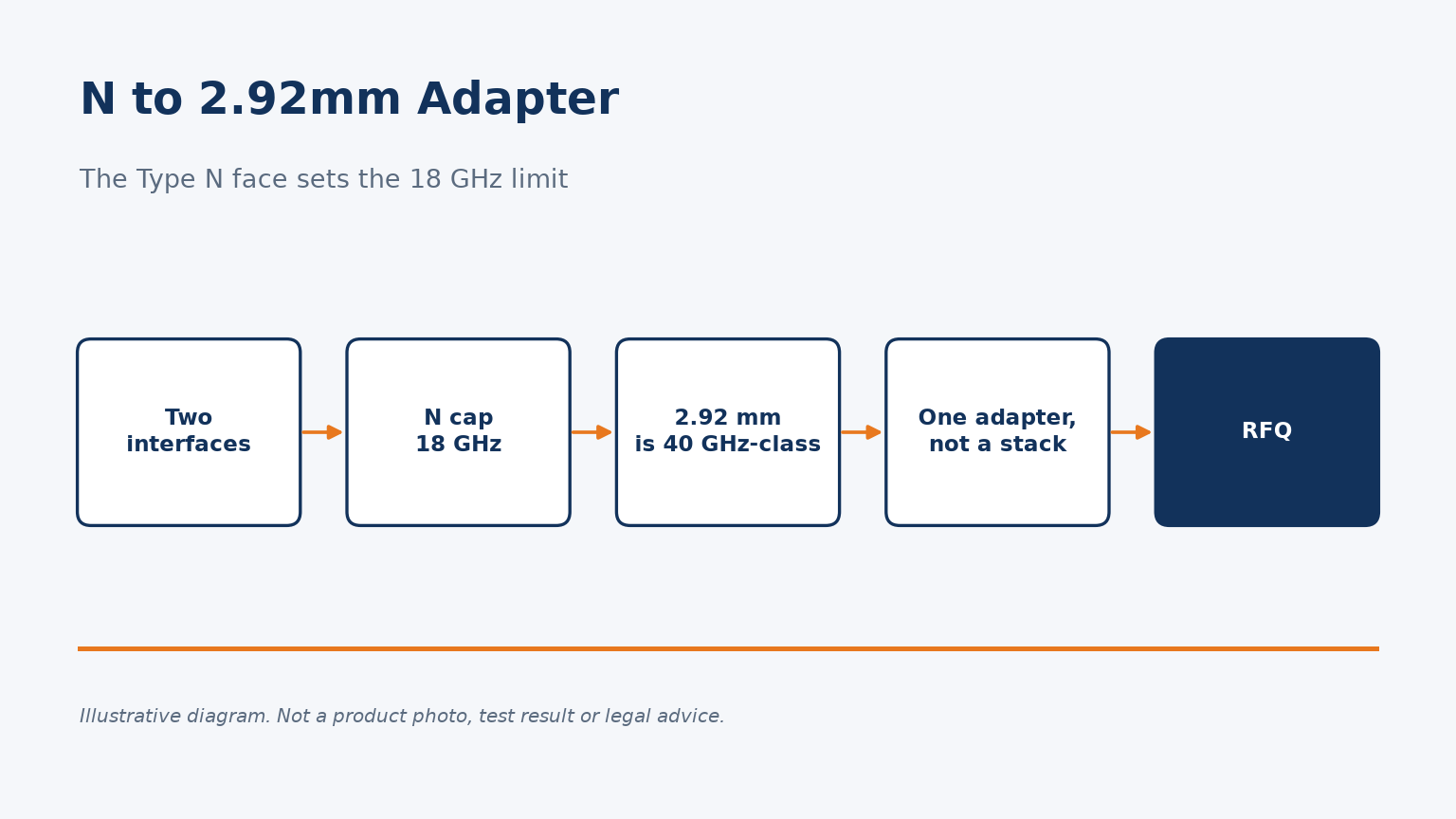
An N to 2.92mm adapter is limited by the Type N side, usually to 18 GHz. Do not expect a 40 GHz path. See genders, VSWR and a short RFQ list.
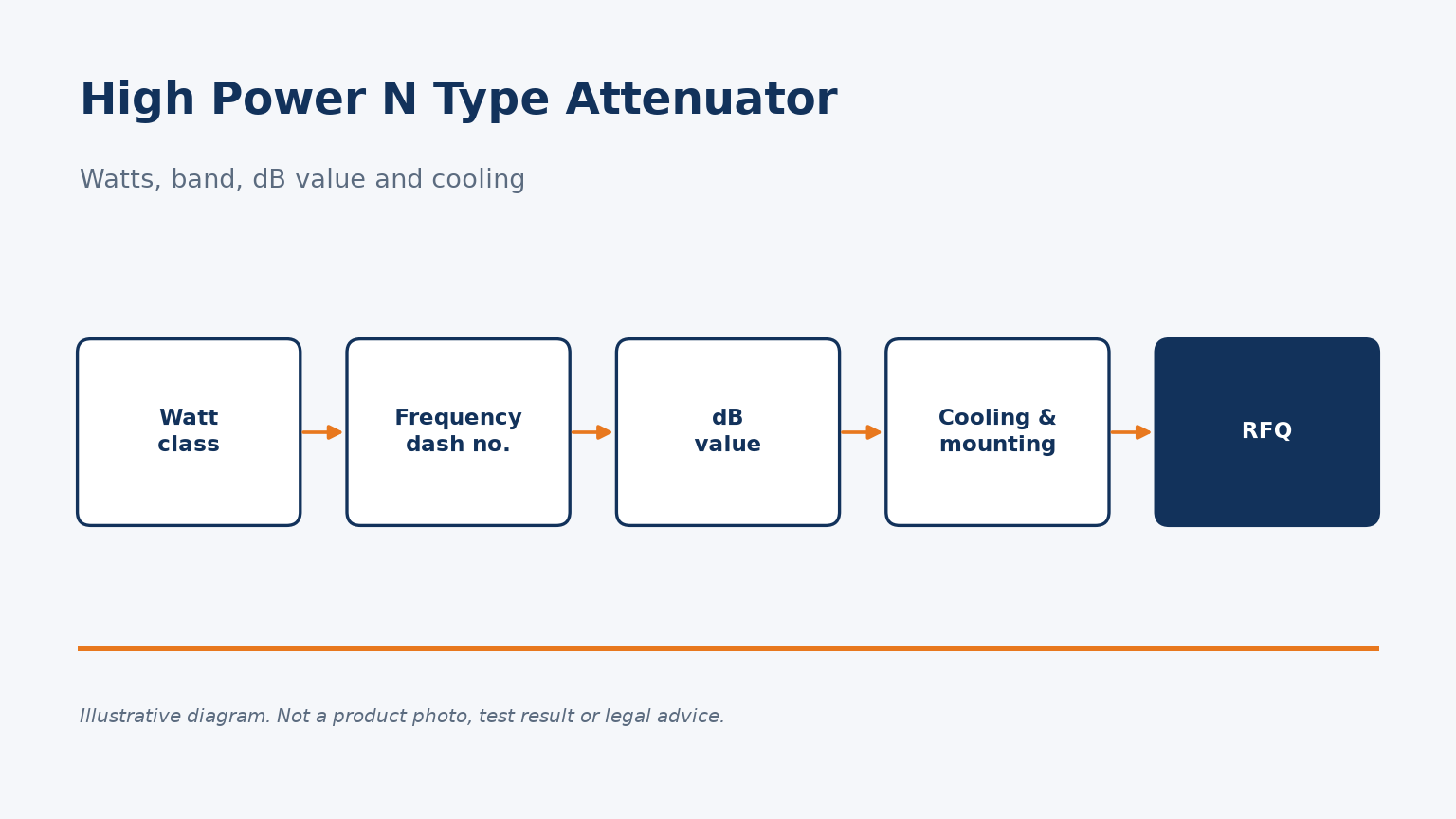
A high power N type attenuator RFQ needs wattage, band, VSWR, dB value and cooling. Compare published 5 W and 250 W listings before you buy.
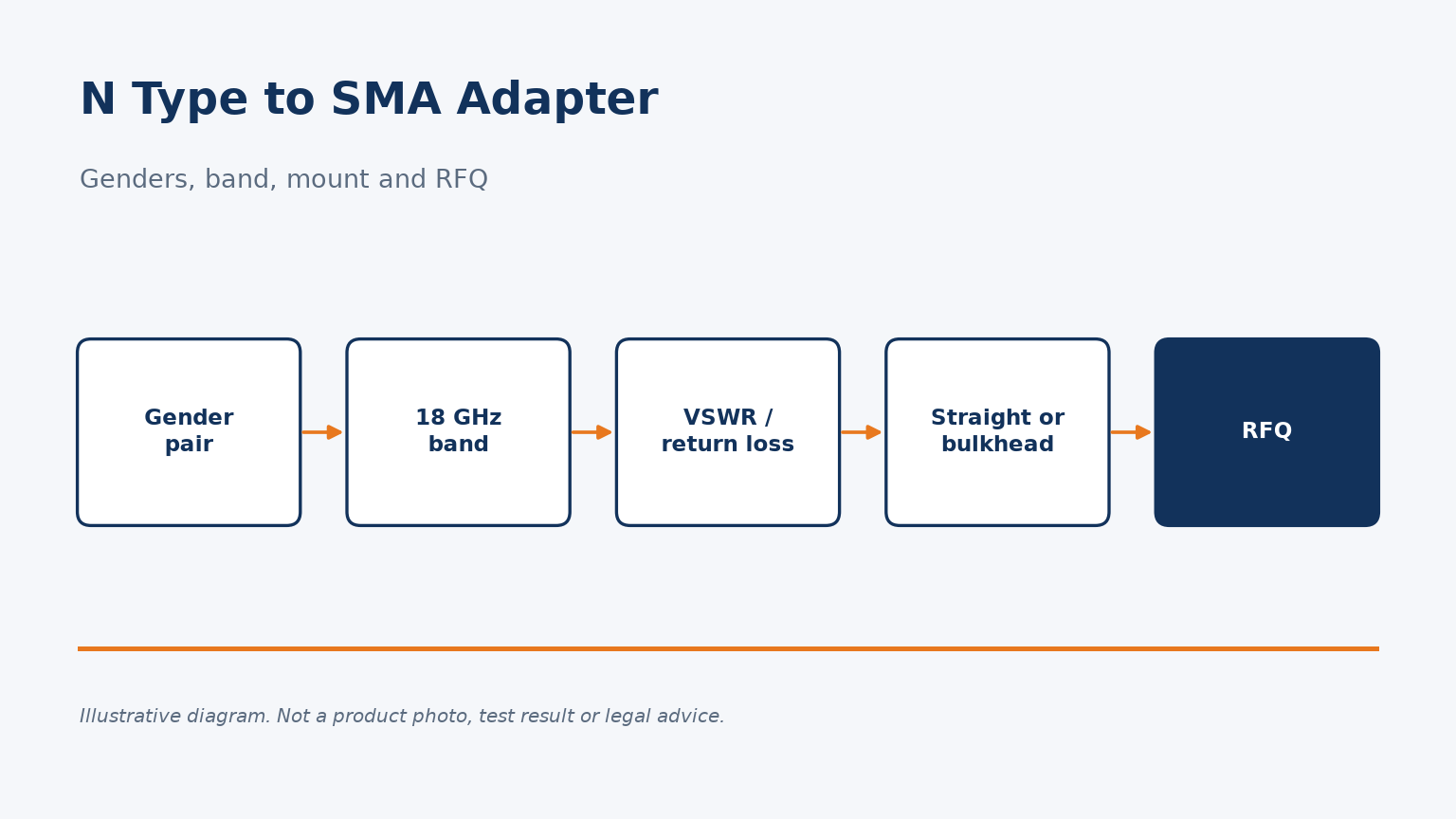
Specify an N type to SMA adapter by gender pair, 18 GHz band, VSWR and mount. See four catalog options plus a short RFQ checklist for buyers.
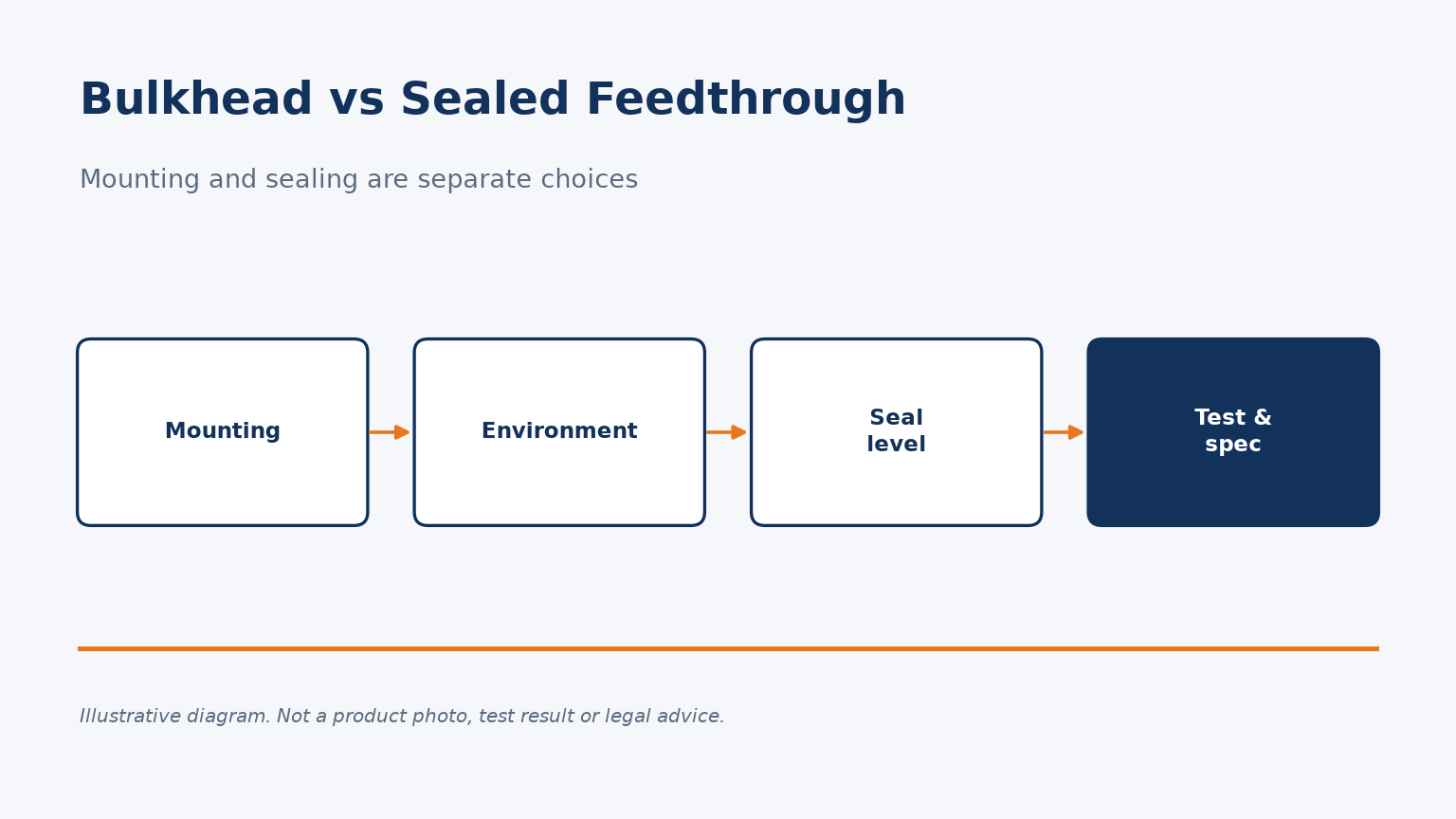
SMA bulkhead adapter vs sealed feedthrough: mounting versus sealing, levels from gasket to hermetic, how to choose, and what to specify.
